Space exploration has always captured human imagination — from the first steps on the Moon to today’s plans for colonizing Mars. In the last decade, rapid technological progress has transformed what was once science fiction into an achievable reality.
The Mainstream, space technology is entering a new golden era driven by innovation, collaboration, and commercial ambition. Let’s explore the latest breakthroughs shaping the future of space exploration.
1. Reusable Rockets: The New Normal
One of the most transformative advancements in space exploration is reusable rocket technology.
Companies like SpaceX with its Falcon 9 and Starship, and Blue Origin with New Shepard, have proven that rockets can be launched, landed, and reused — drastically reducing costs and enabling more frequent missions.
Reusability is no longer experimental; it’s becoming the industry standard, paving the way for sustainable and affordable access to space.
2. The James Webb Space Telescope: A New Eye in the Sky
Launched in 2021, the James Webb Space Telescope (JWST) has revolutionized astronomy. Its infrared imaging allows scientists to peer through cosmic dust and capture light from the earliest galaxies after the Big Bang.
With unprecedented detail, JWST is offering insights into exoplanets, star formation, and the origins of the universe — marking one of the greatest achievements in modern space science.
3. Mars Missions and the Perseverance Rover
NASA’s Perseverance Rover, which landed on Mars in 2021, continues exploring the Jezero Crater with groundbreaking tools. Its MOXIE experiment successfully produced oxygen from the Martian atmosphere — a major step toward sustaining human life on Mars.
The Ingenuity helicopter, the first aircraft to fly on another planet, has proven that aerial exploration is viable in Mars’s thin atmosphere, setting the stage for future robotic and crewed missions.
According to insights from The Mainstream, these achievements represent a pivotal shift from exploration to preparation for long-term human presence on the Red Planet.
4. The Artemis Program: Return to the Moon
NASA’s Artemis Program aims to return humans to the Moon by 2026 — including the first woman and the first person of color. Unlike the Apollo missions, Artemis focuses on sustainability through lunar bases, advanced landers, and next-generation suits.
The program also leverages the Space Launch System (SLS) — NASA’s most powerful rocket — to establish a long-term gateway for future Mars missions.
5. Satellite Mega-Constellations
Private players such as SpaceX’s Starlink and Amazon’s Project Kuiper are deploying massive satellite constellations in low-Earth orbit (LEO) to deliver global internet access.
These satellites not only connect remote areas on Earth but also lay the foundation for future space communications, navigation networks, and even interplanetary data transfer systems.
6. AI and Robotics in Space
Artificial Intelligence (AI) and robotics are driving automation in space exploration. AI enables autonomous navigation, anomaly detection, and spacecraft health monitoring.
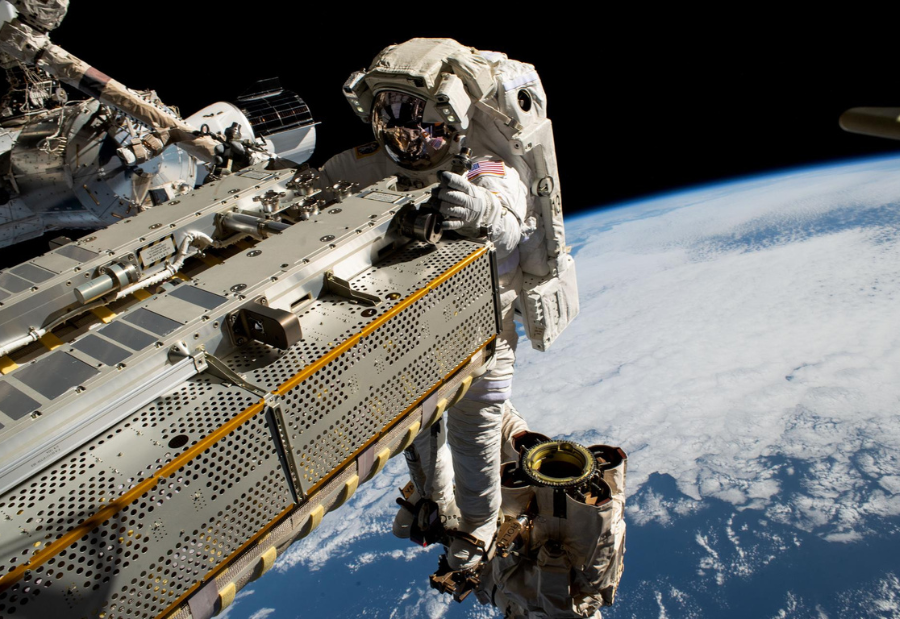
On the International Space Station (ISS), AI-powered robotic assistants support astronauts, while robotic arms and mining systems are being designed for asteroid extraction and in-space construction.
These intelligent systems will be crucial as missions move farther from Earth and require greater autonomy.
7. Nuclear Propulsion and Deep Space Travel
One of the greatest challenges in space exploration is travel time between planets. NASA and DARPA are developing nuclear thermal propulsion systems, which could halve the travel time to Mars.
This technology could make long-distance, crewed missions practical, opening new possibilities for deep space exploration and future interplanetary travel.
Looking Ahead: The Future of Space Exploration
From lunar bases and Martian colonies to asteroid mining and interstellar probes, the pace of progress in space technology is accelerating faster than ever.
Private-public partnerships, AI integration, and reusable spacecraft are transforming humanity’s approach to the cosmos
The Mainstream believes that this is the dawn of a new space age — one where humanity will not only visit space but live, work, and thrive beyond Earth’s boundaries.
Also read: Viksit Workforce for a Viksit Bharat
Do Follow: The Mainstream formerly known as CIO News LinkedIn Account | The Mainstream formerly known as CIO News Facebook | The Mainstream formerly known as CIO News Youtube | The Mainstream formerly known as CIO News Twitter |The Mainstream formerly known as CIO News Whatsapp Channel | The Mainstream formerly known as CIO News Instagram
About us:
The Mainstream formerly known as CIO News is a premier platform dedicated to delivering latest news, updates, and insights from the tech industry. With its strong foundation of intellectual property and thought leadership, the platform is well-positioned to stay ahead of the curve and lead conversations about how technology shapes our world. From its early days as CIO News to its rebranding as The Mainstream on November 28, 2024, it has been expanding its global reach, targeting key markets in the Middle East & Africa, ASEAN, the USA, and the UK. The Mainstream is a vision to put technology at the center of every conversation, inspiring professionals and organizations to embrace the future of tech.