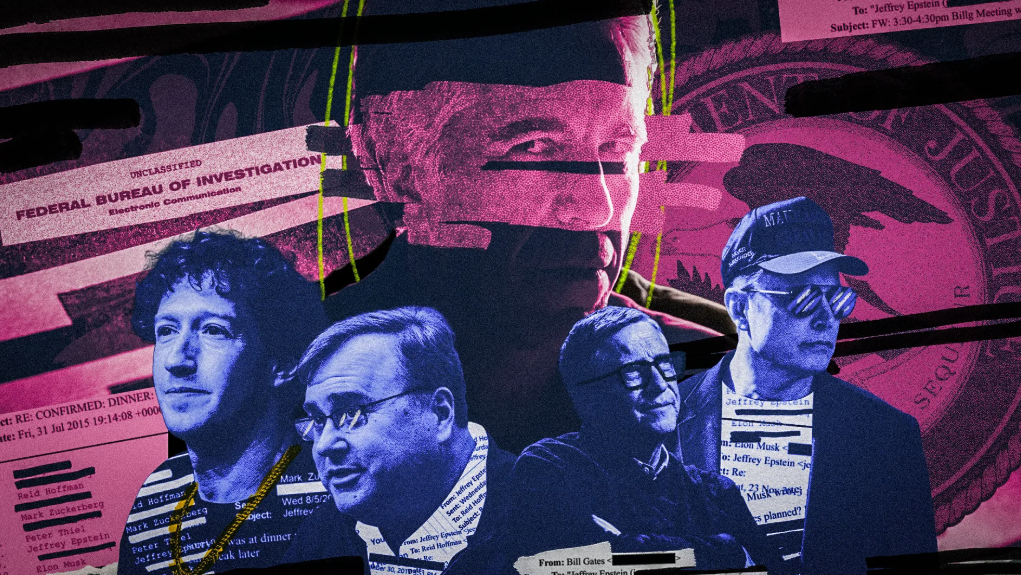
The latest tranche of documents released in connection with convicted sex offender Jeffrey Epstein has once again pulled some of the world’s most powerful names into public scrutiny from Silicon Valley. From billionaires and venture capitalists to founders of the world’s largest technology companies, the files reveal how Epstein embedded himself within elite tech circles, even after his 2008 conviction.
Crucially, being named in the Epstein files does not imply criminal wrongdoing. The documents, which include emails, calendars, contact lists, flight logs, photographs and scheduling notes show social, professional, or attempted interactions, not evidence of illegal activity. Still, the volume and proximity of these references raise uncomfortable questions about the culture of elite networks.
What the Epstein Files Actually Are
The “Epstein files” are not a single dossier. They are a collection of materials released through court proceedings, congressional transparency efforts and Justice Department disclosures. Many documents were unsealed as part of civil litigation or freedom-of-information processes. They show how Epstein maintained extensive contact lists of influential figures.
The Most Prominent Tech Figures Mentioned
Bill Gates (Microsoft)
Bill Gates appears more extensively than any other tech leader in the released material. The files document multiple meetings and email exchanges between Epstein and Gates. Gates has acknowledged meeting Epstein several times after Epstein’s conviction, calling it a “mistake in judgment,” but has repeatedly denied any wrongdoing. No criminal allegations have been made against him. In fact, His ex-wife, Melinda French Gates said her ex-husband, being named in files dredged up painful times in her marriage. She mentioned in a podcast that she felt “unbelievable sadness” and is “happy to be away from all the muck”. The couple divorced in 2021.
Elon Musk (Tesla, SpaceX)
Musk’s name appears in calendar entries and emails where Epstein sought meetings and floated possible visits. Musk has said publicly that he declined Epstein’s invitations and later cut off contact, describing Epstein as “creepy.” Separately, some investigative accounts have reported that Musk at one point expressed interest in visiting Epstein’s private island, an invitation Epstein himself allegedly rebuffed. There is no evidence in the files that Musk was engaged in financial dealings with him.
Reid Hoffman (LinkedIn)
The LinkedIn co-founder appears repeatedly in Epstein-related emails, calendars and correspondence, with records showing multiple meetings extending beyond what he initially disclosed. Court-released documents and subsequent reporting indicate that Hoffman visited Epstein’s private island, Little Saint James, in 2014, with travel entries showing an overnight stay. Hoffman has since acknowledged the visit and has stated publicly that he regrets the association and the role his presence may have played in legitimising Epstein within elite philanthropic and technology circles.
Peter Thiel (PayPal, Palantir)
Peter Thiel’s name appears between 2012 and 2017, a period well after Epstein’s 2008 conviction. The documents show Epstein actively seeking proximity to Thiel and other powerful venture capital figures, listing him among high-value contacts and potential attendees at private gatherings.
Sergey Brin (Google)
Brin is referenced in connection with social events and suggested meetings. Like others, his inclusion appears to be contextual rather than evidentiary.
Mark Zuckerberg (Meta)
Mark Zuckerberg’s name appears in Epstein-related references to a 2015 dinner that Epstein himself described in emails as “wild,” attended by several figures from the technology and business world. The documents place Zuckerberg within Epstein’s social orbit at a time when Epstein was actively cultivating relationships with Silicon Valley elites, using private dinners and gatherings to maintain relevance and access.
The renewed focus on tech leaders is not about guilt by association. It’s about accountability in elite culture. Epstein’s ability to maintain relationships with powerful individuals’ years after his conviction raises questions about if reputational risk is assessed among the ultra-wealthy and whether power itself creates insulation from scrutiny
The Epstein files do not prove criminal conduct by any major tech figure named so far. But they map a troubling proximity between immense power and a convicted predator, offering a reminder that influence can blur judgment and that transparency still matters.
Also read: Viksit Workforce for a Viksit Bharat
Do Follow: The Mainstream formerly known as CIO News LinkedIn Account | The Mainstream formerly known as CIO News Facebook | The Mainstream formerly known as CIO News Youtube | The Mainstream formerly known as CIO News Twitter
About us:
The Mainstream is a premier platform delivering the latest updates and informed perspectives across the technology business and cyber landscape. Built on research-driven, thought leadership and original intellectual property, The Mainstream also curates summits & conferences that convene decision makers to explore how technology reshapes industries and leadership. With a growing presence in India and globally across the Middle East, Africa, ASEAN, the USA, the UK and Australia, The Mainstream carries a vision to bring the latest happenings and insights to 8.2 billion people and to place technology at the centre of conversation for leaders navigating the future.