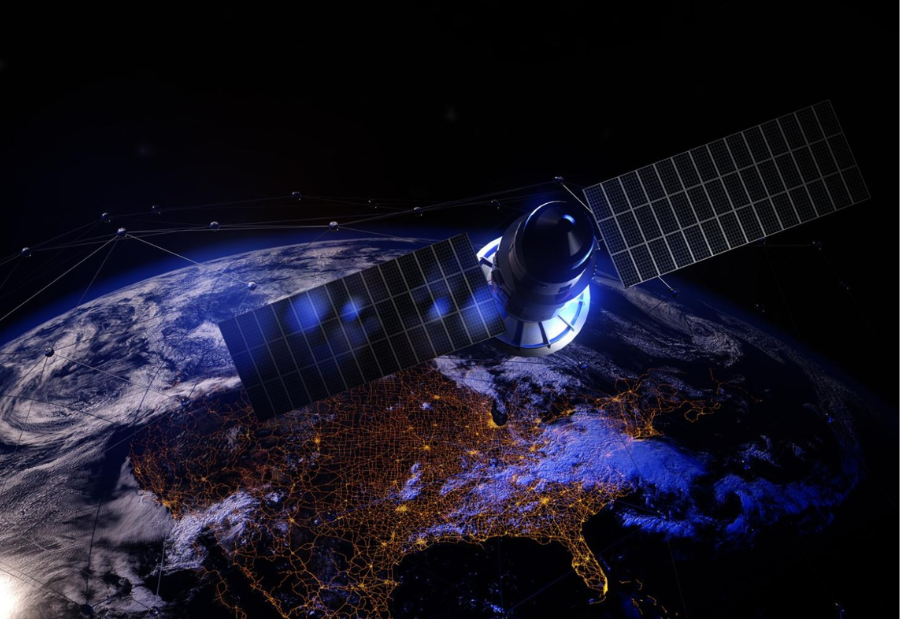
In a major step for its satellite internet network, SpaceX has crossed 10,000 active Starlink satellites in low Earth orbit, nearly 7 years after the programme began.
The milestone was achieved on March 17 during the first of 2 Falcon 9 launches. Together, the missions deployed 54 satellites.
The first rocket carried 25 satellites and lifted off from Vandenberg Space Force Base. The second launch added 29 satellites from Cape Canaveral Space Force Station.
The Starlink constellation now stands at 10,049 satellites, with all but 10 currently operational, according to satellite tracker Jonathan McDowell. Since May 2019, an additional 1,509 satellites have reentered Earth’s atmosphere and been destroyed.
The first mission, Starlink group 17-24, launched from Space Launch Complex 4 East in California at 1:19 a.m. EDT (0519 GMT or 10:19 p.m. PDT on March 16 local time). Its first stage booster, 1088, completed its 14th flight and landed on the droneship “Of Course I Still Love You” in the Pacific Ocean.
The second mission, Starlink group 10-46, lifted off from Space Launch Complex 40 in Florida at 9:27 a.m. EDT (1327 GMT). Booster 1090 completed its 11th flight and landed on the droneship “A Shortfall of Gravitas” in the Atlantic Ocean.
The Cape Canaveral launch marked SpaceX’s 34th Falcon 9 mission of 2026 and the 378th Starlink launch to date.
Also read: Viksit Workforce for a Viksit Bharat
Do Follow: The Mainstream LinkedIn | The Mainstream Facebook | The Mainstream Youtube | The Mainstream Twitter
About us:
The Mainstream is a premier platform delivering the latest updates and informed perspectives across the technology business and cyber landscape. Built on research-driven, thought leadership and original intellectual property, The Mainstream also curates summits & conferences that convene decision makers to explore how technology reshapes industries and leadership. With a growing presence in India and globally across the Middle East, Africa, ASEAN, the USA, the UK and Australia, The Mainstream carries a vision to bring the latest happenings and insights to 8.2 billion people and to place technology at the centre of conversation for leaders navigating the future.