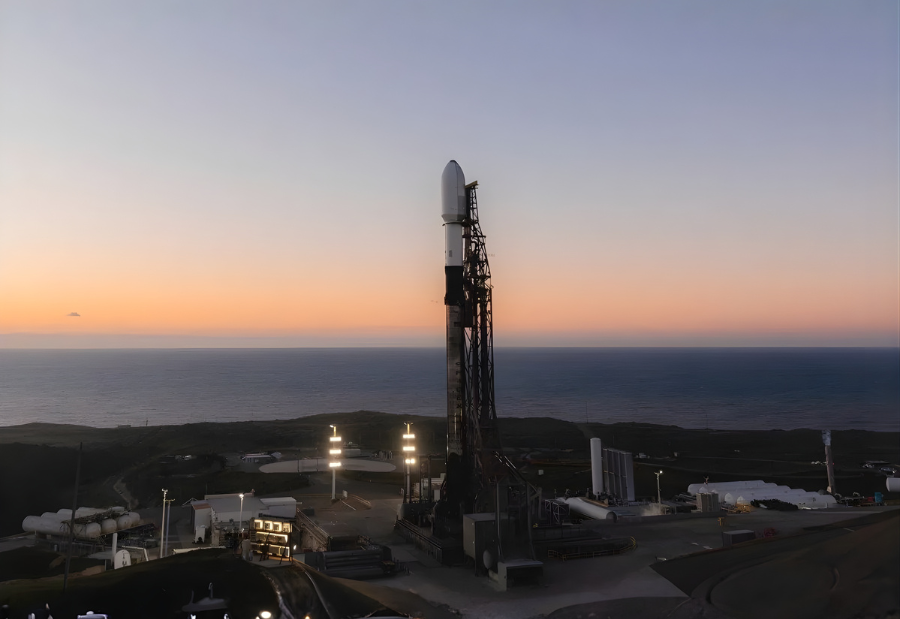
SpaceX launched the latest second generation satellite for Italy’s COSMO SkyMed constellation on January 02, using a Falcon 9 rocket from Vandenberg Space Force Base in California. The launch took place at 06:09 p.m. Pacific time.
The Falcon 9 successfully deployed the COSMO SkyMed CSG FM3 satellite into a sun synchronous orbit at an altitude of 618 kilometres at 02:22 UTC. Signal acquisition was confirmed 59 minutes after deployment, indicating that the satellite was functioning as expected.
“COSMO SkyMed represents evidence of Italy’s ability to invest over the long term,” said Teodoro Valente, president of the Italian Space Agency.
COSMO SkyMed is a dual use synthetic aperture radar system operating in low Earth orbit. The first generation constellation consisted of 4 satellites launched between 2007 and 2010. The system now includes 5 operational satellites, with 2 remaining first generation spacecraft and 3 second generation satellites.
The second generation satellites were launched in 2019 aboard a Soyuz rocket, in 2022 aboard a Falcon 9 after a planned Vega C mission was changed, and now with the latest Falcon 9 launch.
With a launch mass of about 2207 kilograms and a deployed span of 16.66 metres, CSG FM3 is the heaviest of the second generation satellites. It brings several upgrades aimed at improving performance and flexibility.
“The main upgrade is the antenna,” said Claudia Facchinetti, COSMO SkyMed program manager at the Italian Space Agency. “The new antenna is more flexible and efficient, allowing a single pass to observe multiple areas and respond to multiple user requests at the same time.”
The satellite is also equipped with a new laser reflector array that enables millimetre level accuracy in the georeferencing of radar images.
Designed for both civilian and military use, COSMO SkyMed supports applications such as natural disaster monitoring, security operations, and defence missions in all weather conditions, both day and night. “Our goal was to ensure continuity between the two generations of COSMO SkyMed and to deliver faster and more accurate data for research, security and defense,” said ASI Director General Luca Salamone.
The satellites are built by Thales Alenia Space, which also oversees the mission. Telespazio manages the ground segment and civilian operations, while e GEOS handles commercial data services. Leonardo provides onboard technologies, and the Italian Ministry of Defense manages security related processing.
The final second generation COSMO SkyMed satellite is expected to launch in early 2027, after which the remaining first generation spacecraft will be retired following more than 15 years of service.
Also read: Viksit Workforce for a Viksit Bharat
Do Follow: The Mainstream formerly known as CIO News LinkedIn Account | The Mainstream formerly known as CIO News Facebook | The Mainstream formerly known as CIO News Youtube | The Mainstream formerly known as CIO News Twitter
About us:
The Mainstream is a premier platform delivering the latest updates and informed perspectives across the technology business and cyber landscape. Built on research-driven, thought leadership and original intellectual property, The Mainstream also curates summits & conferences that convene decision makers to explore how technology reshapes industries and leadership. With a growing presence in India and globally across the Middle East, Africa, ASEAN, the USA, the UK and Australia, The Mainstream carries a vision to bring the latest happenings and insights to 8.2 billion people and to place technology at the centre of conversation for leaders navigating the future.