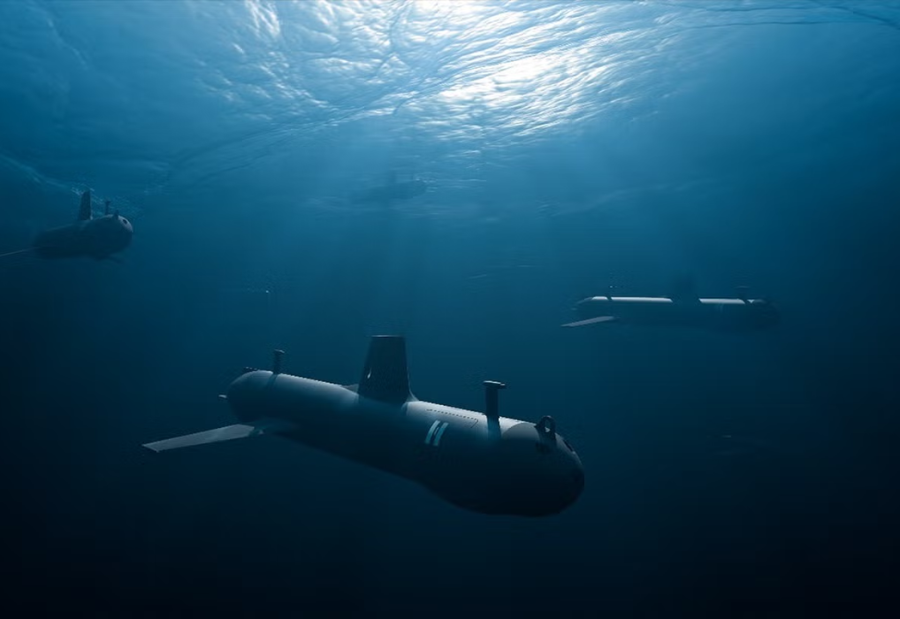
A new technology developed by Skana Robotics could change how underwater robots operate during complex missions.
Underwater autonomous vessels are expected to play a growing role in defence and infrastructure security. However, communication has long been a major limitation, as most submersibles need to surface to transmit data, increasing the risk of detection. Tel Aviv based Skana Robotics says it has addressed this challenge with a new AI driven communication capability.
Skana has introduced an upgrade to its fleet management platform, SeaSphere, that allows groups of underwater vessels to communicate with each other across long distances while remaining submerged. The system uses AI based decision making to enable vessels to share data, respond to signals from other robots, and adjust their actions without human intervention.
According to the company, each robot can autonomously change its route or task based on shared information, while still operating toward the broader mission objective. The software is designed for use in defence operations and for protecting underwater infrastructure and supply chains.
“Communication between vessels is one of the main challenges during the deployment of multi-domain, multi-vessel operations,” said Idan Levy, co-founder and chief executive officer of Skana Robotics. “The problem that we tackle is how you can deploy hundreds of unmanned vessels in an operation, share data, communicate on the surface level and under the water.”
The research behind the system was led by Teddy Lazebnik, an AI scientist and professor at the University of Haifa. He said the team deliberately avoided newer AI models in favour of older, mathematically driven algorithms.
“The new algorithms have two properties: they are more powerful, but as a result, are less predictable,” Lazebnik said. “Hypothetically, you’re paying in the performance or the ‘wow effect’ of this algorithm, but the older ones, you gain explainability, predictability, and actually generality.”
Skana Robotics was founded in 2024 and emerged from stealth earlier this year. The company is currently focused on selling its technology to governments and organisations in Europe, where maritime security concerns have increased following the war between Russia and Ukraine.
Levy said Skana is in discussions for a large government contract that it aims to finalise by the end of the year. The company plans to release a commercial version of its product in 2026 and demonstrate its capabilities at scale.
“We want to show we can use this in scale,” Lazebnik said. “We argue that our software can handle complex maneuvers. We want admirals from EU countries to actually check this argument and see by themselves that we actually get results.”
Also read: Viksit Workforce for a Viksit Bharat
Do Follow: The Mainstream formerly known as CIO News LinkedIn Account | The Mainstream formerly known as CIO News Facebook | The Mainstream formerly known as CIO News Youtube | The Mainstream formerly known as CIO News Twitter
About us:
The Mainstream is a premier platform delivering the latest updates and informed perspectives across the technology business and cyber landscape. Built on research-driven, thought leadership and original intellectual property, The Mainstream also curates summits & conferences that convene decision makers to explore how technology reshapes industries and leadership. With a growing presence in India and globally across the Middle East, Africa, ASEAN, the USA, the UK and Australia, The Mainstream carries a vision to bring the latest happenings and insights to 8.2 billion people and to place technology at the centre of conversation for leaders navigating the future.