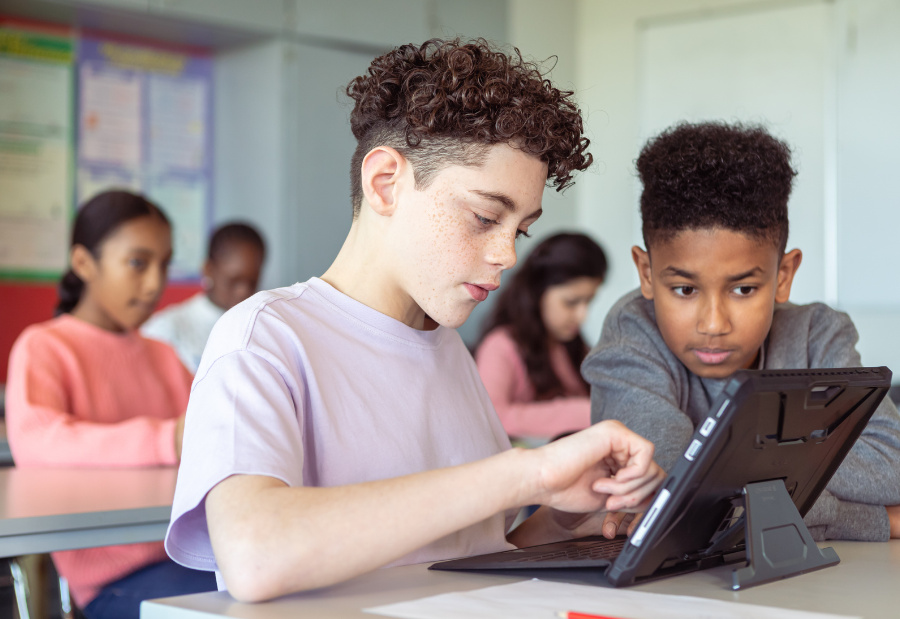
A growing shift is emerging in education as schools begin to reassess heavy reliance on digital devices. At a middle school in Kansas, administrators have taken a bold step by limiting student access to Chromebooks after concerns over distractions, bullying, and reduced learning focus.
At McPherson Middle School, which serves 480 students, school-issued laptops were once used both in classrooms and at home. However, despite banning mobile phones earlier, students continued to face distractions through Chromebook devices. Activities like watching videos on YouTube, playing games, and even bullying via school Gmail accounts raised concerns among teachers and parents.
In December, the school asked students to return their devices. Chromebooks are now stored in classroom carts and used only for specific tasks. Students mainly take notes by hand. “We just felt we couldn’t have Chromebooks be that huge distraction,” said the school principal. “This technology can be a tool. It is not the answer to education.”
The move reflects a wider trend. For years, tech giants like Google, Apple, and Microsoft promoted one-device-per-student models. However, studies show limited improvement in academic outcomes despite billions spent on digital tools. Organisations like UNESCO have also warned that excessive technology use can hinder learning.
Schools across states like North Carolina, Virginia, Maryland, and Michigan are now reducing screen time. At least 10 states, including Kansas, Vermont, and Virginia, have introduced bills to limit device usage or allow parents to opt out. Utah has passed a law requiring monitoring of student device activity.
Concerns extend beyond devices. In a recent case, a jury found Meta and YouTube liable for harming a minor. Meanwhile, countries like Australia have moved to restrict social media access for users under 16.
Back in Kansas, the shift has brought noticeable changes. Students are engaging more in discussions, playing board games like Scattergories and Uno, and focusing on offline learning. Some even prefer writing on paper over using laptops.
“We’re not going back to stone tablets,” said a school official. “This is intentional tech use.”
Educators say the goal is not to remove technology, but to use it more thoughtfully. As schools continue to experiment, the balance between digital tools and traditional learning remains a key focus.
Also read: Viksit Workforce for a Viksit Bharat
Do Follow: The Mainstream LinkedIn | The Mainstream Facebook | The Mainstream Youtube | The Mainstream Twitter
About us:
The Mainstream is a premier platform delivering the latest updates and informed perspectives across the technology business and cyber landscape. Built on research-driven, thought leadership and original intellectual property, The Mainstream also curates summits & conferences that convene decision makers to explore how technology reshapes industries and leadership. With a growing presence in India and globally across the Middle East, Africa, ASEAN, the USA, the UK and Australia, The Mainstream carries a vision to bring the latest happenings and insights to 8.2 billion people and to place technology at the centre of conversation for leaders navigating the future.