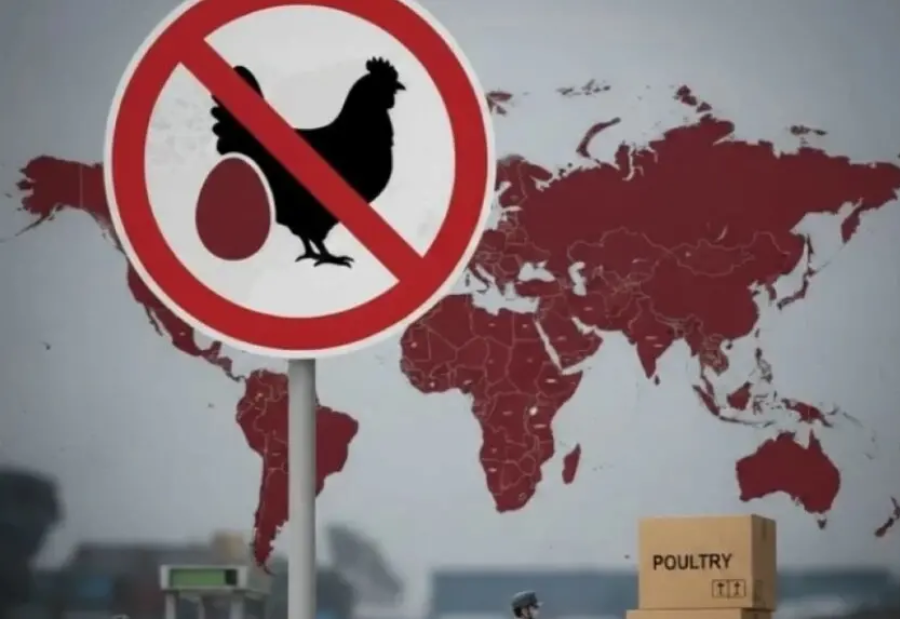
In a sweeping food safety update, Saudi authorities have imposed a full ban on poultry and table egg imports from 40 countries, including India, citing global animal disease concerns. Additional regional restrictions have also been placed on 16 countries, targeting specific provinces and cities.
The decision was issued by the Saudi Food and Drug Authority as part of precautionary measures to safeguard public health and strengthen food safety standards in the domestic market. The authority said the restricted list is subject to periodic review based on global health developments and risk assessments.
Officials confirmed that some bans have been in place since 2004, while others were added over time in response to updated international reports on animal disease outbreaks. A key concern behind the move is the spread of highly pathogenic avian influenza. Authorities said the measures reflect continuous monitoring of the global epidemiological situation.
Countries under full ban
Imports of poultry and table eggs are completely prohibited from the following 40 countries:
Afghanistan, Azerbaijan, Germany, Indonesia, Iran, Bosnia and Herzegovina, Bulgaria, Bangladesh, Taiwan, Djibouti, South Africa, China, Iraq, Ghana, Palestine, Vietnam, Cambodia, Kazakhstan, Cameroon, South Korea, North Korea, Laos, Libya, Myanmar, the United Kingdom, Egypt, Mexico, Mongolia, Nepal, Niger, Nigeria, India, Hong Kong, Japan, Burkina Faso, Sudan, Serbia, Slovenia, Ivory Coast and Montenegro.
Partial bans on 16 countries
A partial ban applies to specific regions within the following 16 countries:
Australia, the United States, Italy, Belgium, Bhutan, Poland, Togo, Denmark, Romania, Zimbabwe, France, the Philippines, Canada, Malaysia, Austria and the Democratic Republic of Congo.
These restrictions target designated provinces and cities rather than nationwide imports.
Exemptions for heat-treated products
The authority clarified that poultry meat and related products may be exempt if they undergo heat treatment or processing sufficient to eliminate bird flu or Newcastle disease viruses. However, strict conditions apply.
Exempted products must:
- Fully comply with approved health requirements and standards
- Be accompanied by an official health certificate
- Have certification issued by competent authorities in the exporting country
- Confirm that processing eliminates avian influenza or Newcastle disease virus
- Originate from an approved facility
- All conditions must be met for the exemption to apply.
Also read: Viksit Workforce for a Viksit Bharat
Do Follow: The Mainstream LinkedIn | The Mainstream Facebook | The Mainstream Youtube | The Mainstream Twitter
About us:
The Mainstream is a premier platform delivering the latest updates and informed perspectives across the technology business and cyber landscape. Built on research-driven, thought leadership and original intellectual property, The Mainstream also curates summits & conferences that convene decision makers to explore how technology reshapes industries and leadership. With a growing presence in India and globally across the Middle East, Africa, ASEAN, the USA, the UK and Australia, The Mainstream carries a vision to bring the latest happenings and insights to 8.2 billion people and to place technology at the centre of conversation for leaders navigating the future.