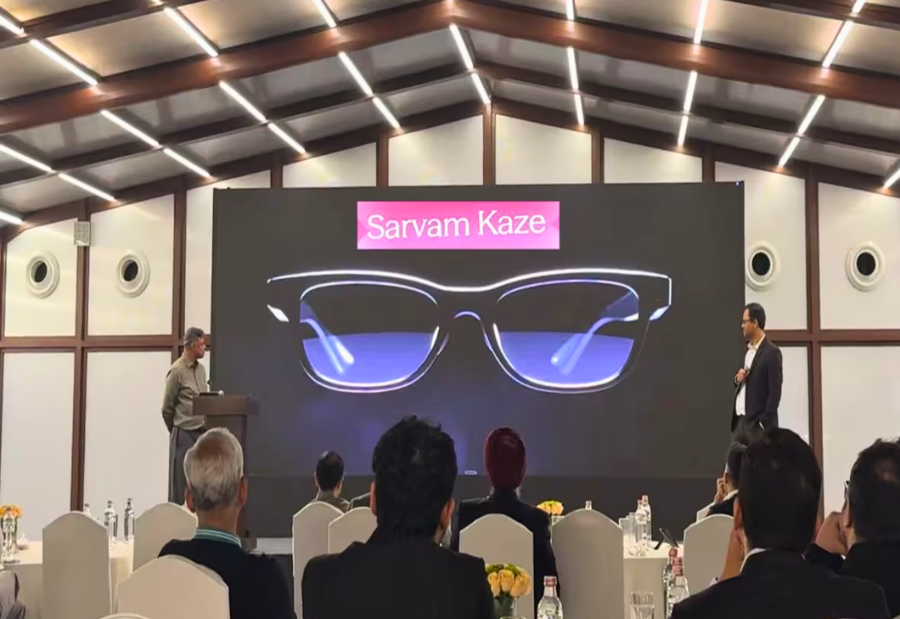
In a notable moment for India’s AI and hardware ecosystem, an Indian startup has stepped into smart wearables with its first AI-powered device.
Sarvam AI unveiled its first AI-powered hardware product, the Kaze smart glasses, at the India AI Impact Summit. Designed to bring intelligence from a smartphone directly to the user’s face, Kaze smart glasses are built to listen, understand, respond, and capture visuals. Prime Minister Modi was the first to test the device at the event.
Kaze is scheduled to launch in May 2026. The smart glasses feature visible cameras, similar in concept to other smart eyewear already in the market. Users will also be able to create their own customised experiences through the Sarvam platform. A brief teaser shared by Sarvam’s chief, Pratyush Kumar, pointed to several customisation options planned for the product.
With this launch, Kaze enters the growing category of smart eyewear alongside offerings such as those from Meta. The product aims to blend everyday usability with AI-driven features, while highlighting an India-made approach to wearable technology.
As interest in smart glasses continues to rise, Kaze is positioned as a device to watch ahead of its official release in May 2026, especially for users looking for intelligent eyewear developed by an Indian company.
Also read: Viksit Workforce for a Viksit Bharat
Do Follow: The Mainstream LinkedIn | The Mainstream Facebook | The Mainstream Youtube | The Mainstream Twitter
About us:
The Mainstream is a premier platform delivering the latest updates and informed perspectives across the technology business and cyber landscape. Built on research-driven, thought leadership and original intellectual property, The Mainstream also curates summits & conferences that convene decision makers to explore how technology reshapes industries and leadership. With a growing presence in India and globally across the Middle East, Africa, ASEAN, the USA, the UK and Australia, The Mainstream carries a vision to bring the latest happenings and insights to 8.2 billion people and to place technology at the centre of conversation for leaders navigating the future.