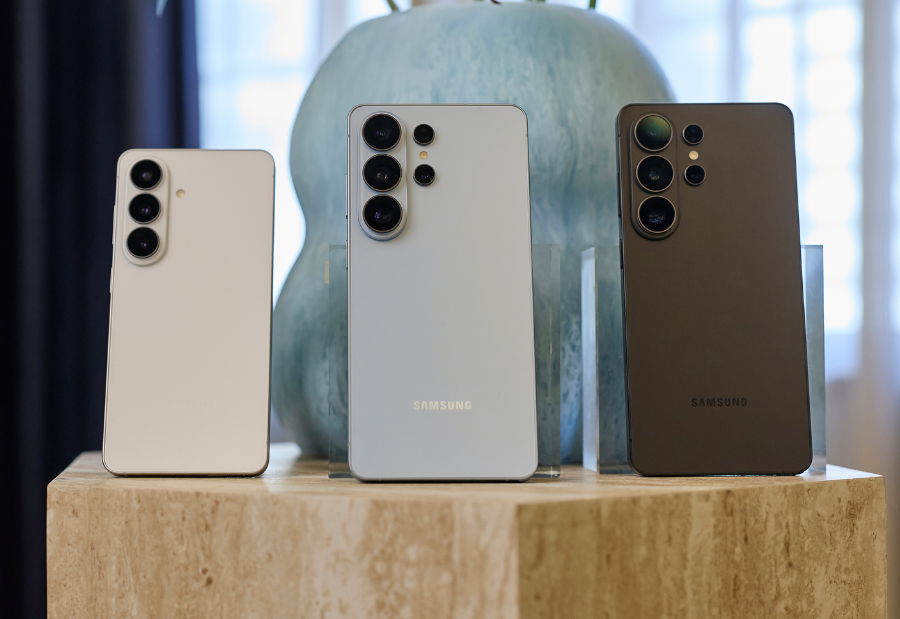
Advancements in smartphone battery technology could soon lead to significantly longer battery life. New leaked information suggests that Samsung is currently experimenting with high-capacity silicon-carbon battery designs that may power future smartphones.
According to details shared online, Samsung SDI is testing 12,000mAh and 18,000mAh silicon-carbon (Si-C) battery prototypes for smartphones. The company is also refining cell stacking designs and battery management software to improve reliability, thermal control, and efficiency.
Samsung has taken a cautious approach toward new battery technologies since the Samsung Galaxy Note 7 incidents in 2016. As a result, the company is carefully evaluating silicon-carbon batteries before introducing them commercially. If development succeeds, the technology could allow thinner batteries with higher capacity for future flagship smartphones and foldable devices without increasing device thickness.
Testing of silicon-carbon battery prototypes
Information about the testing programme surfaced in a post on X by user Schrödinger (@phonefuturist). The post claims that Samsung previously tested a 20,000mAh silicon-carbon battery, but the prototype reportedly failed durability tests after around 960 charge cycles.
Silicon-carbon batteries use a silicon-based anode instead of graphite, allowing them to store more energy without significantly increasing battery size. Several modern smartphones, particularly from Chinese brands, have already adopted this technology.
Prototype battery designs
Leaked details indicate that the earlier 20,000mAh prototype used a dual-cell design, combining a 12,000mAh primary cell measuring about 6.3mm thick with an 8,000mAh secondary cell measuring around 4mm. However, the battery did not meet Samsung’s durability targets, prompting the company to continue development with smaller configurations.
One of the newer prototypes reportedly delivers 12,000mAh total capacity using a dual-cell structure made up of a 6,800mAh cell (4.7mm) and a 5,200mAh cell (3.2mm). The expected combined thickness is under about 9.3mm, although some test samples reportedly exceeded this limit.
Samsung is also testing a larger 18,000mAh configuration using a triple-cell design consisting of 6,699mAh, 6,000mAh, and 5,257mAh cells with thicknesses of roughly 4.2mm, 3.9mm, and 3.28mm. The target stacked thickness is about 12.3mm, but additional thermal interface layers have pushed some prototypes to around 12.8mm.
Expected performance goals
The testing programme aims for a lifespan of around 1,500 charge cycles for the 12,000mAh and 18,000mAh batteries. The 12,000mAh version is reportedly designed with stability as a priority and could theoretically deliver 20–25 hours of screen-on time on a smartphone using both mobile data and Wi-Fi.
If the technology proves reliable, these high-capacity silicon-carbon batteries could play a major role in powering next-generation smartphones and foldable devices.
Also read: Viksit Workforce for a Viksit Bharat
Do Follow: The Mainstream LinkedIn | The Mainstream Facebook | The Mainstream Youtube | The Mainstream Twitter
About us:
The Mainstream is a premier platform delivering the latest updates and informed perspectives across the technology business and cyber landscape. Built on research-driven, thought leadership and original intellectual property, The Mainstream also curates summits & conferences that convene decision makers to explore how technology reshapes industries and leadership. With a growing presence in India and globally across the Middle East, Africa, ASEAN, the USA, the UK and Australia, The Mainstream carries a vision to bring the latest happenings and insights to 8.2 billion people and to place technology at the centre of conversation for leaders navigating the future.