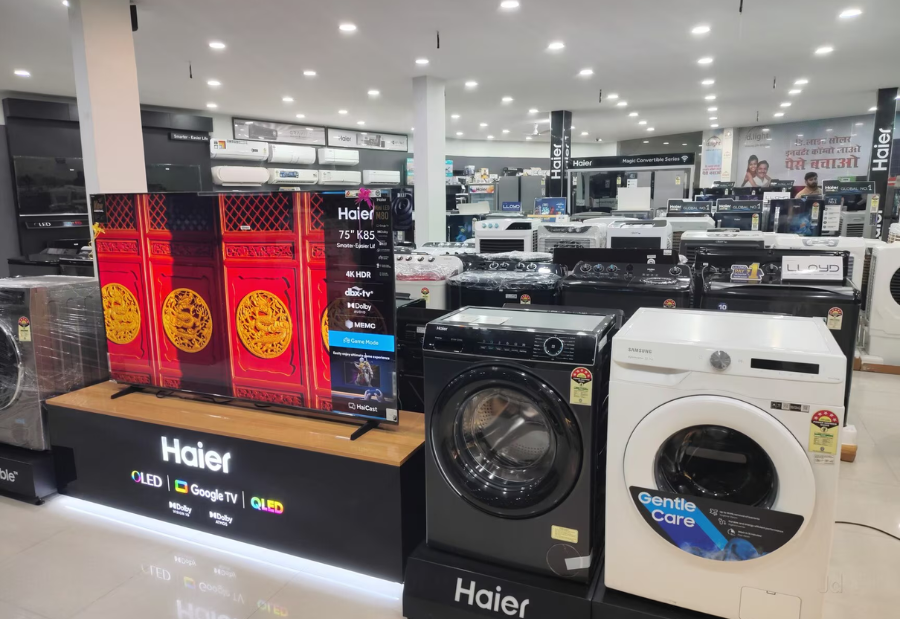
A noticeable shift is underway in India’s consumer electronics market, where products that once became cheaper over time are now getting more expensive, putting pressure on entry-level demand.
Prices of smartphones, televisions, and home appliances are rising sharply as manufacturers pass on increased input costs to consumers. Industry players say they can no longer absorb these expenses, leading to higher retail prices across categories.
“Prices are hitting record highs,” Kamal Nandi, who heads the appliances business at Godrej Enterprises, said, adding, “There is concern that entry-segment demand could weaken unless a harsh summer boosts sales.”
The impact is clearly visible in pricing trends. Entry-level 5G smartphones, earlier priced below ₹10,000 during Diwali, are now selling between ₹13,000 and ₹14,000. Industry executives expect these prices to rise further to ₹17,000–18,000 next quarter, with some projections touching ₹20,000 within 2 to 3 months.
Televisions and appliances are also seeing similar increases. A 32-inch smart TV, which cost around ₹6,500 last year, is now priced at ₹8,500 and may reach ₹10,000 by May. Meanwhile, a 3-star, 1.5-tonne air conditioner is expected to cost between ₹37,000 and ₹40,000 from April, compared to ₹32,000–34,000 last summer.
This marks a clear break from the industry’s earlier trend of falling prices due to scale and lower component costs. A rise in memory chip prices over the past 5 to 6 months, along with pressure from the Gulf conflict and a weakening rupee, has made cost absorption difficult.
Retailers confirm the trend. Kailash Lakhyani, founder chairman of the All India Mobile Retailers Association, said brands like Vivo, Oppo, Samsung and Xiaomi have indicated price hikes of up to 10% on select models. He noted, “Some new models from Vivo and Samsung, despite carrying similar specifications to their predecessors, are priced up to 36% higher.” He added that entry-level 5G smartphones could reach ₹20,000 by June.
At the same time, discounts and promotional offers have reduced. “The industry typically sees quarterly price cuts, cashback offers and trade promotions, but these are now largely absent — effectively raising consumer costs by another 10%,” he said.
Prices have been increasing every 30 to 60 days since November–December. As a result, many consumers are shifting to refurbished devices or delaying purchases. Retailers are now planning to request a GST reduction from 18% to 5% on smartphones priced up to ₹20,000 to support demand recovery.
Also read: Viksit Workforce for a Viksit Bharat
Do Follow: The Mainstream LinkedIn | The Mainstream Facebook | The Mainstream Youtube | The Mainstream Twitter
About us:
The Mainstream is a premier platform delivering the latest updates and informed perspectives across the technology business and cyber landscape. Built on research-driven, thought leadership and original intellectual property, The Mainstream also curates summits & conferences that convene decision makers to explore how technology reshapes industries and leadership. With a growing presence in India and globally across the Middle East, Africa, ASEAN, the USA, the UK and Australia, The Mainstream carries a vision to bring the latest happenings and insights to 8.2 billion people and to place technology at the centre of conversation for leaders navigating the future.