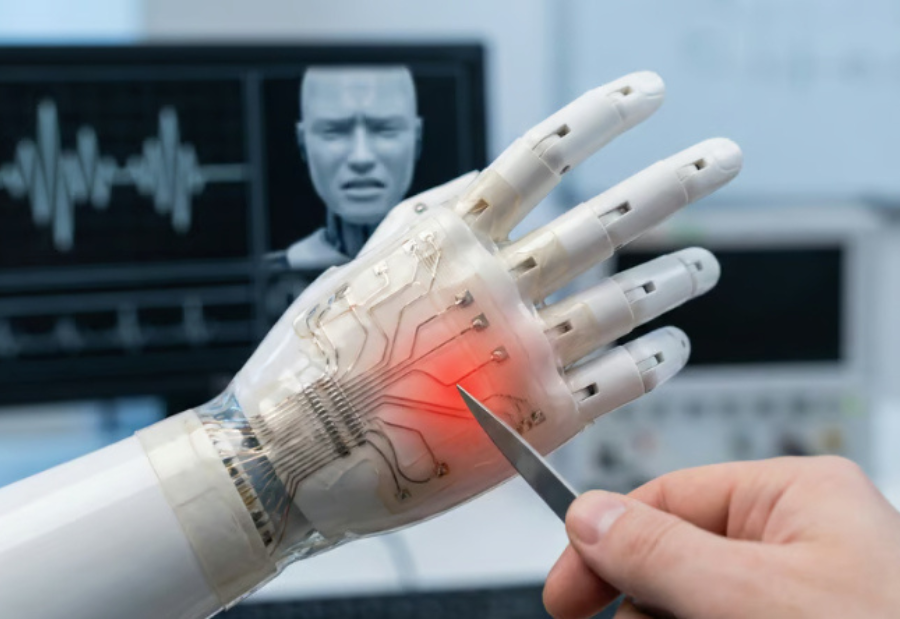
Researchers at the City University of Hong Kong have developed a neuromorphic robotic e skin that allows humanoid robots to sense pain and respond with fast protective reflexes. The project is led by Yuyu Gao and is designed to closely mirror how the human nervous system reacts to touch and injury.
The artificial skin converts physical pressure into neural like signals. It can tell the difference between a gentle touch and harmful force. This helps robots detect contact, identify potential damage, and react instantly, making interactions with humans safer and more natural. The development opens the door to more “empathetic” robots that can better understand physical limits.
The research, published as part of a PNAS paper, explains that the e skin uses a four layer structure inspired by human nerves. When the robot feels light contact, the signals are sent to the central processor for analysis. If the pressure crosses a defined pain threshold, the system reacts immediately.
Instead of waiting for the central processor, the skin sends a strong electrical signal directly to the motors. This causes the robot to pull away at once, similar to a human reflex. This design allows the robot to avoid damage and respond to danger almost instantly.
The researchers describe this as a built in pain centre within the skin itself. It enables rapid reactions without relying on slower processing systems.
The e skin also monitors its own condition. Each sensor regularly sends a “still here” signal to confirm it is working. If part of the skin is cut or damaged, the signal stops. This alerts the system to the exact location of the problem.
While the skin cannot heal itself, it uses magnetic modular sections. When a section is damaged, it can detach easily and be replaced within seconds, much like a building block. The research team is also working to improve sensitivity so robots can sense multiple touch points at the same time.
This innovation marks a major step toward safer and more responsive humanoid robots that can operate effectively alongside people.
Also read: Viksit Workforce for a Viksit Bharat
Do Follow: The Mainstream formerly known as CIO News LinkedIn Account | The Mainstream formerly known as CIO News Facebook | The Mainstream formerly known as CIO News Youtube | The Mainstream formerly known as CIO News Twitter
About us:
The Mainstream is a premier platform delivering the latest updates and informed perspectives across the technology business and cyber landscape. Built on research-driven, thought leadership and original intellectual property, The Mainstream also curates summits & conferences that convene decision makers to explore how technology reshapes industries and leadership. With a growing presence in India and globally across the Middle East, Africa, ASEAN, the USA, the UK and Australia, The Mainstream carries a vision to bring the latest happenings and insights to 8.2 billion people and to place technology at the centre of conversation for leaders navigating the future.