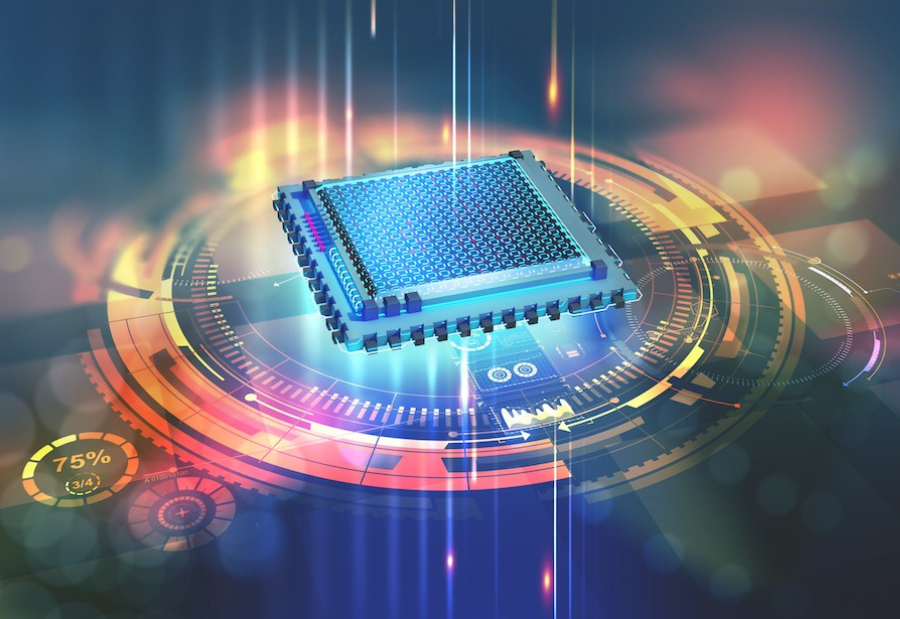
Enter Quantum Computing — a revolutionary approach that’s redefining what’s possible in science and technology. It has the potential to solve problems that today’s most powerful supercomputers can’t even approach.
As reported by The Mainstream, quantum computing technology is emerging as the next major leap in computational power — one that could transform industries from healthcare to finance.
What Is Quantum Computing?
At its core, Quantum Computing harnesses the principles of quantum mechanics — the branch of physics that governs particles at the atomic and subatomic levels.
Unlike classical computers that process data as 0s and 1s, quantum computers use qubits (quantum bits), which can exist in a state of 0, 1, or both simultaneously thanks to superposition.
Two key principles make quantum computing so revolutionary:
- Superposition: A qubit can hold multiple states at once, allowing a quantum computer to process many possibilities simultaneously.
- Entanglement: Qubits can be linked in such a way that the state of one instantly affects another — even across vast distances — enabling faster and more coordinated problem-solving.
Together, these properties allow quantum computers to perform complex calculations exponentially faster than classical systems for certain tasks.
Why Is Quantum Computing Important?
While classical computers remain powerful, they struggle with tasks that involve analyzing billions of possibilities or modeling highly complex systems. Quantum Computing could unlock breakthroughs in areas such as:
1. Drug Discovery & Healthcare
Quantum simulations can model molecules at a subatomic level, helping scientists design new medicines faster and more accurately.
2. Cryptography & Cybersecurity
Quantum computers could potentially crack current encryption methods — but they also promise to build quantum-proof security systems that protect data against future cyber threats.
3. Financial Services
Banks and investment firms can use quantum algorithms to optimize trading strategies, risk management, and portfolio planning in real time.
4. Artificial Intelligence (AI)
By accelerating data analysis, quantum computing could supercharge machine learning and deep learning, enabling AI systems to learn faster and make more accurate predictions.
5. Climate & Energy
Quantum simulations could model global climate systems or help design more efficient solar panels, batteries, and sustainable materials.
According to insights from The Mainstream, these advancements could fundamentally reshape how industries innovate, bringing us closer to a future where computation and creativity merge seamlessly.
Challenges Ahead
Despite its promise, quantum computing technology is still in its early stages. Some of the major challenges include:
- Fragility of Qubits: Qubits are highly sensitive to their surroundings, making them prone to errors and decoherence.
- Scalability: Building stable, large-scale quantum systems with millions of qubits is still a work in progress.
-
Cost & Infrastructure: Quantum machines require ultra-cold environments and advanced setups that are expensive and complex.
However, tech leaders like IBM, Google, and Microsoft, along with innovative startups, are making steady progress toward practical, accessible quantum computing systems.
How Could Quantum Computing Change the Future of Technology?
The shift to quantum computing won’t happen overnight — but when it does, the impact will be massive. In the near future, we may see hybrid computing systems, where classical and quantum computers work together:
- Classical systems will handle everyday processing.
- Quantum machines will take on ultra-complex tasks like optimization, encryption, and large-scale simulations.
Much like the internet revolutionized communication and commerce, quantum computing could redefine entire industries — not just by making computers faster, but by opening doors to solutions we can’t even imagine today.
The Mainstream believes that the fusion of classical and quantum systems will mark the beginning of a new digital era — one where computing becomes exponentially smarter, faster, and more capable.
Final Thought
Quantum Computing represents the next great leap in technology. Though still in its infancy, its potential — from curing diseases to tackling climate change — makes it one of the most exciting frontiers in innovation.
As emphasized by The Mainstream, the question isn’t if quantum computing will change the world, but when.
And when that moment arrives, it will redefine not just computing, but the very limits of human possibility.
Also read: Viksit Workforce for a Viksit Bharat
Do Follow: The Mainstream formerly known as CIO News LinkedIn Account | The Mainstream formerly known as CIO News Facebook | The Mainstream formerly known as CIO News Youtube | The Mainstream formerly known as CIO News Twitter |The Mainstream formerly known as CIO News Whatsapp Channel | The Mainstream formerly known as CIO News Instagram
About us:
The Mainstream formerly known as CIO News is a premier platform dedicated to delivering latest news, updates, and insights from the tech industry. With its strong foundation of intellectual property and thought leadership, the platform is well-positioned to stay ahead of the curve and lead conversations about how technology shapes our world. From its early days as CIO News to its rebranding as The Mainstream on November 28, 2024, it has been expanding its global reach, targeting key markets in the Middle East & Africa, ASEAN, the USA, and the UK. The Mainstream is a vision to put technology at the center of every conversation, inspiring professionals and organizations to embrace the future of tech.