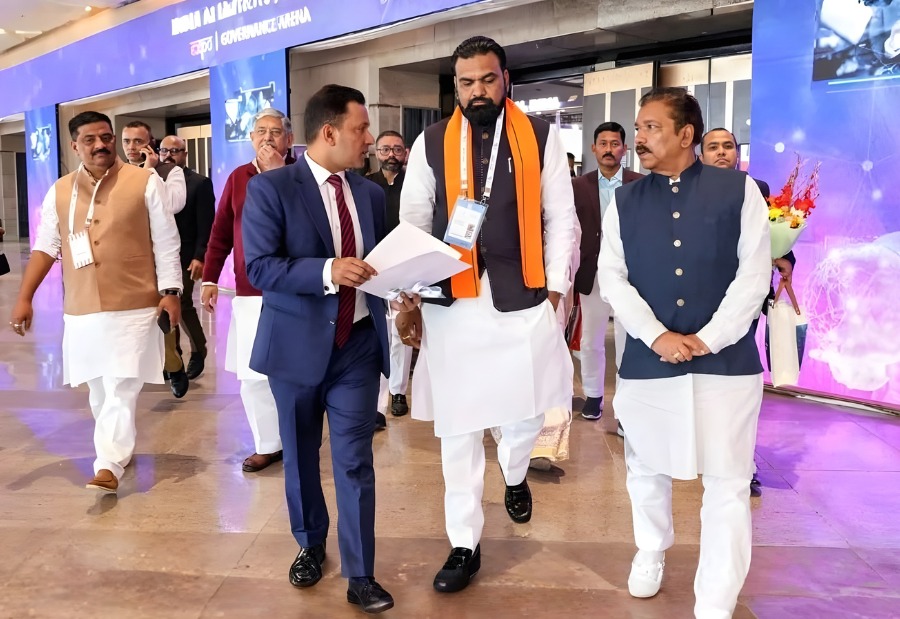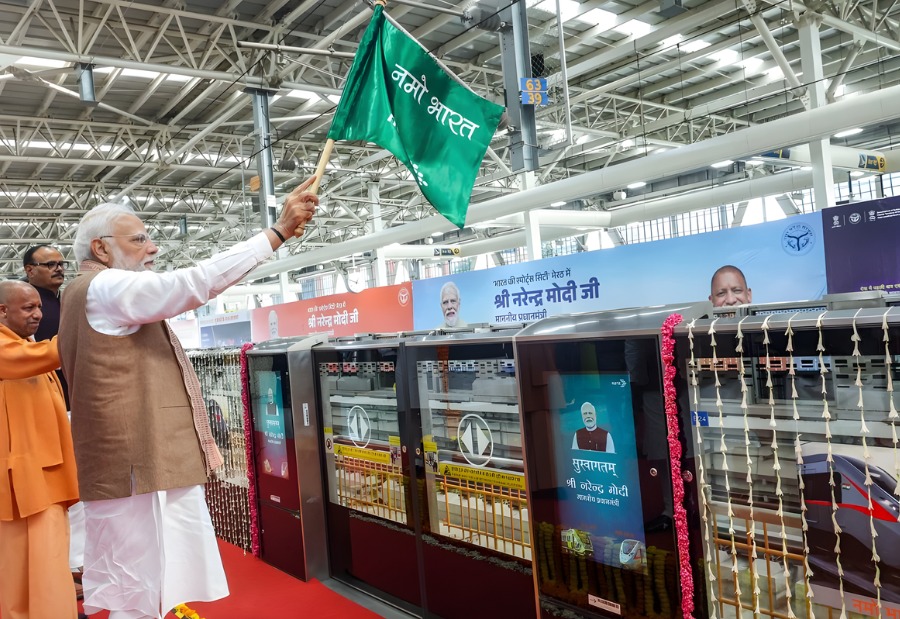
India’s first Regional Rapid Transit System is now fully operational between Delhi and Meerut. Prime Minister Narendra Modi on February 22, 2026 inaugurated the remaining sections of the Namo Bharat RRTS, completing the entire 82 km corridor.
The newly opened stretches include a 5 km section between Sarai Kale Khan and New Ashok Nagar in Delhi, and a 21 km section between Meerut South and Modipuram in Uttar Pradesh. The project has also been integrated with Meerut Metro services, which were launched simultaneously.
Designed for a top speed of 180 km/h, the Namo Bharat system connects Sahibabad, Ghaziabad, Modinagar and Meerut with Delhi. The Prime Minister said the corridor reflects the vision of a developed India where Metro systems support intra-city travel and Namo Bharat trains enable fast inter-city connectivity under a “twin cities” model. He highlighted the seamless integration of Indian Railways, Metro and bus terminals at Sarai Kale Khan, Anand Vihar, Ghaziabad and Meerut.
Mr. Modi also noted that investments in expressways, freight corridors and Jewar International Airport are generating employment and attracting industries to the region.
Union Housing and Urban Affairs Minister Manohar Lal said proposals for two additional rapid rail corridors from Sarai Kale Khan are expected soon. One is planned towards Karnal in Haryana, covering about 125-130 km in around 1.5 hours. Another is proposed towards Babarpur in Haryana and Neemrana in Rajasthan.
Sarai Kale Khan will function as a major multi-modal hub, connecting Hazrat Nizamuddin railway station, Delhi Metro’s Pink Line, Veer Haqeeqat Rai ISBT and Ring Road.
Delhi Chief Minister Rekha Gupta said the corridor will boost economic activity, reduce congestion and cut carbon emissions by lowering dependence on private vehicles.
Namo Bharat trains will run across 15 stations from Sarai Kale Khan to Modipuram, while Meerut Metro will operate across 12 stations on the Meerut South-Modipuram section.
Unlike conventional railways, RRTS offers high-frequency, high-speed regional travel on a dedicated corridor. Compared to Metro, it serves longer distances with fewer stops and faster speeds.
Also read: Viksit Workforce for a Viksit Bharat
Do Follow: The Mainstream LinkedIn | The Mainstream Facebook | The Mainstream Youtube | The Mainstream Twitter
About us:
The Mainstream is a premier platform delivering the latest updates and informed perspectives across the technology business and cyber landscape. Built on research-driven, thought leadership and original intellectual property, The Mainstream also curates summits & conferences that convene decision makers to explore how technology reshapes industries and leadership. With a growing presence in India and globally across the Middle East, Africa, ASEAN, the USA, the UK and Australia, The Mainstream carries a vision to bring the latest happenings and insights to 8.2 billion people and to place technology at the centre of conversation for leaders navigating the future.