A new chapter in space exploration has begun as artificial intelligence helps guide a rover on another planet.
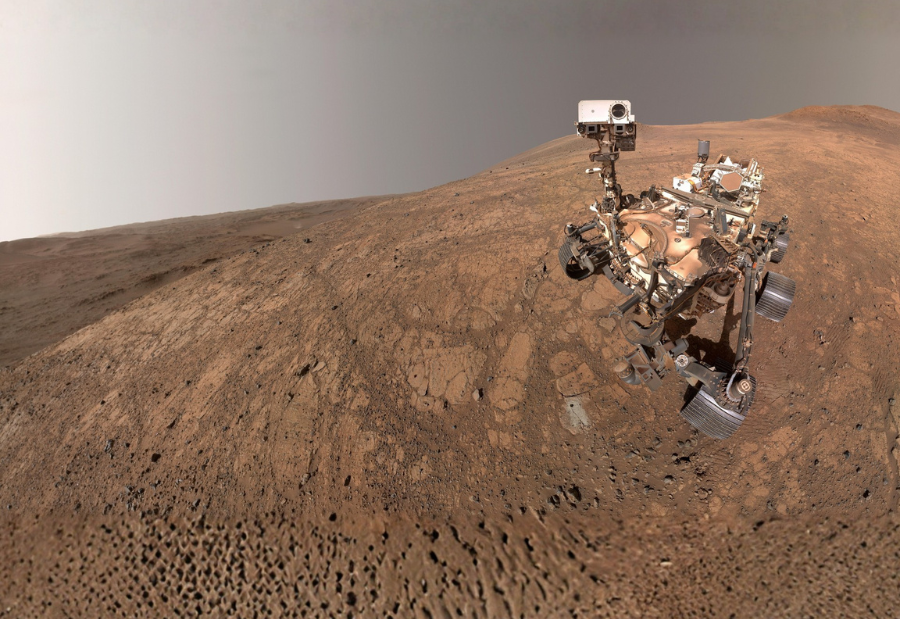
The NASA rover Perseverance has completed the first drive on Mars that was planned using a generative AI model. The route was created with support from Claude, an AI chatbot developed by Anthropic. The drive took place on January 27 and marks the first time AI directly assisted in planning rover movement on another world.
According to NASA Jet Propulsion Laboratory, the process began when a human mission planner provided Claude with a terrain map and science goals. The AI then generated a sequence of waypoints based on slope limits, safety rules, and the desired path. These waypoints were checked and refined by engineers before being sent to Mars.
The commands were transmitted across about 362 million kilometres from Earth to Mars. Perseverance then drove about 23 metres (75 feet) across rocky terrain inside Jezero Crater, where it is studying geology and signs of past life. NASA confirmed that the AI-assisted plan produced a safe route. Navigation and engineering teams monitored the rover and reviewed its data after the drive.
For this test, Claude was equipped with vision-language models and trained on mission data from JPL. NASA said the AI used the same images and datasets that human planners rely on to design rover paths.
NASA also clarified that Claude did not control the rover directly. Its role was limited to planning support. Engineers made the final decisions before commands were uploaded. Earlier rover drives were planned fully by humans using orbital images, 3D terrain models, and mission limits.
“The fundamental elements of generative AI are showing a lot of promise in streamlining the pillars of autonomous navigation for off-planet driving. We are moving towards a day where generative AI and other smart tools will help our surface rovers handle kilometre-scale drives while minimising operator workload, and flag interesting surface features for our science team by scouring huge volumes of rover images,” said Vandi Verma, a member of the Perseverance engineering team.
The test shows how AI can support future missions by reducing planning time and helping rovers travel longer distances with less human effort.
Also read: Viksit Workforce for a Viksit Bharat
Do Follow: The Mainstream formerly known as CIO News LinkedIn Account | The Mainstream formerly known as CIO News Facebook | The Mainstream formerly known as CIO News Youtube | The Mainstream formerly known as CIO News Twitter
About us:
The Mainstream is a premier platform delivering the latest updates and informed perspectives across the technology business and cyber landscape. Built on research-driven, thought leadership and original intellectual property, The Mainstream also curates summits & conferences that convene decision makers to explore how technology reshapes industries and leadership. With a growing presence in India and globally across the Middle East, Africa, ASEAN, the USA, the UK and Australia, The Mainstream carries a vision to bring the latest happenings and insights to 8.2 billion people and to place technology at the centre of conversation for leaders navigating the future.