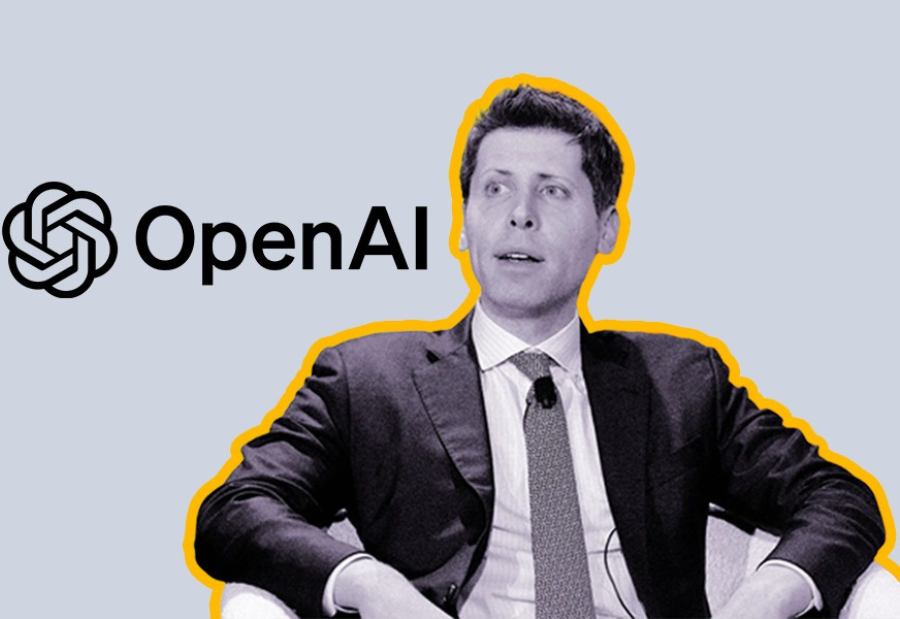
In Silicon Valley, contradiction is rarely seen as a flaw. More often, it is treated as a sign that something ambitious is underway. Few leaders embody that paradox as vividly as Sam Altman.
The OpenAI chief has spent much of the past two years warning governments about the potential dangers of artificial intelligence while simultaneously accelerating its deployment. He speaks about regulation with unusual enthusiasm for a technology executive, yet presides over the company that arguably ignited the global race to build ever more powerful AI systems.
It is a balancing act that has made Altman one of the most influential figures in modern technology, and one of the most scrutinised.
OpenAI’s launch of ChatGPT in 2022 transformed artificial intelligence from a specialised research field into a mainstream technology shaping everything from education to enterprise productivity. The rapid adoption of generative AI forced companies and governments around the world to confront a reality that had once seemed distant: powerful AI systems were no longer theoretical.
Altman quickly emerged as the industry’s most visible spokesperson. In congressional hearings and global forums, he warned that advanced AI could reshape labour markets, disrupt economies and potentially introduce new forms of risk if poorly governed.
Yet critics have pointed out a tension at the heart of that message. Even as Altman calls for oversight, OpenAI continues to push increasingly capable AI models into the market at remarkable speed.
That contradiction became dramatically visible in November 2023, when OpenAI’s board abruptly removed Altman as chief executive, citing a breakdown of trust. The move triggered a corporate drama rarely seen in the technology sector.
Within days, most of the company’s employees threatened to resign unless Altman was reinstated. Microsoft, OpenAI’s most powerful partner and investor, publicly backed him as well. Less than a week later, Altman returned to the role, while the board that dismissed him was largely replaced.
The episode raised deeper questions about the governance of companies building technologies with global consequences. OpenAI was originally designed as a hybrid structure, combining a non-profit mission with a rapidly expanding commercial arm. The goal was to ensure artificial intelligence would ultimately benefit humanity.
The crisis suggested that such ideals can be difficult to maintain once billions of dollars and global competition enter the equation.
More recently, Altman has also drawn criticism over the growing energy demands of artificial intelligence. Training and running large AI models requires vast computing infrastructure, and data centres already consume significant amounts of electricity worldwide.
As AI adoption expands, that demand is expected to rise sharply.
Altman’s response to these concerns has been characteristically ambitious. He has suggested that breakthroughs in energy generation, including technologies such as nuclear fusion, could ultimately provide the abundance needed to power the AI age.
To supporters, this reflects the long-standing Silicon Valley belief that innovation solves the problems it creates. To critics, it can sound like technological optimism stretched to its limits.
Either way, the comment illustrates the worldview that has shaped Altman’s career. Before leading OpenAI, he built his reputation at Y Combinator, where he championed startups capable of transforming entire industries. The philosophy was simple: build quickly, experiment widely and trust that progress will outpace the risks.
Artificial intelligence, however, may test that philosophy more than any previous technology.
The stakes are enormous. AI systems promise breakthroughs in medicine, scientific research and economic productivity. At the same time, they raise complex questions about energy consumption, labour disruption and the concentration of technological power.
Navigating those tensions will define the next chapter of the AI era.
And whether admired or criticised, Sam Altman remains firmly at the centre of it, building a technology powerful enough to reshape the world while still arguing about how that world should be governed.
For now, the contradictions surrounding him are not disappearing. If anything, they are becoming the story of artificial intelligence itself.
Also read: Viksit Workforce for a Viksit Bharat
Do Follow: The Mainstream LinkedIn | The Mainstream Facebook | The Mainstream Youtube | The Mainstream Twitter
About us:
The Mainstream is a premier platform delivering the latest updates and informed perspectives across the technology business and cyber landscape. Built on research-driven, thought leadership and original intellectual property, The Mainstream also curates summits & conferences that convene decision makers to explore how technology reshapes industries and leadership. With a growing presence in India and globally across the Middle East, Africa, ASEAN, the USA, the UK and Australia, The Mainstream carries a vision to bring the latest happenings and insights to 8.2 billion people and to place technology at the centre of conversation for leaders navigating the future.