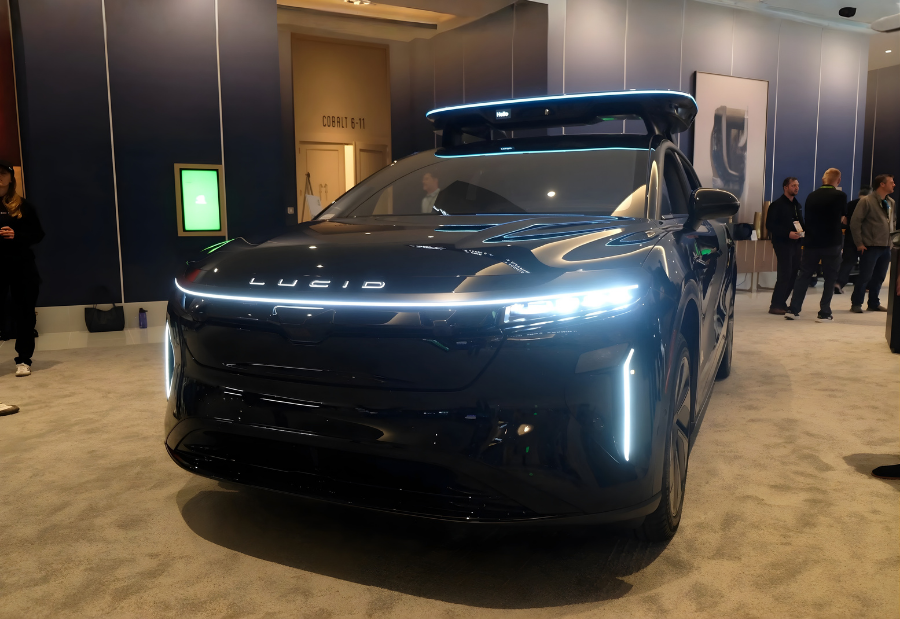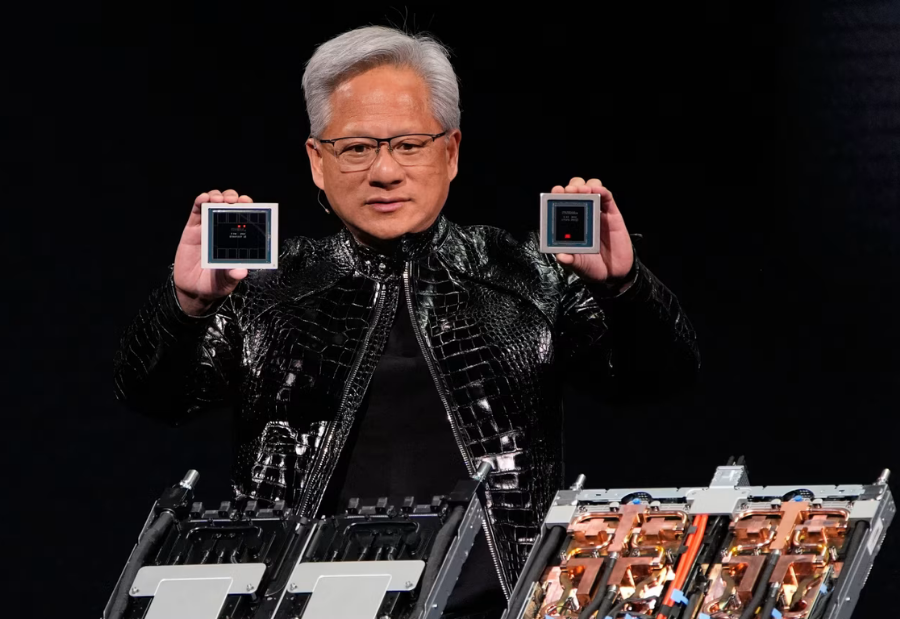
Nvidia on Monday introduced its latest artificial intelligence chip platform as the company works to protect its leadership in the fast growing AI hardware market. The announcement was made at a major global technology event in Las Vegas, where chief executive Jensen Huang delivered one of the most anticipated keynote addresses.
The California based company revealed its new Vera Rubin platform, which was first announced in September. With this launch, Nvidia aims to strengthen its dominance in the AI chip sector, where it currently controls an estimated 80 percent of the global market for data centre AI processors.
Despite its strong position, Nvidia is facing increasing pressure. Established chipmakers such as AMD and Intel are stepping up efforts to challenge its lead. At the same time, some of Nvidia’s largest customers, including Google, Amazon, and Microsoft, are developing their own chips to reduce reliance on external suppliers. Google has already trained its latest AI model, Gemini 3, without using Nvidia technology.
China is also pushing to create domestic alternatives to Nvidia products. This comes as United States export restrictions have limited access to advanced Nvidia chips, slowing parts of the Chinese technology sector.
Nvidia said products based on the Rubin platform will be available through partners in the second half of 2026. The company described the platform, named after American astronomer Vera Rubin, as a major shift from its previous AI architecture, Blackwell, which launched in late 2024.
According to Nvidia, the Rubin platform is expected to run five times more efficiently than earlier generations. Energy efficiency is becoming a critical factor as the power demands of large scale AI systems continue to rise.
The platform is made up of six chips that together form what Nvidia calls an AI supercomputer. Dion Harris, the company’s director of data centre and high performance computing, said these chips are designed to “meet the needs of the most advanced models and drive down the cost of intelligence.”
Since the release of ChatGPT in 2022, Nvidia has rapidly refreshed its product lineup. This fast pace of innovation has raised questions across the industry about whether companies building AI models can afford to keep upgrading their systems to stay competitive.
Also read: Viksit Workforce for a Viksit Bharat
Do Follow: The Mainstream formerly known as CIO News LinkedIn Account | The Mainstream formerly known as CIO News Facebook | The Mainstream formerly known as CIO News Youtube | The Mainstream formerly known as CIO News Twitter
About us:
The Mainstream is a premier platform delivering the latest updates and informed perspectives across the technology business and cyber landscape. Built on research-driven, thought leadership and original intellectual property, The Mainstream also curates summits & conferences that convene decision makers to explore how technology reshapes industries and leadership. With a growing presence in India and globally across the Middle East, Africa, ASEAN, the USA, the UK and Australia, The Mainstream carries a vision to bring the latest happenings and insights to 8.2 billion people and to place technology at the centre of conversation for leaders navigating the future.