Nvidia has added Chinese automakers BYD and Geely to its growing robotaxi ecosystem, marking a significant step in its push to strengthen its position in the global autonomous vehicle market.
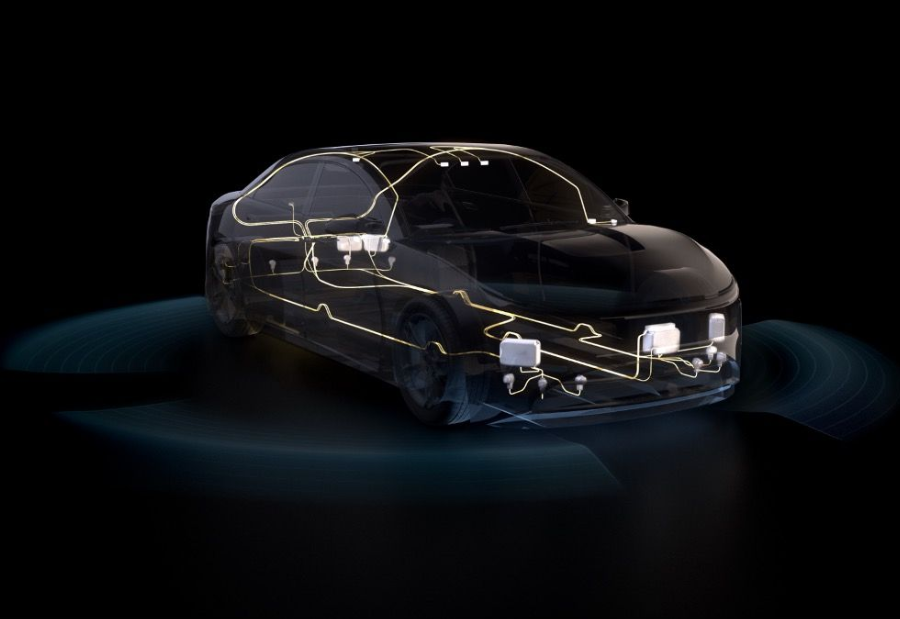
The announcement was made at Nvidia’s GTC conference, where the company revealed that BYD, Geely, Nissan, and Isuzu will adopt its Drive Hyperion platform. The platform integrates chips, computing systems, sensors, and software required to develop Level 4 autonomous vehicles.
BYD, which already uses Nvidia chips in its conventional vehicles, will now expand its partnership to build next-generation Level 4 autonomous cars using the Hyperion platform. Geely, on the other hand, is leveraging Nvidia’s Thor chips in its Zeekr vehicles and also supplies these vehicles to Waymo for its US robotaxi operations. Nvidia confirmed that Waymo uses its technology both in vehicles and in cloud infrastructure.
The collaboration comes at a time of ongoing trade tensions between the US and China, where Nvidia’s advanced chips have been a key point of negotiation. Despite geopolitical challenges, the company continues to deepen its presence in China’s fast-growing electric and autonomous vehicle markets.
China currently leads in electric vehicle production, while competition in the robotaxi segment remains more balanced. Companies like Baidu are already operating commercial robotaxis across multiple Chinese cities, while Waymo runs a fleet of around 3,000 vehicles across 10 US cities.
Nvidia’s partnerships with BYD and Geely are expected to accelerate the development of autonomous vehicles in China, potentially strengthening its position in the global race. The move also comes amid increasing pressure in the US to advance autonomous vehicle regulations to maintain technological leadership.
Beyond China, Nvidia is expanding its automotive footprint globally. Nissan will use the Hyperion platform alongside software from Wayve, while Isuzu is working with Tier IV to develop Level 4 autonomous buses powered by Nvidia’s Drive AGX Thor system.
The company is also collaborating with ride-hailing platforms. Lyft plans to use Nvidia’s technology to develop its own robotaxi services and enhance machine learning capabilities. Meanwhile, Nvidia’s partnership with Uber aims to deploy 100,000 robotaxis globally by 2027, with expansion across 28 markets by 2028.
Despite these developments, Nvidia’s automotive segment remains a small part of its overall business. In Q3 2025, the company reported total revenue of $51.2 billion, with its automotive division contributing $592 million, or 1.2%.
To address safety concerns in autonomous driving, Nvidia introduced Halos OS, a system designed to act as a safety layer. It is intended to intervene in critical situations and ensure vehicles can respond safely even if certain components fail.
With increasing adoption and partnerships, Nvidia is positioning itself as a key player in the evolving autonomous vehicle ecosystem.
Also read: Viksit Workforce for a Viksit Bharat
Do Follow: The Mainstream LinkedIn | The Mainstream Facebook | The Mainstream Youtube | The Mainstream Twitter
About us:
The Mainstream is a premier platform delivering the latest updates and informed perspectives across the technology business and cyber landscape. Built on research-driven, thought leadership and original intellectual property, The Mainstream also curates summits & conferences that convene decision makers to explore how technology reshapes industries and leadership. With a growing presence in India and globally across the Middle East, Africa, ASEAN, the USA, the UK and Australia, The Mainstream carries a vision to bring the latest happenings and insights to 8.2 billion people and to place technology at the centre of conversation for leaders navigating the future.