NASA is moving ahead with a new Mars mission that will use a nuclear-powered spacecraft for the first time, marking a major step in deep space exploration.
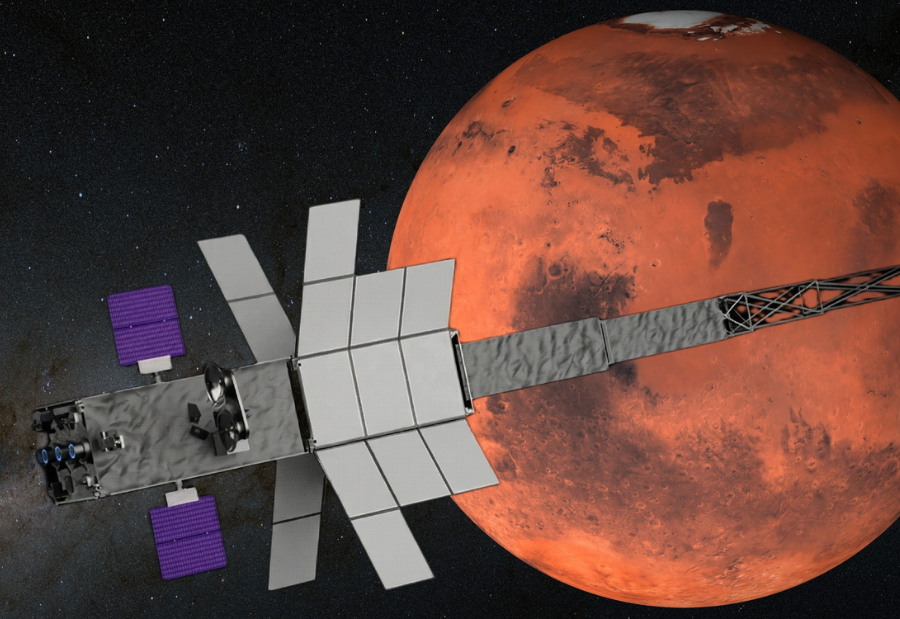
The mission, called Skyfall, is scheduled for launch in December 2028. It will send a fleet of small helicopters to Mars aboard a spacecraft named Space Reactor-1 (SR-1) Freedom, which will demonstrate nuclear electric propulsion (NEP).
NEP systems work like nuclear power plants, using a fission reactor to generate electricity. This energy powers highly efficient electric thrusters, making it different from radioisotope thermoelectric generators (RTGs), which have been used in earlier missions but do not provide propulsion.
NASA sees NEP as a key technology for future missions, as it can operate regardless of distance from the Sun. It could support long-duration missions, including lunar operations under the Artemis program and exploration of the outer solar system.
“SR-1 Freedom will establish flight-heritage nuclear hardware, set regulatory and launch precedent, and activate the industrial base for future fission power systems across propulsion, surface and long-duration missions,” NASA said in a statement.
The Skyfall mission will include 3 helicopters, similar to Ingenuity, which successfully completed 72 flights on Mars between April 2021 and January 2024. However, unlike Ingenuity, these helicopters will carry out specific scientific tasks.
“They will also map and characterize the subsurface water ice to find out where the water ice deposits are, along with the size, depth and other important characteristics,” said Steve Sinacore, program executive at NASA’s Space Reactors Office.
The helicopters will be equipped with cameras and ground-penetrating radar to study landing sites, assess terrain conditions, and support future human missions to Mars.
NASA expects the spacecraft to reach Mars about 1 year after launch. The agency is also exploring the possibility of extending the mission beyond Mars, allowing SR-1 Freedom to continue deeper into the solar system.
The announcement also included an update that NASA is pausing its Gateway moon-orbiting station plans to focus more on building a lunar surface base, with some Gateway components being repurposed.
Also read: Viksit Workforce for a Viksit Bharat
Do Follow: The Mainstream LinkedIn | The Mainstream Facebook | The Mainstream Youtube | The Mainstream Twitter
About us:
The Mainstream is a premier platform delivering the latest updates and informed perspectives across the technology business and cyber landscape. Built on research-driven, thought leadership and original intellectual property, The Mainstream also curates summits & conferences that convene decision makers to explore how technology reshapes industries and leadership. With a growing presence in India and globally across the Middle East, Africa, ASEAN, the USA, the UK and Australia, The Mainstream carries a vision to bring the latest happenings and insights to 8.2 billion people and to place technology at the centre of conversation for leaders navigating the future.