Quiet but critical work across NASA centres is shaping the future of human spaceflight, with one California-based facility playing a central role in improving safety, testing new technologies, and preparing astronauts for missions beyond the Moon.
NASA is drawing on expertise, infrastructure, and partnerships across its network to make the Artemis campaign and deep space exploration safer, more reliable, and more efficient. At NASA Armstrong Flight Research Center, contributions range from advanced flight testing to leadership of key technology programmes that support exploration goals.
The upcoming Artemis II mission is a demanding test flight. Lessons from it will help NASA return humans to the Moon on Artemis III and support future crewed missions to Mars.
As part of Artemis II preparations, NASA Armstrong technicians modified a Gulfstream G-III aircraft to collect heat shield data during the Orion spacecraft’s reentry. The aircraft will fly alongside others at different altitudes to capture detailed thermal protection imagery under NASA’s Scientifically Calibrated In-Flight Imagery project.
“Before the Artemis II mission begins, the aircraft will complete a dress rehearsal over the Pacific Ocean to verify the airborne system performance,” said Robert Navarro, NASA Armstrong support aircraft fleet project manager.
Technicians at NASA’s Johnson Space Center installed sensors and special windows for the mission, with support from NASA Armstrong teams. The heat shield itself was inspected at NASA’s Kennedy Space Center, where it was confirmed as a critical element for protecting astronauts during atmospheric reentry.
NASA Armstrong also supports the Orion heat shield spectrometer system, designed to gather shock layer radiation data during entry to enhance astronaut safety.
“There is nothing that can go to space or come back without going through the atmosphere, so our mission of atmospheric flight research and test is very relevant,” said Brad Flick, NASA Armstrong center director. “We specialize in testing technologies and working through the challenges of flight.”
The centre previously integrated and tested Orion’s launch abort systems, including Pad Abort-1 and Ascent Abort-2, proving astronauts could escape safely during emergencies.
“We proved the system could get the astronauts to safety,” said Cathy Bahm, project manager for NASA’s Low Boom Flight Demonstrator.
NASA Armstrong also manages the Flight Opportunities program, which tests emerging technologies on commercial vehicles. The program has advanced precision lunar landing systems, optical communications, and vibration isolation platforms. One laser-based system successfully transmitted data from more than 215 million miles away during a deep space demonstration.
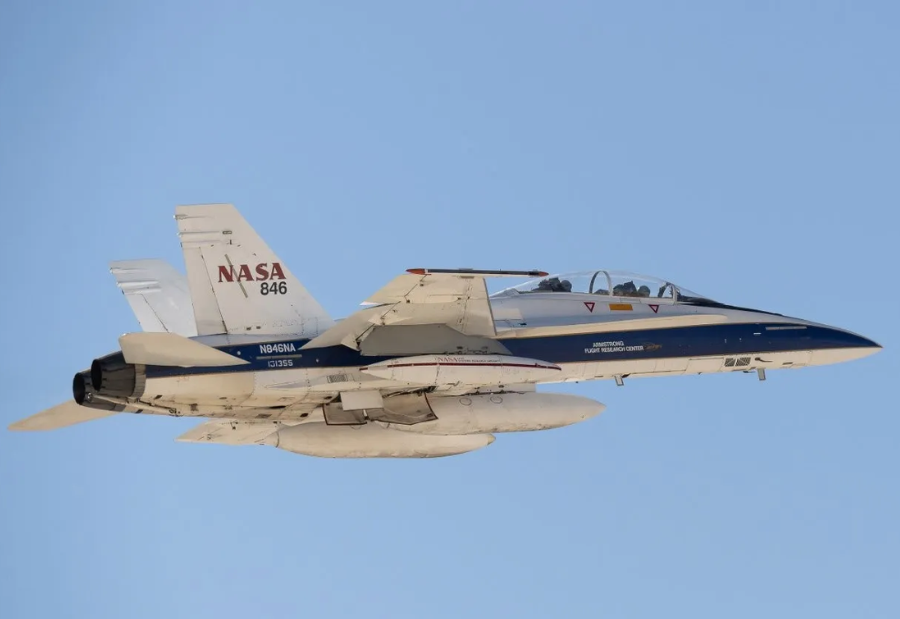
Additional work includes Doppler Lidar navigation tests on F/A-18 aircraft, cryogenic fiber optic sensing for in-space fuel production, autopilot testing for Mars trajectories, and documentation of Orion parachute tests.
Under the Artemis campaign, NASA aims to return humans to the Moon for scientific discovery, economic benefit, and preparation for future missions to Mars.
Also read: Viksit Workforce for a Viksit Bharat
Do Follow: The Mainstream formerly known as CIO News LinkedIn Account | The Mainstream formerly known as CIO News Facebook | The Mainstream formerly known as CIO News Youtube | The Mainstream formerly known as CIO News Twitter
About us:
The Mainstream is a premier platform delivering the latest updates and informed perspectives across the technology business and cyber landscape. Built on research-driven, thought leadership and original intellectual property, The Mainstream also curates summits & conferences that convene decision makers to explore how technology reshapes industries and leadership. With a growing presence in India and globally across the Middle East, Africa, ASEAN, the USA, the UK and Australia, The Mainstream carries a vision to bring the latest happenings and insights to 8.2 billion people and to place technology at the centre of conversation for leaders navigating the future.