India outlined an ambitious full-stack artificial intelligence strategy on Day 3 of the Global AI Impact Summit at Bharat Mandapam, positioning itself as a contender in the next phase of the global technology race.
The roadmap spans five strategic layers such as, applications, models, chips, infrastructure and energy. Speaking at the summit, IT Minister Ashwini Vaishnaw described the approach as a “whole-of-nation” strategy aimed at building a scalable and sovereign AI ecosystem. He emphasised that India’s focus is on practical AI deployment by improving enterprise productivity and addressing population-scale challenges in healthcare, agriculture and climate change.
Services Pivot to AI-Led Delivery
At the services layer, India’s IT majors are accelerating their transition toward AI-driven business models. Companies including Tata Consultancy Services, Infosys, Wipro, and HCLTech are embedding generative AI and agentic workflows into enterprise offerings. Collectively, the firms are reskilling over a million employees to align with AI-as-a-Service (AIaaS) opportunities.
Sovereign Models and Localisation Push
On the model layer, the government-backed BharatGen Param2, which is a 17-billion-parameter large language model supporting 22 Indian languages was launched at the summit. The initiative underscores India’s push for sovereign AI systems tailored to multilingual and domestic governance use cases.
Indigenous AI firms such as Sarvam AI and Krutrim are developing models optimised for Indic languages, document intelligence and cost-efficient inference. While global platforms such as OpenAI’s ChatGPT and Google’s Gemini retain scale advantages, India’s strategy is centred on localisation, affordability and data sovereignty.
Youth Participation and Practical AI Focus
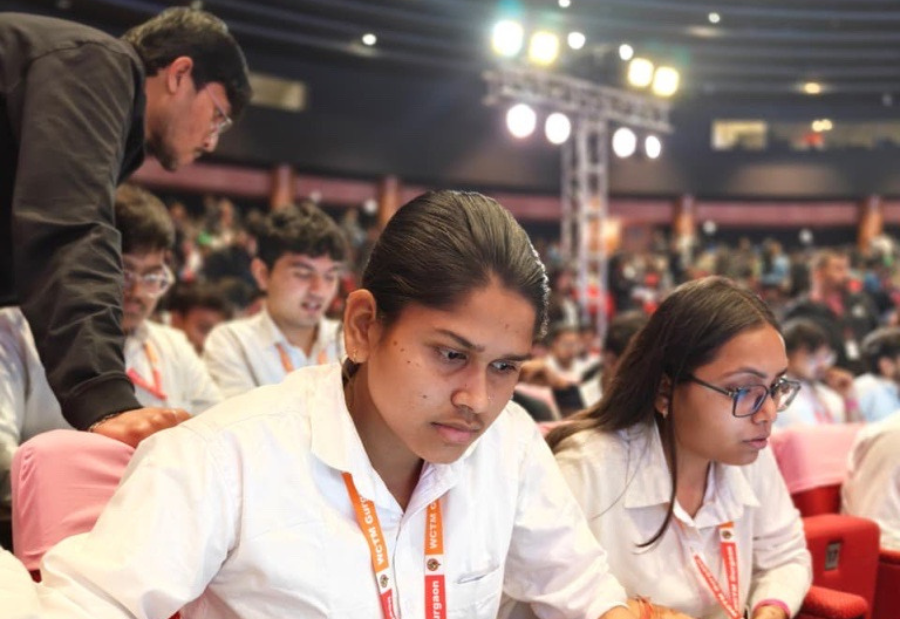
Vaishnaw also highlighted the strong turnout at the AI Expo, noting that nearly 2.5 lakh attendees, largely under the age of 30, participated across the exhibition area. He described the response as reflective of growing optimism among young Indians toward AI-driven opportunities. The minister reiterated that India is prioritising edge AI and real-world applications over abstract experimentation.
High-Level International Participation
Day 3 also witnessed significant international engagement.
Canada’s Minister for AI and Digital Innovation, Evan Solomon, is participating in the summit, with meetings scheduled to strengthen collaboration in artificial intelligence and emerging technologies. Sweden’s Deputy Prime Minister and Minister for Energy, Business and Industry, Ebba Busch, arrived in New Delhi, underscoring expanding India–Sweden cooperation across trade, innovation and climate-linked technologies. Spain’s Prime Minister, Pedro Sánchez, was welcomed by Minister of State for Skills Development and Entrepreneurship Jayant Singh. The visit is expected to provide momentum to India–Spain cooperation during their ongoing dual year of culture, tourism and AI.
Expo Controversy
However, the day was not without controversy. Sources indicated that Galgotias University was asked to vacate its stall at the expo following backlash over a robotic dog branded “Orion,” which critics identified as a rebranded Unitree Robotics Go2 model. The incident has sparked debate around transparency, authenticity and intellectual property standards within India’s emerging AI and robotics ecosystem.
Updates until 4 pm
Also read: Viksit Workforce for a Viksit Bharat
Do Follow: The Mainstream LinkedIn | The Mainstream Facebook | The Mainstream Youtube | The Mainstream Twitter
About us:
The Mainstream is a premier platform delivering the latest updates and informed perspectives across the technology business and cyber landscape. Built on research-driven, thought leadership and original intellectual property, The Mainstream also curates summits & conferences that convene decision makers to explore how technology reshapes industries and leadership. With a growing presence in India and globally across the Middle East, Africa, ASEAN, the USA, the UK and Australia, The Mainstream carries a vision to bring the latest happenings and insights to 8.2 billion people and to place technology at the centre of conversation for leaders navigating the future.