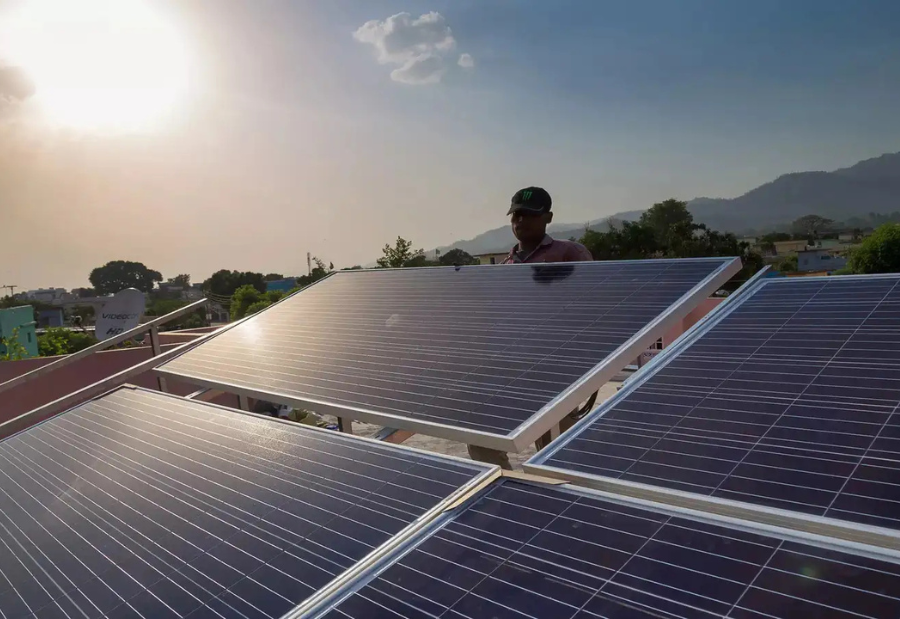
A quiet but significant shift is underway in how India powers its economy, one that is redefining the link between growth, energy, and climate action. India is electrifying its economy faster than China did at a comparable stage of development, driven largely by affordable and cleaner technologies.
India’s rapid electrification is helping meet rising energy demand while relying more on green solutions such as solar panels, batteries, and electric vehicles. This shift is changing long-held assumptions about development and could allow India to bypass the fossil-fuel-heavy path taken by many industrialising nations.
The trend was highlighted in an analysis led by Ember, a clean energy and green transition think tank. Researchers tracking global electricity use found that at an income level of around USD 11,000 per person, or nearly ₹10 lakhs, India is already consuming more electricity, including cleaner electricity, than China did at the same stage.
“India is taking a better path to the electro-tech future without the fossil fuel detour,” said Kingsmill Bond, Director and energy strategist at Ember.
Electrification refers to replacing direct fossil fuel use such as petrol, diesel, or coal with electricity across transport, cooking, heating, and industrial activity.
A major driver behind India’s faster progress is cost. Over the last decade, prices of solar panels, wind turbines, and lithium-ion batteries have fallen sharply. This was largely due to large-scale global manufacturing, especially in China, which made these technologies affordable for countries like India.
As a result, India is expanding power capacity without depending entirely on coal. Solar and wind energy are often cheaper than building new coal plants, particularly when fuel and pollution costs are included. This has enabled India to grow while reducing environmental damage.
Electrification is also visible in transport. While electric cars still form a small share of total vehicles, growth is strong. Around 5% of new car sales are now electric, while electric two-wheelers and buses are expanding even faster. India’s per-capita oil use for transport is far lower than China’s was at a similar point, showing that mobility needs are being met with less oil.
This transition matters because India imports a large share of its oil and gas. Cleaner, domestic power reduces exposure to global fuel price shocks, improves air quality, and lowers pollution in cities like Delhi. Coal will not disappear overnight, but future demand can increasingly be met by cleaner sources.
India’s experience shows that economic growth no longer needs to rely heavily on fossil fuels. If sustained, it could offer a model for other developing economies.
Also read: Viksit Workforce for a Viksit Bharat
Do Follow: The Mainstream formerly known as CIO News LinkedIn Account | The Mainstream formerly known as CIO News Facebook | The Mainstream formerly known as CIO News Youtube | The Mainstream formerly known as CIO News Twitter
About us:
The Mainstream is a premier platform delivering the latest updates and informed perspectives across the technology business and cyber landscape. Built on research-driven, thought leadership and original intellectual property, The Mainstream also curates summits & conferences that convene decision makers to explore how technology reshapes industries and leadership. With a growing presence in India and globally across the Middle East, Africa, ASEAN, the USA, the UK and Australia, The Mainstream carries a vision to bring the latest happenings and insights to 8.2 billion people and to place technology at the centre of conversation for leaders navigating the future.