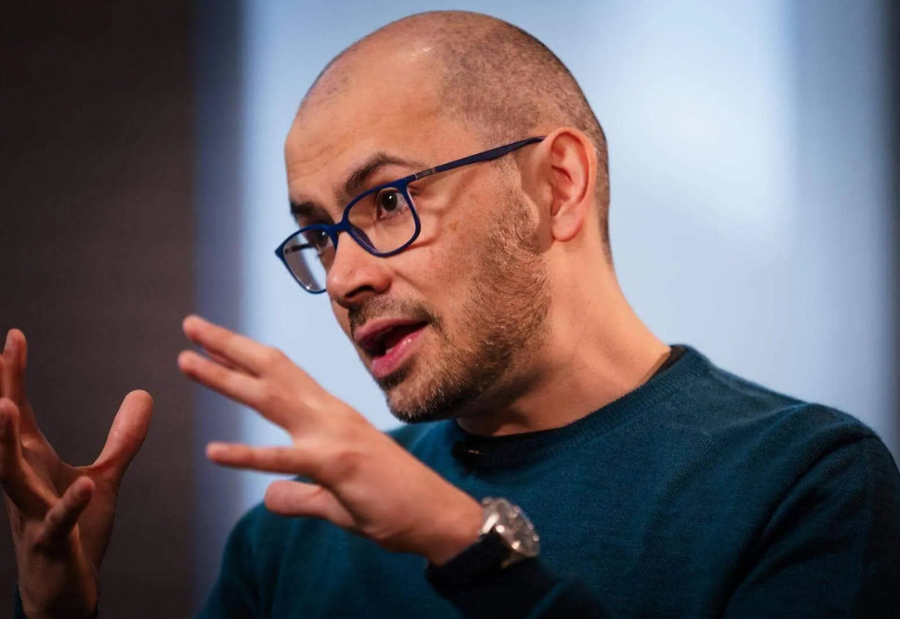
Demis Hassabis, the CEO of Google DeepMind, says China’s artificial intelligence capabilities are now far closer to Western standards than many expected. According to Hassabis, the CEO of Google DeepMind, Chinese AI models may be only months behind those developed in the US and other Western countries, marking a major shift from perceptions held just one or two years ago. Speaking on a recently launched technology podcast, Hassabis highlighted how fast China has progressed in advanced AI development.
“Maybe they’re only a matter of months behind at this point,” Hassabis said, noting that China has clearly shown it can catch up to the cutting edge. Hassabis pointed to the example of Chinese AI lab DeepSeek, which released a high performing model around a year ago that surprised markets by achieving strong results using less advanced chips and at lower costs. Since then, Hassabis said major technology companies such as Alibaba, along with startups like Moonshot AI and Zhipu, have introduced increasingly capable AI models.
However, Hassabis raised doubts about China’s ability to move beyond imitation. “The question is, can they innovate something new beyond the frontier?” Hassabis said. While Chinese firms can closely match leading AI models, Hassabis added that they have not yet demonstrated major scientific breakthroughs, such as creating a new transformer architecture. The transformer, developed by Google researchers in 2017, remains the foundation of most modern large language models powering today’s AI assistants.
Hassabis also pointed to structural challenges facing Chinese AI development, especially access to advanced chips. US export restrictions limit China’s access to top Nvidia semiconductors needed to train the most advanced AI systems. While approvals may allow sales of Nvidia’s H200 chip, Hassabis noted that it still falls short of the company’s most powerful products. Domestic chipmakers like Huawei are working to fill the gap, but analysts believe performance differences could widen as US infrastructure scales faster.
Even Chinese executives acknowledge the difficulty. Alibaba’s Qwen technical lead reportedly said there is less than a 20% chance a Chinese firm will surpass US tech leaders in the next 3 to 5 years, citing much larger US computing infrastructure. Hassabis believes the deeper issue is mindset rather than hardware, comparing DeepMind to a modern research lab focused on exploration. As Hassabis put it, “To invent something is about a hundred times harder than it is to copy it.”
Also read: Viksit Workforce for a Viksit Bharat
Do Follow: The Mainstream formerly known as CIO News LinkedIn Account | The Mainstream formerly known as CIO News Facebook | The Mainstream formerly known as CIO News Youtube | The Mainstream formerly known as CIO News Twitter
About us:
The Mainstream is a premier platform delivering the latest updates and informed perspectives across the technology business and cyber landscape. Built on research-driven, thought leadership and original intellectual property, The Mainstream also curates summits & conferences that convene decision makers to explore how technology reshapes industries and leadership. With a growing presence in India and globally across the Middle East, Africa, ASEAN, the USA, the UK and Australia, The Mainstream carries a vision to bring the latest happenings and insights to 8.2 billion people and to place technology at the centre of conversation for leaders navigating the future.