A major shift is underway in India’s defence propulsion strategy. Gas Turbine Research Establishment under Defence Research and Development Organisation has issued an Expression of Interest to select a Development-cum-Production Partner for an Indigenous Advanced High Thrust Class Aero Engine. The move aims to build a full national ecosystem for military aero engines, covering design translation, manufacturing, integration, and long-term support.
The programme will be executed with support from an international engine house, while design control and manufacturing depth will be progressively indigenised. GTRE will remain the design authority. The selected partner will act as the main industrial execution agency, converting GTRE’s engineering into flight-ready hardware.
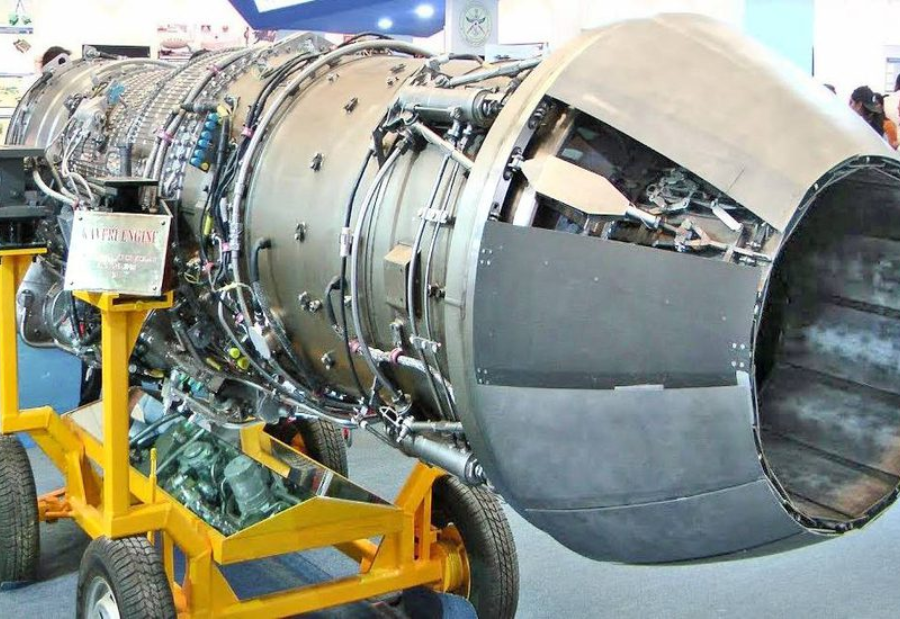
The engine scope includes all major turbofan modules: low-pressure and high-pressure compressors, combustor, high-pressure and low-pressure turbines, exhaust cone, afterburner, rotor support systems, and exhaust nozzle. It also covers key subsystems such as gearbox, oil and fuel systems, actuators, and FADEC units.
The plan involves delivery of 18 complete engines over a 10-year period and production of about 2,300 components and sub-assemblies. Capability is expected to grow from part manufacturing to full engine assembly, validation, and sustainment.
GTRE has defined a 4-phase execution model:
- Design phase: Preparation of 2D drawings, 3D models, design updates, tooling concepts, and manufacturing routes.
- Manufacturing planning phase: Process sheets, digital mock-ups, assembly layouts, inspection strategies, and alignment with NADCAP standards.
- Manufacturing phase: Component and module production, raw material management, inspection, and subsystem validation.
- Assembly and integration phase: Engine assembly bays, balancing, instrumentation, testing, and final build-up with certification agencies.
The DcPP will handle production engineering, tooling, quality control, certification coordination with CEMILAC, DGAQA, and TAA, and full lifecycle documentation.
Required infrastructure includes multi-axis CNC machining, EDM, electron beam welding, laser processing, coatings, heat treatment, and vacuum furnaces. Special processes listed include thermal barrier coatings, plasma spraying, EB-PVD, vacuum brazing, diffusion bonding, nitriding, carburising, and powder metallurgy. Inspection must cover CMMs, ultrasonic testing, radiography, eddy current, penetrant testing, and surface metrology.
Engine deliveries are planned to begin around year 7 after contract signing, with gradual ramp-up. The Ministry of Defence has also indicated a future production order of up to 200 engines, subject to success.
Selection will be based on financial strength, technical capability, manufacturing depth, assembly and inspection systems, and special process approvals. Only Indian defence and aerospace firms with aero-engine or turbomachinery experience are eligible.
All intellectual property will remain with the Government of India or jointly with the partner, ensuring sovereign control.
The AHTCE programme marks a shift from lab-based development to a national industrial mission. If executed as planned, it could define India’s ability to close its most critical aerospace capability gap.
Also read: Viksit Workforce for a Viksit Bharat
Do Follow: The Mainstream formerly known as CIO News LinkedIn Account | The Mainstream formerly known as CIO News Facebook | The Mainstream formerly known as CIO News Youtube | The Mainstream formerly known as CIO News Twitter
About us:
The Mainstream is a premier platform delivering the latest updates and informed perspectives across the technology business and cyber landscape. Built on research-driven, thought leadership and original intellectual property, The Mainstream also curates summits & conferences that convene decision makers to explore how technology reshapes industries and leadership. With a growing presence in India and globally across the Middle East, Africa, ASEAN, the USA, the UK and Australia, The Mainstream carries a vision to bring the latest happenings and insights to 8.2 billion people and to place technology at the centre of conversation for leaders navigating the future.