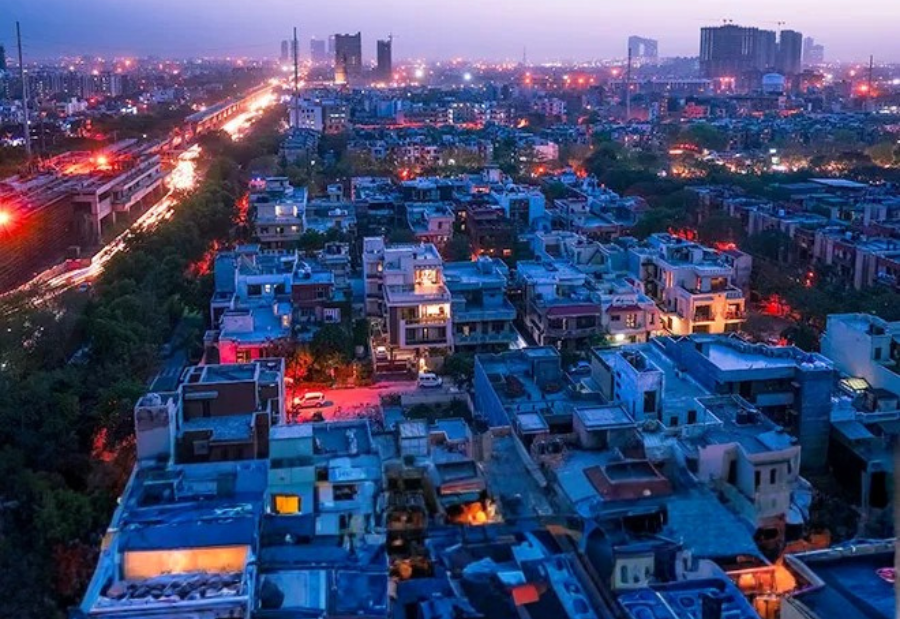
A new urban development strategy is taking shape as the government moves to build globally competitive city clusters across India.
In the Union Budget, Finance Minister Nirmala Sitharaman announced the creation of 7 city economic regions. Each region will receive Rs 5,000 crore over 5 years to support growth in infrastructure, real estate, and logistics.
While presenting the Budget, the Finance Minister said cities are the engines of India’s growth, innovation, and opportunity.
The proposed city economic regions include Bengaluru, Surat, and Varanasi. Other regions named in the Budget are Bhubaneswar-Puri-Cuttack, Coimbatore-Erode-Tiruppur, and Pune. Allocation has also been proposed for Visakhapatnam.
The Budget also proposes more than Rs 2,000 crore for 2 new schemes: City Economic Regions and Regional Medical Hubs. These schemes are designed to strengthen urban ecosystems and improve access to healthcare and economic infrastructure.
The government expects the initiative to support medium-term growth in real estate, logistics, and core infrastructure. By linking multiple cities into economic regions, the plan aims to create stronger business corridors and improve regional competitiveness.
Officials believe these clusters will help distribute growth beyond a few major metros and encourage balanced development across states. The focus will be on improving connectivity, upgrading urban services, and creating conditions for sustained private investment.
With dedicated funding and long-term planning, the city economic regions are expected to emerge as key drivers of India’s urban and economic transformation.
Also read: Viksit Workforce for a Viksit Bharat
Do Follow: The Mainstream formerly known as CIO News LinkedIn Account | The Mainstream formerly known as CIO News Facebook | The Mainstream formerly known as CIO News Youtube | The Mainstream formerly known as CIO News Twitter
About us:
The Mainstream is a premier platform delivering the latest updates and informed perspectives across the technology business and cyber landscape. Built on research-driven, thought leadership and original intellectual property, The Mainstream also curates summits & conferences that convene decision makers to explore how technology reshapes industries and leadership. With a growing presence in India and globally across the Middle East, Africa, ASEAN, the USA, the UK and Australia, The Mainstream carries a vision to bring the latest happenings and insights to 8.2 billion people and to place technology at the centre of conversation for leaders navigating the future.