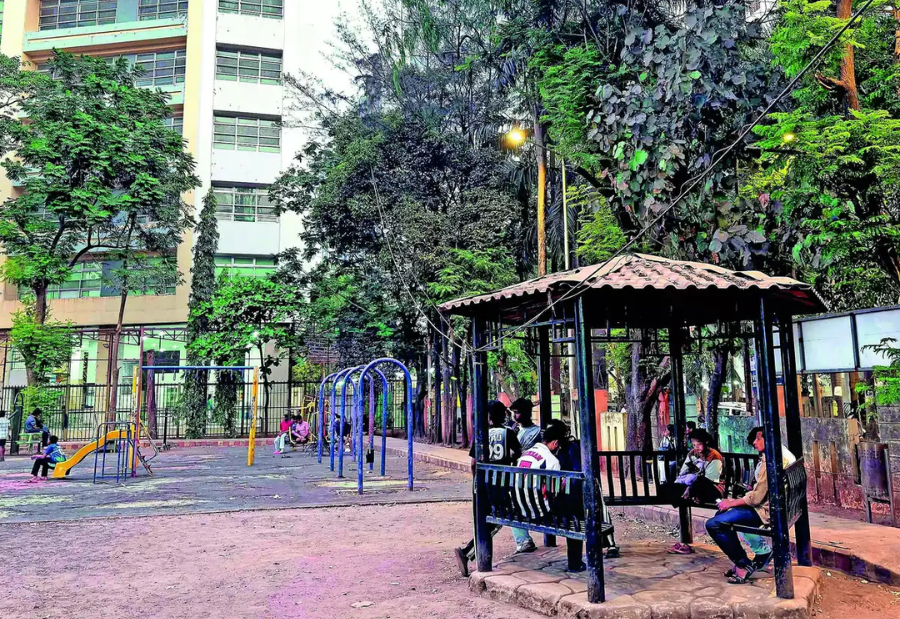
In an effort to tackle increasing pollution levels, the Brihanmumbai Municipal Corporation (BMC) has announced a bamboo plantation initiative across several parts of the city. The civic body plans to carry out the drive at more than 20 locations, mainly in the eastern suburbs including Chunabhatti and Chembur.
The project is estimated to cost over Rs 1.5 crore, and the BMC has already invited 12 tenders to implement the initiative.
According to civic officials, bamboo was selected because of its environmental and structural benefits. “The idea of bamboo plantation was proposed to address pollution. It also has economic benefits. Bamboo conserves and holds soil and does not easily fall. We will use local species,” a civic official said.
However, environmental experts have raised concerns about the ecological impact of introducing bamboo plantations without proper planning. While bamboo is widely known for its fast growth and ability to increase green cover, experts caution that large-scale plantation without studying local ecosystems may harm biodiversity.
They warn that plantation drives carried out without scientific evaluation of local habitats can alter soil composition, disrupt existing vegetation patterns and crowd out native plant species. If bamboo is planted extensively as a single-species plantation, it could result in monoculture, which weakens ecosystem resilience and reduces biodiversity.
“Plantation drives cannot be carried out in a blanket or random manner. If bamboo is introduced without studying the local habitat and existing vegetation, it can negatively impact biodiversity,” an environmental expert said.
Experts stress that urban greening initiatives should prioritise native plant species and ecological balance rather than focusing solely on increasing green cover.
Avinash Kubal, conservationist and former deputy director of the Maharashtra Nature Park Society in Dharavi, said the civic body should explain the scientific basis for choosing bamboo.
He noted that while bamboo is one of the fastest-growing plants, it thrives only under suitable environmental conditions and requires adequate space. “India has around 267 bamboo species, so selecting the appropriate variety is crucial,” Kubal said.
Kubal also pointed out that many bamboo varieties have dense foliage, which can create maintenance challenges in densely built urban areas with paved surfaces. However, he said bamboo can be effective in gardens and landscaped spaces.
According to Kubal, Mumbai’s climate supports bamboo growth and the plant can enhance the city’s aesthetics. However, he added that bamboo alone would not significantly reduce air pollution. “Mumbai’s pollution largely consists of dust and particulate matter. Bamboo absorbs carbon dioxide but is not very effective in controlling dust,” he explained.
Despite this, bamboo plantations may still provide environmental benefits. They can help reduce temperatures, retain soil moisture, reduce noise pollution and provide shelter for small birds such as sparrows and munias.
Urban horticulture expert Vaibhav Raje also cautioned against planting only bamboo across multiple locations. “If only bamboo is planted across locations, it becomes monoculture, which has its side effects. If any disease affects bamboo, it can destroy all plantations. There should be a variety of species because different organisms depend on different trees to survive,” he said.
Data shows that dust from construction activities and roads contributes about 40% of Mumbai’s pollution, while vehicle emissions account for approximately 25–28%.
Conservationist and environmental educator Kedar Gore said the key question should not only be about planting bamboo but about selecting appropriate plant species.
He explained that while all plants absorb carbon dioxide, it is important to ensure that species introduced in urban plantations are native to India. In many cases, bamboo plantations include exotic varieties that can create ecological imbalances.
Gore also warned against monoculture plantations and recommended a mix of species for urban greening. “Bamboo leaves are narrow, while several native trees with broader leaves provide greater ecological benefits in urban areas,” he said.
He added that Mumbai has several environmental experts who can advise authorities on suitable plant species for the city’s ecosystem.
Gore noted that bamboo is technically a grass and can be useful in certain situations. However, he emphasised that it should not become the main plantation strategy. “Maintaining biodiversity through a mix of native species is far more important,” he said.
Also read: Viksit Workforce for a Viksit Bharat
Do Follow: The Mainstream LinkedIn | The Mainstream Facebook | The Mainstream Youtube | The Mainstream Twitter
About us:
The Mainstream is a premier platform delivering the latest updates and informed perspectives across the technology business and cyber landscape. Built on research-driven, thought leadership and original intellectual property, The Mainstream also curates summits & conferences that convene decision makers to explore how technology reshapes industries and leadership. With a growing presence in India and globally across the Middle East, Africa, ASEAN, the USA, the UK and Australia, The Mainstream carries a vision to bring the latest happenings and insights to 8.2 billion people and to place technology at the centre of conversation for leaders navigating the future.