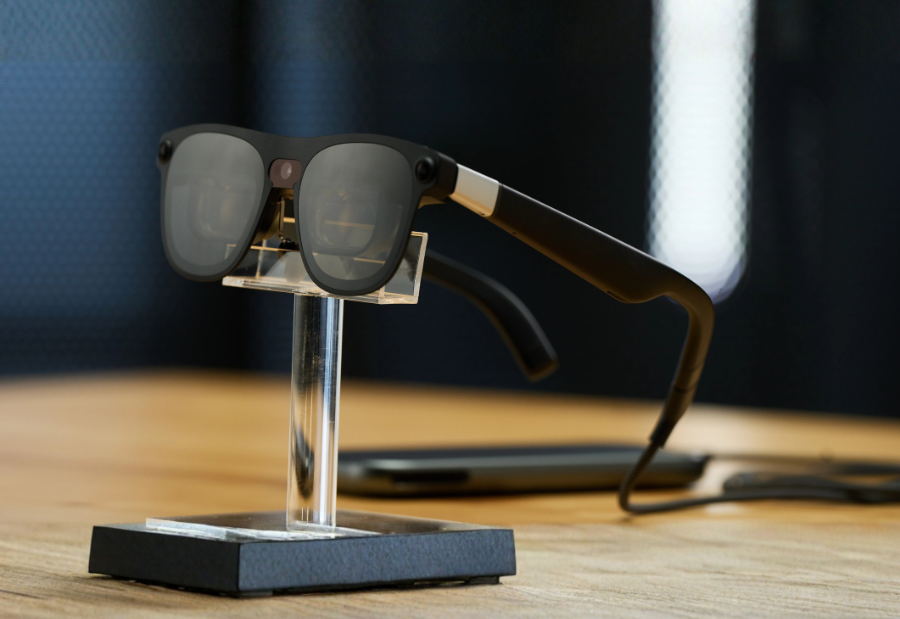
Google has revealed a first look at Project Aura, its upcoming pair of AI powered smart glasses built on the new Android XR platform. The company confirmed that the device is planned for commercial release in 2026. The project represents Google’s renewed effort to strengthen its position in the expanding XR and smart glasses market, where rivals such as Meta and Samsung are moving quickly.
Project Aura was first shown during Google I O and is being developed in partnership with Xreal, a company known for its lightweight augmented reality displays. Through this collaboration, Google aims to design glasses that can be used comfortably every day while offering immersive digital interactions. The preview highlights Google’s intention to use the wider Android ecosystem to bring together wearables, mobile devices, and spatial computing.
The device looks similar to a pair of large sunglasses but features a clear difference. The glasses are connected by a cable to a small battery pack. According to a well known publication, Google describes the design as wired XR glasses. The external battery pack powers the glasses and also works as a touch enabled trackpad, giving users an extra way to interact without increasing the weight of the frames.
A key feature that separates Project Aura from most smart glasses is its operating system. The glasses run on Android XR, which is also used in the recently launched Samsung Galaxy XR headset. This shared platform means Project Aura can run any feature or application created for the Galaxy XR without developers having to rebuild software for the glasses. This compatibility could help encourage faster adoption by giving users an existing collection of XR ready apps from the start.
The announcement comes at a time when Meta’s Ray Ban range is receiving wide attention for combining style with AI features. Google is positioning Aura differently by focusing on productivity, contextual support, and immersive workspace tools rather than social features or camera functions. The glasses include a confirmed seventy degree field of view with optical see through projection, allowing digital information to blend naturally into the user’s real world view. Instead of animated objects, Aura aims to offer more useful overlays such as cooking instructions, multitasking layouts, or visual guides that integrate with the surroundings. Google describes the experience as a portable workspace designed to move beyond traditional augmented reality visuals.
Cross platform access is also part of the plan. The XR glasses will support iOS, allowing iPhone users to access the complete Gemini AI experience. This is unusual in a market where XR devices are usually limited to one brand’s ecosystem. While Google has not shared pricing or final hardware details, the preview shows that Project Aura is built around interoperability, developer friendliness, and practical everyday use. As Google prepares for its 2026 release, Project Aura could become a strong competitor in the next phase of AI driven wearable devices.
Also read: Viksit Workforce for a Viksit Bharat
Do Follow: The Mainstream formerly known as CIO News LinkedIn Account | The Mainstream formerly known as CIO News Facebook | The Mainstream formerly known as CIO News Youtube | The Mainstream formerly known as CIO News Twitter
About us:
The Mainstream is a premier platform delivering the latest updates and informed perspectives across the technology business and cyber landscape. Built on research-driven, thought leadership and original intellectual property, The Mainstream also curates summits & conferences that convene decision makers to explore how technology reshapes industries and leadership. With a growing presence in India and globally across the Middle East, Africa, ASEAN, the USA, the UK and Australia, The Mainstream carries a vision to bring the latest happenings and insights to 8.2 billion people and to place technology at the centre of conversation for leaders navigating the future.