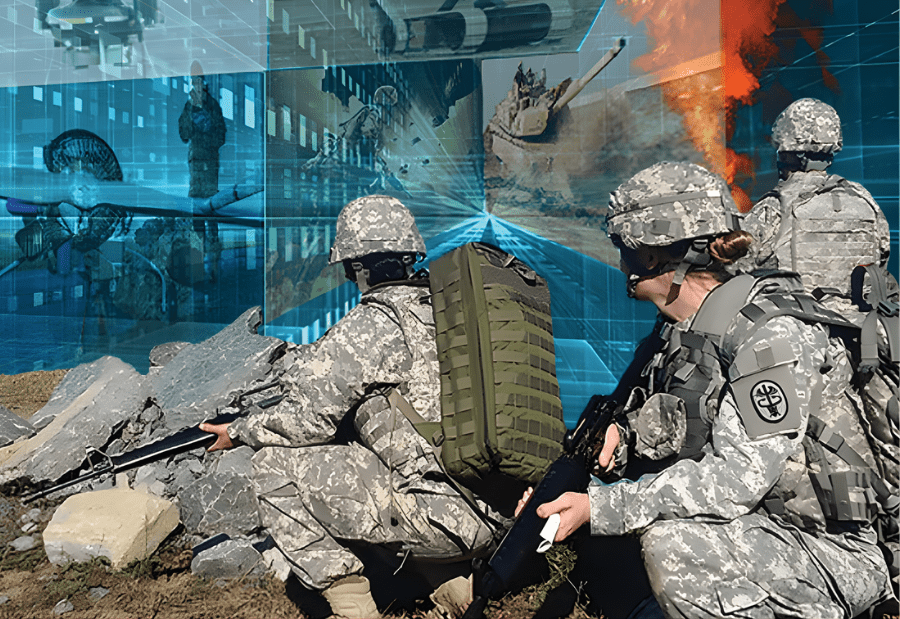
A new phase of military competition is unfolding as countries rapidly advance artificial intelligence-powered weapons, raising concerns about global security and control.
At a military parade in Beijing in September, President Xi Jinping, along with President Vladimir Putin and Kim Jong Un, witnessed drones capable of flying autonomously alongside fighter jets. The display triggered concern in the United States, where officials believe China’s unmanned combat drone programme is ahead. Russia is also seen as progressing in building advanced drone production facilities.
In response, the United States has accelerated efforts. A defense startup has begun producing AI-powered self-flying drones ahead of schedule to close the gap. These developments highlight a growing global race to build autonomous military systems that can operate with minimal human involvement.
Countries are now developing drones that can identify and strike targets independently, fighter jets that coordinate attacks, and AI systems that analyse intelligence and recommend strike decisions. The United States and China remain central to this competition, but nations like Russia, Ukraine, India, Israel, Iran, France, Germany, Britain, and Poland are also investing heavily.
Russia, China, and the United States are building these capabilities for deterrence and “mutually assured destruction.” The situation is often compared to the nuclear arms race of the 1940s, though AI’s full impact is still not fully understood. Unlike humans, AI systems can operate continuously, making warfare faster and less predictable.
“whoever leads in AI “will become the ruler of the world.”
“accelerate like hell.”
Governments are investing billions. The United States has requested over $13 billion for autonomous systems, while China is driving private sector participation through incentives. Russia is using ongoing conflicts to test and refine its AI-driven systems.
The role of startups and private companies has also increased. AI technology is becoming widely accessible, allowing more countries to develop advanced capabilities. However, global agreements remain limited. A 2024 understanding between the United States and China focuses only on maintaining human control over nuclear decisions, with no broader commitments.
Experts warn that the speed of AI systems could lead to unintended escalation. In simulated scenarios, autonomous responses have triggered unexpected counterattacks, raising concerns about loss of human control.
“There is a risk of an escalatory spiral where we’re in danger of fielding untested, unsafe and unproven systems if we’re not careful, because we each feel like the other side is hiding something from us,”.
Also read: Viksit Workforce for a Viksit Bharat
Do Follow: The Mainstream LinkedIn | The Mainstream Facebook | The Mainstream Youtube | The Mainstream Twitter
About us:
The Mainstream is a premier platform delivering the latest updates and informed perspectives across the technology business and cyber landscape. Built on research-driven, thought leadership and original intellectual property, The Mainstream also curates summits & conferences that convene decision makers to explore how technology reshapes industries and leadership. With a growing presence in India and globally across the Middle East, Africa, ASEAN, the USA, the UK and Australia, The Mainstream carries a vision to bring the latest happenings and insights to 8.2 billion people and to place technology at the centre of conversation for leaders navigating the future.