Perplexity AI chief Aravind Srinivas says disruption could spur entrepreneurship and reshape work.
The chief executive of Perplexity AI has said job losses caused by artificial intelligence could create new opportunities, as workers and businesses adapt to a rapidly changing labour market.
Aravind Srinivas said advances in AI are likely to displace roles that rely on repetitive or routine tasks, but argued the shift should be viewed as a transition rather than a long-term crisis. He suggested the technology could enable more people to pursue independent work and entrepreneurial ventures.
Disruption and opportunity
Srinivas said AI tools are lowering the barriers to building products and services, allowing individuals to achieve outcomes that previously required large teams. This, he said, could accelerate the rise of small businesses and solo founders.
He added that many workers are already dissatisfied with their roles, and that disruption may encourage them to explore alternative career paths, including self-employment and creative industries.
Concerns over displacement
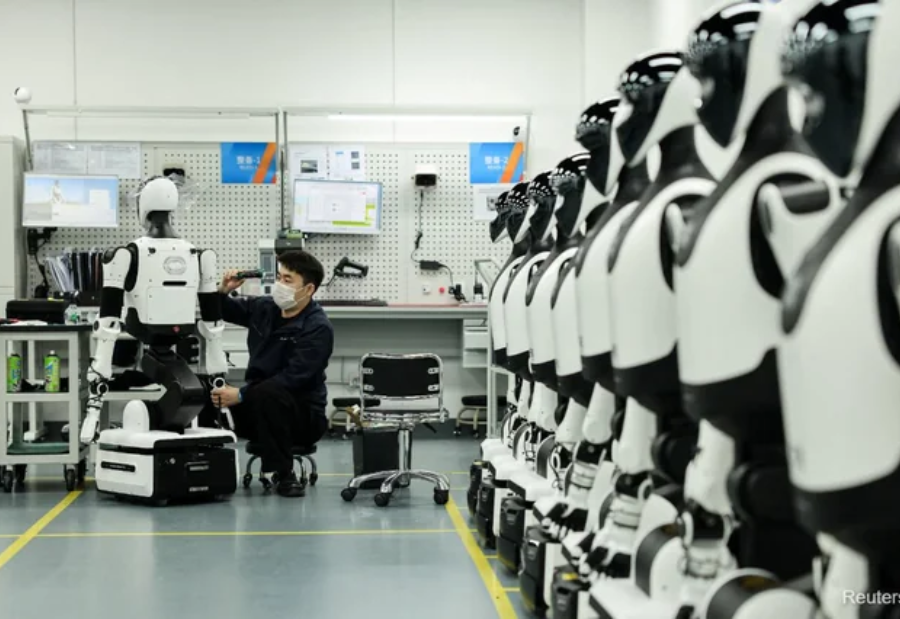
The remarks come amid growing concern over the pace at which AI systems can perform tasks such as customer service, coding and content creation. Critics warn that automation could lead to significant job displacement, particularly in sectors dependent on routine work.
Economists have cautioned that while new opportunities may emerge, the transition could be uneven. Workers may require reskilling and institutional support to adapt to evolving job demands.
A shifting definition of work
Srinivas’ comments reflect a broader shift in how work is being redefined in the AI era. Rather than replacing human effort entirely, AI may reshape employment structures, favouring flexible, project-based and independent roles.
Technology companies are increasingly integrating AI into workflows while balancing productivity and workforce stability. At the same time, policymakers face pressure to introduce safeguards that address job disruption without slowing innovation.
Future shaped by adaptation
As AI adoption accelerates, debate over its economic and social impact is expected to intensify. While some leaders highlight risks, others argue the long-term outcome could be more empowering if workers and institutions adapt effectively.
The coming years are likely to determine whether AI-driven disruption leads to widespread opportunity or deeper inequality in the global workforce.
Also read: Viksit Workforce for a Viksit Bharat
Do Follow: The Mainstream LinkedIn | The Mainstream Facebook | The Mainstream Youtube | The Mainstream Twitter
About us:
The Mainstream is a premier platform delivering the latest updates and informed perspectives across the technology business and cyber landscape. Built on research-driven, thought leadership and original intellectual property, The Mainstream also curates summits & conferences that convene decision makers to explore how technology reshapes industries and leadership. With a growing presence in India and globally across the Middle East, Africa, ASEAN, the USA, the UK and Australia, The Mainstream carries a vision to bring the latest happenings and insights to 8.2 billion people and to place technology at the centre of conversation for leaders navigating the future.