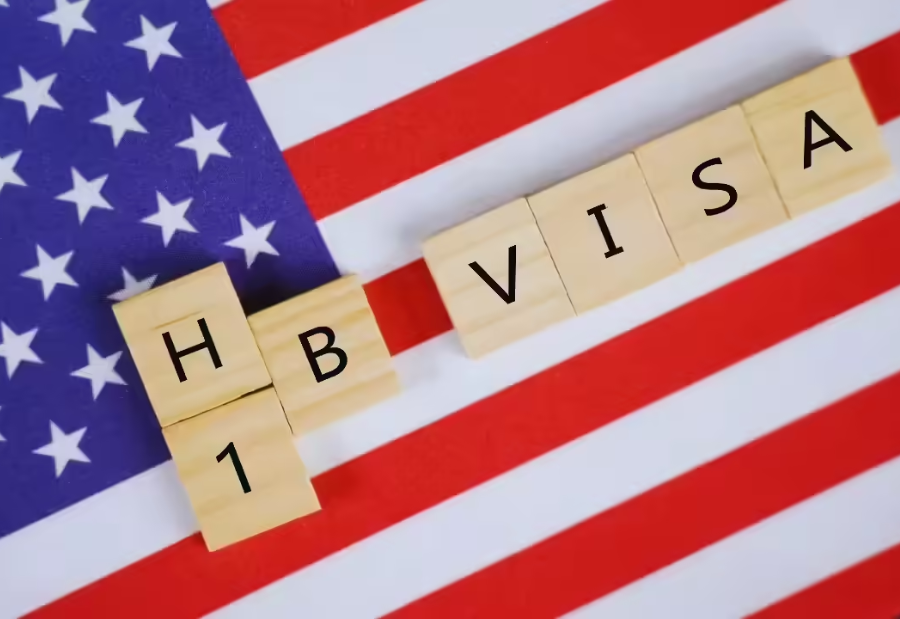
Public universities in Florida have temporarily halted the hiring of new employees under the H-1B visa program, joining Texas, which recently introduced similar restrictions.
The decision comes months after Florida Governor Ron DeSantis called for stronger scrutiny of the program in higher education. The pause applies only to new hires across the 12 universities that form the State University System of Florida.
The Florida Board of Governors, which oversees the state’s public university system, voted to keep the temporary suspension in place until January 5, 2027.
Ray Rodrigues, chancellor of the State University System of Florida, said the pause would allow authorities to review the program’s costs and evaluate how it is being used by universities.
The suspension will not affect employees currently working under H-1B visas at Florida universities, but it will impact prospective foreign faculty and staff seeking new positions through the program.
According to data from the US Citizenship and Immigration Services, more than 600 individuals received H-1B visa approvals through the 12 Florida public universities last year.
Governor’s remarks on visa use
In October, Governor DeSantis criticized the use of the H-1B visa program by universities.
“Universities across the country are importing foreign workers on H-1B visas instead of hiring Americans who are qualified and available to do the job. We will not tolerate H-1B abuse in Florida institutions. That’s why I have directed the Florida Board of Governors to end this practice.”
He also said that US universities were “importing foreign workers on H-1B visas instead of hiring Americans who are qualified and available to do the job.”
What the H-1B visa program allows
The H-1B visa program enables employers in the United States to hire highly skilled professionals in specialized occupations, particularly in fields such as science, technology, engineering, and mathematics (STEM).
Each year, the program allows for 65,000 visas, along with an additional 20,000 visas for applicants who hold advanced degrees. Approved visas typically allow professionals to work in the US for 3 to 6 years.
Texas introduced similar action earlier
Earlier this year, Texas Governor Greg Abbott ordered an investigation into the H-1B visa program in the state and directed government agencies and universities to pause new visa petitions.
“In light of recent reports of abuse in the federal H-1B visa program, and amid the federal government’s ongoing review of that program to ensure American jobs are going to American workers, I am directing all state agencies to immediately freeze new H-1B visa petitions,” Abbott wrote in a letter to state agencies.
Also read: Viksit Workforce for a Viksit Bharat
Do Follow: The Mainstream LinkedIn | The Mainstream Facebook | The Mainstream Youtube | The Mainstream Twitter
About us:
The Mainstream is a premier platform delivering the latest updates and informed perspectives across the technology business and cyber landscape. Built on research-driven, thought leadership and original intellectual property, The Mainstream also curates summits & conferences that convene decision makers to explore how technology reshapes industries and leadership. With a growing presence in India and globally across the Middle East, Africa, ASEAN, the USA, the UK and Australia, The Mainstream carries a vision to bring the latest happenings and insights to 8.2 billion people and to place technology at the centre of conversation for leaders navigating the future.