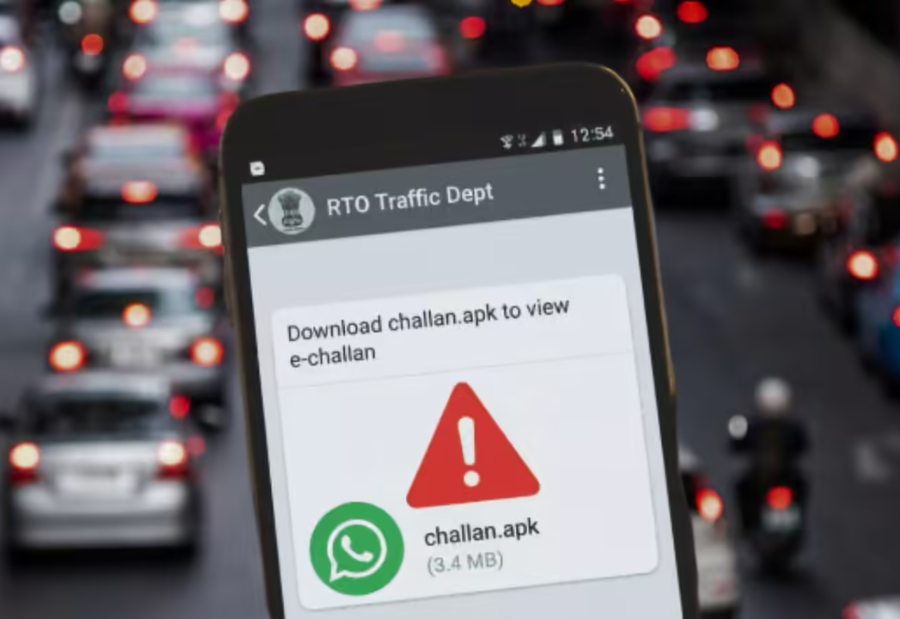
A growing number of people are falling prey to fake traffic challan messages that use fear and urgency to steal money. These fraudulent alerts are being sent through SMS, WhatsApp, and email, and closely resemble official government notices. Victims are directed to fake payment pages where their financial details are misused.
The risk of such scams was highlighted by a recent case reported from east Delhi.
Delhi senior citizen loses over ₹2.49 lakh in fake challan scam
As reported by a business daily, a 65-year-old man from Laxmi Nagar received a message on his wife’s phone claiming there was a pending traffic challan of ₹500. The message came from an unknown number and included a payment link.
Believing it to be genuine, the man clicked the link and attempted to pay using his credit card. While the ₹500 transaction appeared successful, another ₹2,49,246.61 was deducted soon after, including an amount charged in Saudi riyals. Cyber police later confirmed that the money was routed through an international transaction channel.
How fake traffic challan scams work
Cybercriminals design these messages to look official and urgent. Common elements include:
Claims of unpaid traffic fines
Use of government-style language and logos
Payment links or QR codes offering “instant payment”
Fake websites that closely mimic the Parivahan portal
Attempts to collect card and banking details
How these messages reach victims
Fake challan notices are commonly sent through SMS, WhatsApp, or PDF attachments. This method increases trust and pushes users to act quickly without verification.
Warning signs you should not ignore
Police advise caution if a message includes:
Unknown or suspicious links
Requests for OTP, CVV, or card details
Threats of licence suspension or legal action
Missing challan numbers or vehicle details
Payment requests via third-party apps
Website links not ending with .gov.in
How to verify traffic challans safely
To stay protected:
Check challans only on https://parivahan.gov.in
Use your vehicle registration or driving licence number
Do not click links sent via SMS or WhatsApp
Avoid making payments on unfamiliar websites
Never share banking or card information
Authorities stress that government departments do not request payments through personal messages.
What to do if you are scammed
Act fast. The first 60 minutes, known as the “golden hour”, can reduce losses:
Call the National Cyber Crime Helpline at 1930
File a complaint at cybercrime.gov.in
Inform your bank or card issuer immediately
Block the card and request a chargeback
Also read: Viksit Workforce for a Viksit Bharat
Do Follow: The Mainstream formerly known as CIO News LinkedIn Account | The Mainstream formerly known as CIO News Facebook | The Mainstream formerly known as CIO News Youtube | The Mainstream formerly known as CIO News Twitter
About us:
The Mainstream is a premier platform delivering the latest updates and informed perspectives across the technology business and cyber landscape. Built on research-driven, thought leadership and original intellectual property, The Mainstream also curates summits & conferences that convene decision makers to explore how technology reshapes industries and leadership. With a growing presence in India and globally across the Middle East, Africa, ASEAN, the USA, the UK and Australia, The Mainstream carries a vision to bring the latest happenings and insights to 8.2 billion people and to place technology at the centre of conversation for leaders navigating the future.