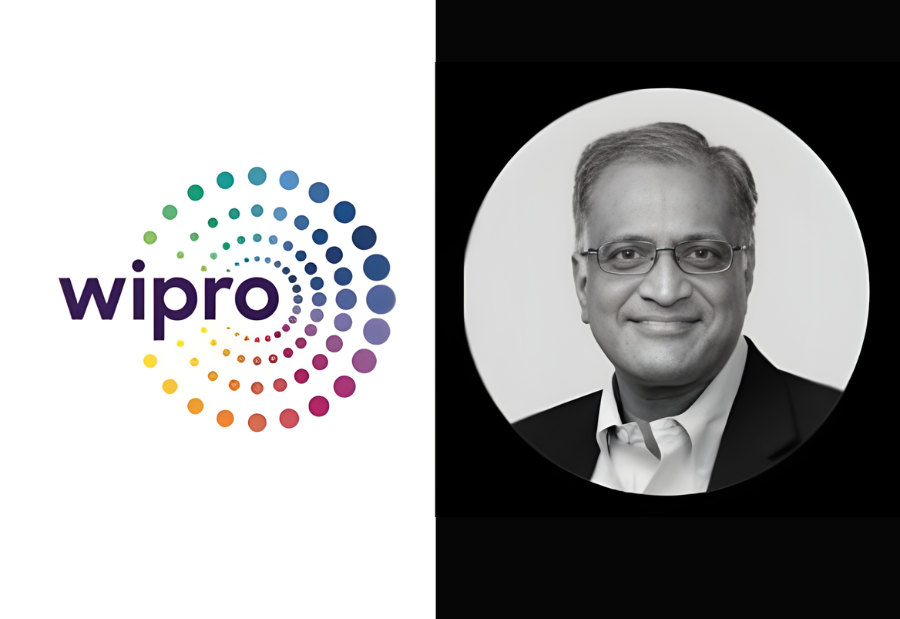
Deploying artificial intelligence at scale involves far deeper operational integration than many assume, according to Wipro Chief Operating Officer Sanjeev Jain. He said enterprise AI requires extensive system integration and responsible-AI safeguards, making implementation far from simple.
“Implementing AI requires touching client systems and our systems. It’s much more work than it appears, and responsible AI layers must be added. So, it’s not easy,” Jain told Moneycontrol.
His remarks come amid debate over whether advances in generative AI could reduce reliance on traditional IT services providers by enabling enterprises to build and manage software with minimal external support.
Repositioning beyond traditional IT
Wipro is repositioning itself as an “intelligence” company, focusing on 3 pillars: using AI to “deliver better” for clients, “operate better” internally, and “reimagine” AI-led solutions. The company is embedding AI into client statements of work and tracking adoption through an “AI infusion index.” Internally, AI tools are being deployed across HR, finance, and legal functions to automate routine queries and enable employee self-service.
Productivity gains emerging
Jain said AI is already improving productivity, especially in software development.
“As people start using AI, we are seeing productivity improvements, especially in software development — coding faster, testing faster,” he said.
Some L1-level tasks, including help desk and routine BPO roles, have become “largely autonomous,” allowing employees to focus on higher-value work. However, Jain stressed that human expertise remains critical.
“You still need domain expertise. You still need humans who understand the client and can use AI tools properly,” he said, adding that outputs must be validated because “AI is not 100 percent accurate.”
Industry-wide execution challenges
Other IT leaders have voiced similar views. Cognizant CEO Ravi Kumar S said AI tools cannot simply replace large portions of services work without deep workflow integration. Infosys executive Satish HC described enterprise AI adoption as “not a plug-and-play upgrade,” likening it to “open heart surgery” due to required changes in core systems and data.
Measuring adoption and skills focus
Wipro initially tracked AI adoption through employee training completion. It now measures tool usage, AI-linked contracts, cost efficiencies, and pipeline growth. Client impact is assessed jointly, including rollout improvements enabled by AI-assisted development.
Jain emphasised that long-term success depends not just on tools but on workforce capability.
“We talk a lot about AI tools and products, but we should talk more about AI skills,” he said, highlighting mindset, skill set, and responsible-AI practices as key enablers.
For Wipro, AI is positioned as an assistive layer across operations and delivery, not a replacement for human expertise. Outcomes, Jain noted, depend on how effectively organisations combine technology, skills, and domain knowledge.
Also read: Viksit Workforce for a Viksit Bharat
Do Follow: The Mainstream LinkedIn | The Mainstream Facebook | The Mainstream Youtube | The Mainstream Twitter
About us:
The Mainstream is a premier platform delivering the latest updates and informed perspectives across the technology business and cyber landscape. Built on research-driven, thought leadership and original intellectual property, The Mainstream also curates summits & conferences that convene decision makers to explore how technology reshapes industries and leadership. With a growing presence in India and globally across the Middle East, Africa, ASEAN, the USA, the UK and Australia, The Mainstream carries a vision to bring the latest happenings and insights to 8.2 billion people and to place technology at the centre of conversation for leaders navigating the future.