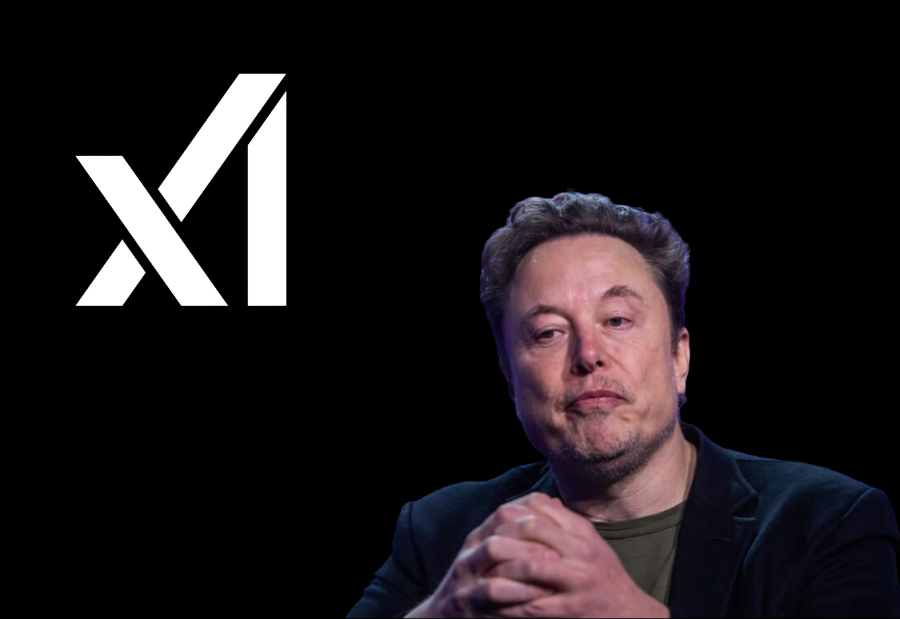
At a recent company-wide meeting, Elon Musk outlined an aggressive vision for xAI, saying the artificial intelligence race will be won by the fastest, not the biggest player.
The meeting, later shared publicly on X, followed the exit of 2 xAI co-founders, Jimmy Ba and Tony Wu. Their departure adds to a series of exits since the company was founded in 2023, including Kyle Kosic, Igor Babuschkin and Christian Szegedy. Greg Yang also reduced his role after a health diagnosis. Musk thanked those who left and shifted focus to the company’s next phase.
He announced that xAI will now operate through 4 main verticals. The first centres on Grok, its chatbot and voice platform. The second focuses on coding tools. The third is Imagine, its video-generation product. The fourth is a new unit called Macrohard, which aims to build AI agents capable of running companies.
“What matters is velocity and acceleration,” Musk said. “If you are moving faster, you will be the leader.”
Macrohard, led by Toby Pohlen, is designed to develop AI agents that go beyond chatbots. These systems would act autonomously, managing workflows, decision-making and operations within organisations. Musk indicated that such agents could eventually run parts of his own companies.
Aman Madaan, who heads the Grok chatbot and voice division, highlighted the team’s rapid progress. “We had nothing, but in 6 months we developed it from scratch,” he said.
Manuel Kroiss will lead coding initiatives, while Guodong Zhang will oversee the Imagine video product and related programming efforts. Musk stressed the importance of video in future AI systems. “Most of the AI computing is gonna be understanding real-time video generation,” he said. “And we expect to be leaders in that.”
The restructuring follows the merger of xAI with SpaceX, reportedly valuing the combined entity at $1.25 trillion. Musk has repeatedly emphasised the need for more computing power to build advanced AI models.
In a bold proposal, he suggested building a factory on the moon to manufacture AI satellites. These satellites could provide additional computing capacity and be launched using a “mass driver.” “You have to go to the moon,” Musk said. “It’s difficult to imagine what an intelligence of that scale would think about, but it’s going to be incredibly exciting to see it happen.”
Also read: Viksit Workforce for a Viksit Bharat
Do Follow: The Mainstream formerly known as CIO News LinkedIn Account | The Mainstream formerly known as CIO News Facebook | The Mainstream formerly known as CIO News Youtube | The Mainstream formerly known as CIO News Twitter
About us:
The Mainstream is a premier platform delivering the latest updates and informed perspectives across the technology business and cyber landscape. Built on research-driven, thought leadership and original intellectual property, The Mainstream also curates summits & conferences that convene decision makers to explore how technology reshapes industries and leadership. With a growing presence in India and globally across the Middle East, Africa, ASEAN, the USA, the UK and Australia, The Mainstream carries a vision to bring the latest happenings and insights to 8.2 billion people and to place technology at the centre of conversation for leaders navigating the future.