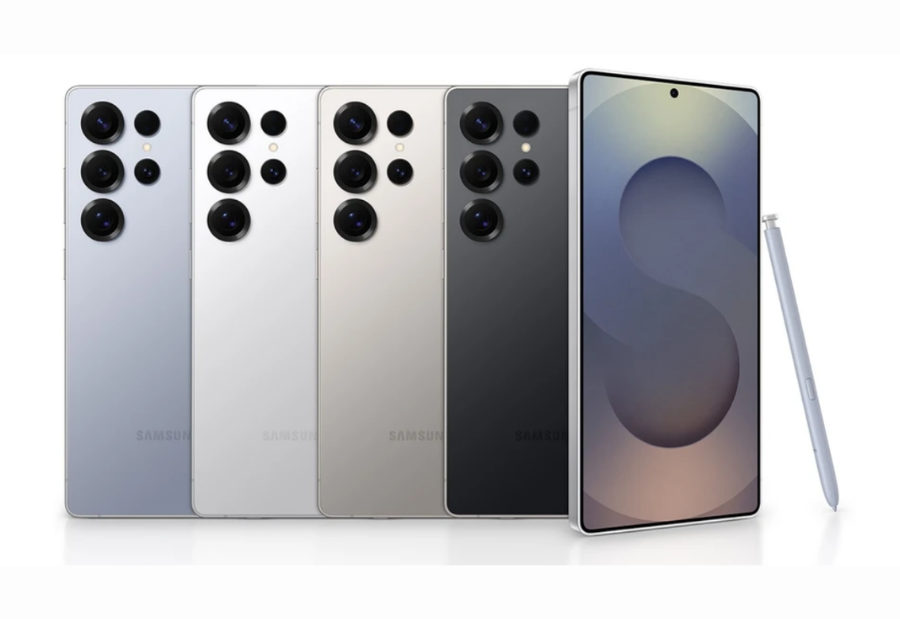
At the global launch of the Galaxy S26 series in San Francisco last week, Samsung highlighted India’s deep role in shaping its latest flagship line-up. JB Park, President and CEO of Samsung Southwest Asia, explained how teams in Bengaluru and Noida have become central to refining the Galaxy S26, S26 Plus and S26 Ultra for global markets.
“We have a group of engineers in Bengaluru that is focused on making our third party or in-house components work on components-to components integration. We call it engineering, not the hardware or component development, but engineering. That’s where India is really, really brilliant on doing that kind of R&D, which I think it’s very important,” Park said. While core hardware such as displays from Samsung Display Corporation and memory and chipsets from LSI are developed in Korea, Park stressed that calibration happens in India. “But you have to calibrate the device and the components to work seamlessly. Calibration is an art of engineering. And that happens in India,” he noted. He added, “There are components that are being conflicted in some of the operating system that we use from Android. And integrating that into component and making it best output is engineering that we call it, what we are good at India.”
Park said the Noida R&D centre manages coding and configuration for 129 countries, making it a global hub for localisation. “I think the Noida R&D centre is the primary place that does configuration for all the localised global settings. From collaborating with the telcos for setting up the frequency to the product settings – all are being all done in Noida. So, I can say that the projects in Noida are very important. We just make the fundamental structure of the S-series or the A-series or the foldables in Korea. But you will see a lot of value add that is done in Noida,” he said. India also remains a key market and a large manufacturing base for Samsung. “We are only a Korean brand that is sticking to the fundamental of technology and innovation and that’s what we care about the consumers to bring the best value of the consumers,” Park added.
The Galaxy S26 line-up, arriving in stores on March 11, brings expanded Galaxy AI features, a new Privacy Shield mode and price increases across base, mid-tier and Ultra models. Analysts expect average smartphone prices could rise by up to 14% due to a global memory shortage. “Rising memory semiconductor prices are a global issue and impacting the broader industry. We expect to be relatively well-positioned on the supply side through strategic partnerships and will continue efforts to minimize the impact on our business by responding flexibly to market changes,” Park said. Samsung is also advancing a multi-agent AI strategy, integrating Google Gemini for cross-app tasks like Uber bookings, Perplexity AI for web queries and an upgraded Bixby powered by its in-house large language model. “Giving users the freedom to choose which agent they use is key to making Galaxy AI feel more personal and natural. This added autonomy helps deliver a more personalized and seamless AI experience on Galaxy S26.” On hardware, Park added, “You cannot have a 5 megapixel camera and expect the output to be a 100 megapixel or 200 megapixel performance. The hardware upgrade has to be accompanied by refining the finest output on camera result with the assistance of AI. That’s how you are going to integrate both software and hardware together. The hardware integration has to move on regardless of the AI functionality.”
Also read: Viksit Workforce for a Viksit Bharat
Do Follow: The Mainstream LinkedIn | The Mainstream Facebook | The Mainstream Youtube | The Mainstream Twitter
About us:
The Mainstream is a premier platform delivering the latest updates and informed perspectives across the technology business and cyber landscape. Built on research-driven, thought leadership and original intellectual property, The Mainstream also curates summits & conferences that convene decision makers to explore how technology reshapes industries and leadership. With a growing presence in India and globally across the Middle East, Africa, ASEAN, the USA, the UK and Australia, The Mainstream carries a vision to bring the latest happenings and insights to 8.2 billion people and to place technology at the centre of conversation for leaders navigating the future.