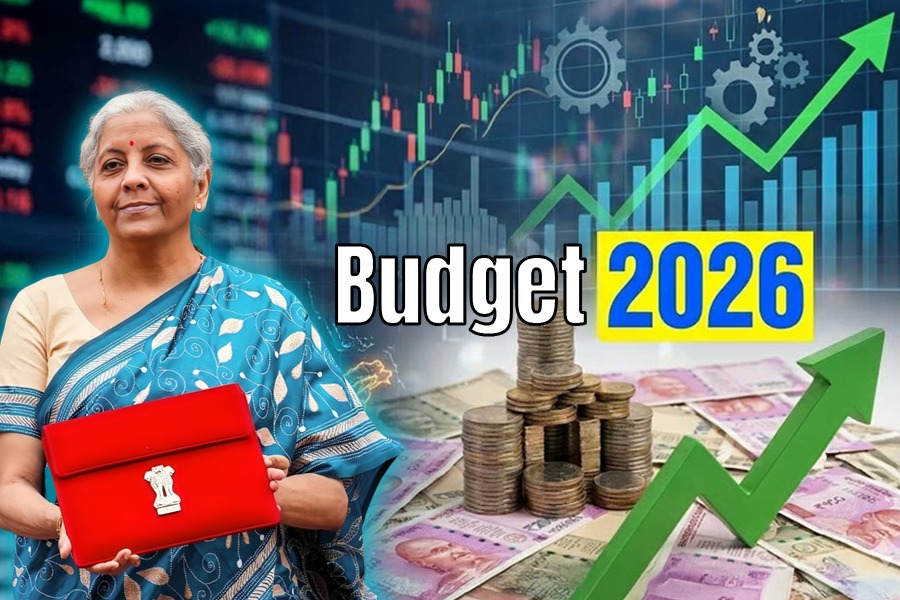
Union Budget 2026–27, like most budgets, has been quickly distilled into a familiar public checklist: what becomes cheaper, what becomes costlier, and what the immediate impact may be on household consumption.
Some of these shifts are tangible. The exemption of basic customs duty on select cancer medicines carries an unmistakable social purpose, lowering costs in an area where affordability is often a matter of survival. Adjustments on components used in electronics and consumer appliances align with the government’s continued emphasis on domestic manufacturing competitiveness. At the same time, higher duties on alcohol and tobacco reinforce the state’s preference for taxing discretionary and harmful consumption.
Yet the more consequential reading of Budget 2026 lies not in individual price movements, but in the broader policy posture it reflects.
This is a budget that continues India’s gradual shift away from short-term consumer relief and toward longer-term economic structuring: strengthening production ecosystems, targeting essential affordability, and building platforms that expand participation in formal markets.
A Budget of Targeted Incentives, Not Broad Comfort
Budget 2026 does not attempt sweeping populism. Its interventions are selective rather than expansive.
The underlying approach is clear: reduce costs where national priorities are non-negotiable — healthcare, strategic manufacturing, export-linked sectors — while maintaining revenue discipline through taxation of non-essential consumption and selective withdrawal of exemptions.
This framework signals an intent to shape behaviour and direct capital, rather than simply soften inflationary pressures through across-the-board concessions.
That is not without risk. Targeted incentives are structurally sound, but they can feel politically distant when cost-of-living pressures remain immediate and uneven across income groups. The success of such a budget depends less on announcement and more on downstream transmission: whether duty rationalisation translates into real consumer relief, and whether sectoral support creates measurable employment and enterprise outcomes.
The Structural Question: Who Gains Market Access?
Beyond customs and taxation, Budget 2026 also raises a deeper economic question: participation.
Budgets do not merely allocate funds. They determine who gains access — to markets, to platforms, to formal economic visibility.
It is in this context that the proposal to establish community-owned SHE-Marts deserves attention. Positioned as a mechanism to empower women entrepreneurs and strengthen the “Lakhpati Didi” initiative, the announcement is more than a gender-focused welfare measure. It reflects an evolving recognition that economic inclusion is not sustained through credit alone, but through market infrastructure.
From Livelihood Support to Enterprise Enablement
India’s self-help group movement has long been central to rural economic policy, particularly for women. Credit access, training, and livelihood missions have expanded steadily.
However, the persistent constraint has been less about production capacity and more about market linkage. Women-led enterprises frequently remain confined to informal networks, limited demand cycles, and insufficient visibility beyond local geographies.
SHE-Marts, if implemented as functioning commercial institutions rather than symbolic outlets, could represent a shift from livelihood support toward enterprise enablement — from participation at the margins to ownership within market systems.
The distinction matters. Empowerment is not simply income generation; it is sustained economic agency.
Execution Will Determine Credibility
The budget speech, however, is only the beginning.
India has announced many well-framed platforms over the years, only for them to lose momentum in implementation. The viability of SHE-Marts will depend on practical design: location viability, supply consistency, branding support, competitive integration, and long-term commercial sustainability.
Without these, the initiative risks becoming another well-intentioned announcement with limited economic depth.
What Budget 2026 Ultimately Represents
Budget 2026–27 is not a radical departure. It is a continuation of India’s broader economic strategy: incentivising domestic capability, prioritising essential sectors, discouraging harmful consumption, and gradually widening the architecture of formal participation.
Its impact will not be measured solely by what becomes cheaper or costlier this quarter, but by whether the structural platforms it proposes translate into durable economic opportunity.
In that sense, the budget’s significance lies less in its immediate arithmetic and more in its underlying direction: an attempt to build an economy that produces more, includes wider, and sustains participation beyond policy intent.
Whether it succeeds will depend, as always, on execution.
Also read: Viksit Workforce for a Viksit Bharat
Do Follow: The Mainstream formerly known as CIO News LinkedIn Account | The Mainstream formerly known as CIO News Facebook | The Mainstream formerly known as CIO News Youtube | The Mainstream formerly known as CIO News Twitter
About us:
The Mainstream is a premier platform delivering the latest updates and informed perspectives across the technology business and cyber landscape. Built on research-driven, thought leadership and original intellectual property, The Mainstream also curates summits & conferences that convene decision makers to explore how technology reshapes industries and leadership. With a growing presence in India and globally across the Middle East, Africa, ASEAN, the USA, the UK and Australia, The Mainstream carries a vision to bring the latest happenings and insights to 8.2 billion people and to place technology at the centre of conversation for leaders navigating the future.