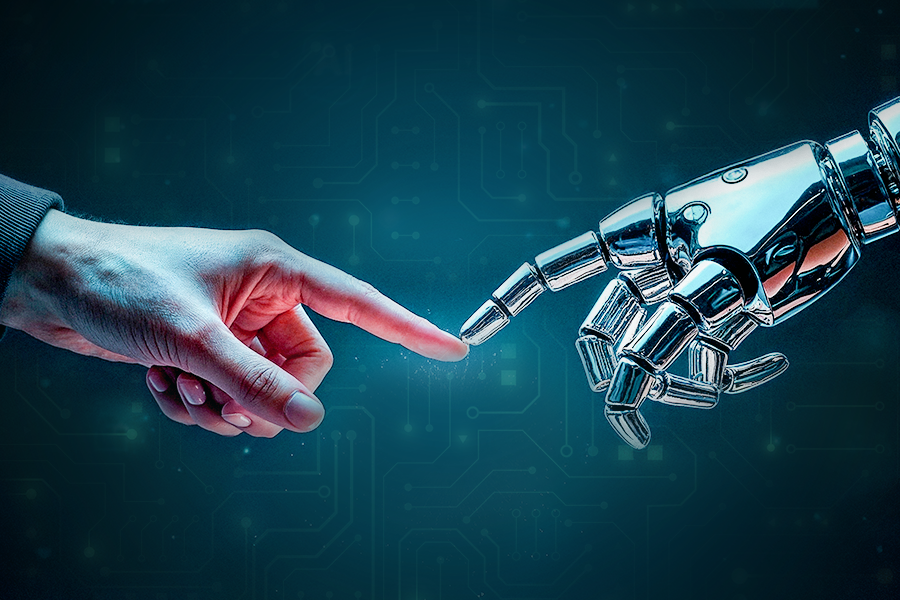
Artificial intimacy has slipped quietly out of the pages of science fiction and onto our screens. It now greets us with tidy sentences, gentle prompts and unnerving emotional attentiveness. Increasingly, people are turning to AI companions not just for information, but for comfort, validation and late-night reassurance, the kinds of exchanges once reserved for trusted friends or, on tougher nights, the family pet.
These systems, powered by sophisticated language models, have evolved far beyond the stilted chatbots of the 2010s. For people navigating loneliness, stress or thin social networks, an always-on conversational partner can feel like a lighthouse in a dim room. And recent research suggests the benefits are not merely anecdotal. A 2025 AI & Society study found that learners using companion AIs showed improved emotional regulation, deeper self-reflection and more adaptive coping during stressful periods. Another controlled experiment reported that emotionally attuned chatbots could temporarily reduce loneliness and social anxiety, bolstering users’ sense of social capability. In practice, these companions function as low-friction social buffers steady presences that never sigh, scroll or glance at the clock.
Yet as evidence accumulates, a more complicated picture is emerging. A large 2025 analysis of more than a thousand users found that those who engaged most intensely with AI companions tended to have fewer offline relationships and their higher reliance correlated with lower psychological well-being. The technology didn’t cause their isolation, but it appeared to fill spaces where human support might otherwise grow. Another 2024 study revealed a subtler discomfort: many users felt both soothed and unsettled when the AI simulated personal vulnerability or emotional disclosure. Designers now find themselves navigating an ethical tightrope, crafting interactions that feel warmly human while making sure no one mistakes the software for a reciprocal partner.
This raises a deeper question. If an AI always adapts, never needs and never falters, does it recalibrate our expectations of human closeness? Real relationships are sustained by negotiation, vulnerability and the occasional emotional pothole. AI companionship, by design, smooths all the rough edges. Over time, some researchers warn, heavy reliance may dull empathy, weaken emotional attentiveness or make human relationships—messy as they are—feel inconvenient.
Tool, Support or Surrogate?
For people in isolating circumstances, AI companions can be stabilising tools. There is no shame in using technology to bridge difficult emotional terrain. But the crucial variable is reliance: whether AI remains a complement to human connection or quietly becomes its substitute.
A responsible path forward demands transparency, guardrails that discourage over-dependence and thoughtful design choices that nudge users back toward real relationships. An AI can mirror warmth and reflect our emotions, but it cannot grow alongside us, challenge us or share the burdens of mutual vulnerability.
Artificial intimacy may well earn its place in modern life—as a momentary comfort or a supportive scaffold. But we owe ourselves the clarity to recognise what it is and what it is not. The glow of a sympathetic screen can steady us for a while; the warmth of human closeness sustains us for a lifetime.
Also read: Viksit Workforce for a Viksit Bharat
Do Follow: The Mainstream formerly known as CIO News LinkedIn Account | The Mainstream formerly known as CIO News Facebook | The Mainstream formerly known as CIO News Youtube | The Mainstream formerly known as CIO News Twitter
About us:
The Mainstream is a premier platform delivering the latest updates and informed perspectives across the technology business and cyber landscape. Built on research-driven, thought leadership and original intellectual property, The Mainstream also curates summits & conferences that convene decision makers to explore how technology reshapes industries and leadership. With a growing presence in India and globally across the Middle East, Africa, ASEAN, the USA, the UK and Australia, The Mainstream carries a vision to bring the latest happenings and insights to 8.2 billion people and to place technology at the centre of conversation for leaders navigating the future.