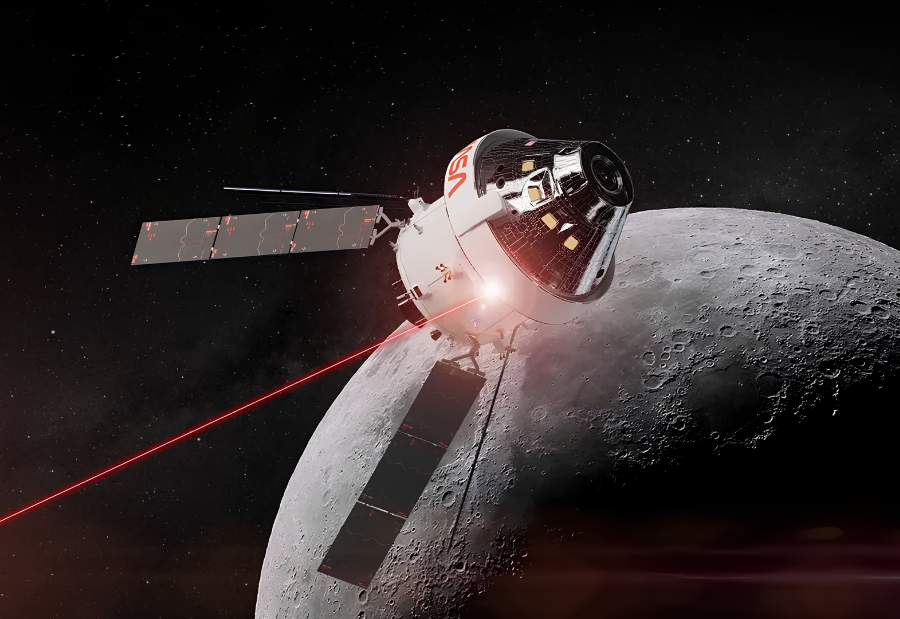
In a defining moment of deep-space travel, NASA’s Artemis II mission experienced a temporary communication blackout as its spacecraft passed behind the Moon, cutting off all contact with Earth.
The loss of signal began at approximately 6:44 PM ET (4:14 AM IST) and lasted around 40 minutes. During this time, astronauts Reid Wiseman, Victor Glover, Christina Koch, and Canadian Space Agency astronaut Jeremy Hansen were completely out of reach, marking one of the most isolated phases of the mission.
The blackout occurred as the spacecraft moved behind the Moon’s far side, where the Moon acted as a physical barrier, blocking all communication signals. Contact was restored at around 7:25 PM ET (4:55 AM IST) when Earth came back into view, a phase known as “Earthrise”.
According to a report, space agencies are working on solutions to avoid such disruptions in future missions. Initiatives like the European Space Agency’s ‘Moonlight’ project aim to deploy a network of satellites around the Moon to enable continuous communication.
Before the blackout, mission control stated that no major risks were expected during this phase. However, astronauts were prepared for contingencies. They rehearsed essential procedures such as consuming protein drinks and administering medication while wearing their orange launch and entry suits.
NASA had also outlined emergency measures. In case of a breach, the Orion capsule can continue supplying oxygen to maintain cabin pressure, allowing astronauts time to secure themselves in pressurised suits.
Despite the communication gap, mission activities continued as planned. During the blackout, the crew observed the Moon’s far side, a region never directly seen by humans.
At approximately 7:05 PM ET (4:35 AM IST), the spacecraft reached its maximum distance from Earth at 252,760 miles. This surpasses the record set by Apollo 13 in 1970 by about 4,105 miles. At its closest point, around 4,070 miles above the lunar surface, the Moon appeared roughly the size of a basketball held at arm’s length.
The crew continued executing their lunar targeting plan and scientific observations. These included tracking Apollo landing sites, identifying potential future landing zones, and capturing images of Mercury, Venus, Mars, and Saturn. They also observed a solar eclipse from Orion’s position.
Earlier, NASA confirmed that Artemis II had already exceeded the distance record previously held by Apollo 13.
Also read: Viksit Workforce for a Viksit Bharat
Do Follow: The Mainstream LinkedIn | The Mainstream Facebook | The Mainstream Youtube | The Mainstream Twitter
About us:
The Mainstream is a premier platform delivering the latest updates and informed perspectives across the technology business and cyber landscape. Built on research-driven, thought leadership and original intellectual property, The Mainstream also curates summits & conferences that convene decision makers to explore how technology reshapes industries and leadership. With a growing presence in India and globally across the Middle East, Africa, ASEAN, the USA, the UK and Australia, The Mainstream carries a vision to bring the latest happenings and insights to 8.2 billion people and to place technology at the centre of conversation for leaders navigating the future.