India’s richest businessman Mukesh Ambani is expanding his AI hardware ambitions through Jio, a subsidiary of Reliance Industries. The company unveiled Jio Frames and multiple robot prototypes, positioning them against offerings from Meta Platforms and Tesla.
Jio Frames target Meta’s smart glasses
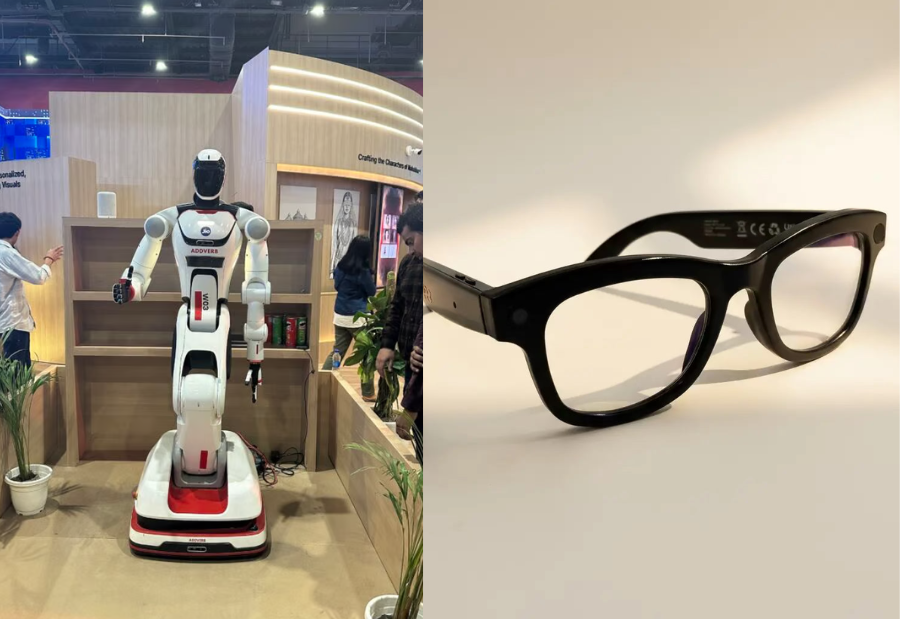
Jio introduced Jio Frames at the India AI Impact Summit 2026 as a domestic alternative to Meta’s Ray-Ban AI smart glasses.
Powered by HelloJio AI, the glasses support multiple Indian languages and regional accents. The device is designed specifically for Indian users.
Jio Frames will launch in 2 variants — audio-only and video-plus-audio.
The premium model includes a 12-megapixel Sony camera, 64GB storage and a Snapdragon AR chipset similar to rival devices. Users can click photos, record videos, livestream, make calls and listen to music.
Both models connect to Jio’s AI assistant for tasks such as solving math problems step-by-step, summarizing books and retrieving recipes. The glasses also integrate with Jio AI Cloud, which has over 40 million users.
While pricing has not been finalized, Jio said it aims to keep the device affordable. In the U.S., Meta’s second-generation Ray-Ban smart glasses are priced between $379 and $459, while the Meta Ray-Ban Display version debuted at $799.
Robots for warehouses and elderly care
Jio also showcased robotics developed by Addverb Technologies.
One wheeled industrial robot can lift up to 10 kilograms using its arms and carry up to 200 cases on its base. It is undergoing internal testing and is expected to be deployed at Reliance warehouses around July or August. Voice-command features for picking and palletizing tasks are planned.
Another prototype is a fully humanoid robot, about 4 feet tall, designed for elderly care and high-risk industrial work.
The home-focused version can respond to voice commands, pick and place objects and assist elderly individuals when caregivers are not present. A larger version is being tested for industrial settings such as battery manufacturing, where it could handle hazardous materials.
While comparisons have been drawn with Tesla’s Optimus, Jio representatives said the design reflects a broader industry trend of building human-like machines.
The humanoid robot remains in testing, with a commercial timeline estimated at 4 to 5 years.
Meanwhile, Tesla plans to begin Optimus production before the end of 2026, targeting an annual capacity of 1 million units.
With smart wearables and robotics, Jio is positioning itself as a serious contender in the global AI hardware race.
Also read: Viksit Workforce for a Viksit Bharat
Do Follow: The Mainstream LinkedIn | The Mainstream Facebook | The Mainstream Youtube | The Mainstream Twitter
About us:
The Mainstream is a premier platform delivering the latest updates and informed perspectives across the technology business and cyber landscape. Built on research-driven, thought leadership and original intellectual property, The Mainstream also curates summits & conferences that convene decision makers to explore how technology reshapes industries and leadership. With a growing presence in India and globally across the Middle East, Africa, ASEAN, the USA, the UK and Australia, The Mainstream carries a vision to bring the latest happenings and insights to 8.2 billion people and to place technology at the centre of conversation for leaders navigating the future.