


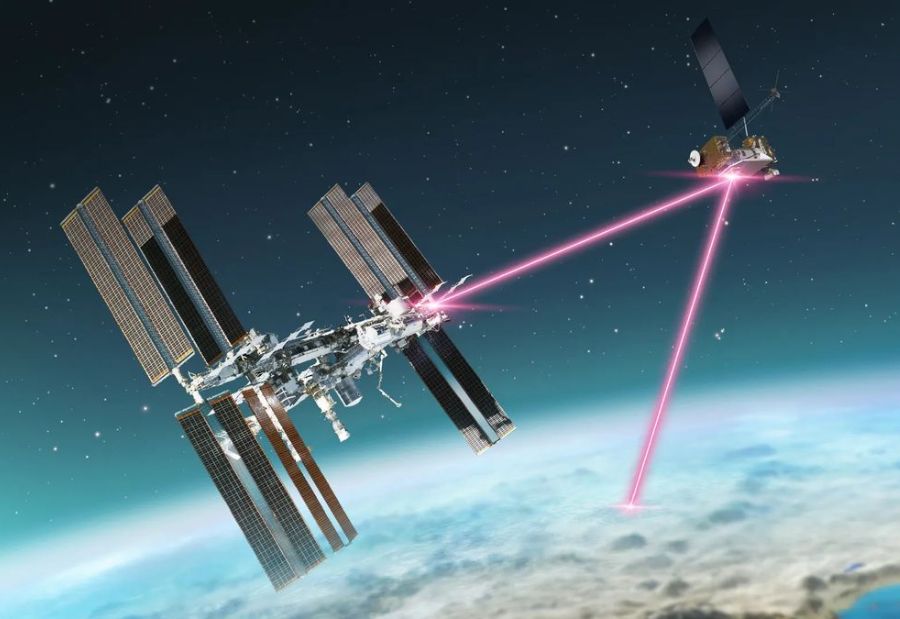
Europe is accelerating efforts to build secure, high-capacity satellite communication infrastructure with the launch of a laser-equipped optical ground station in northern Greece designed to support next-generation space networking.
Lithuanian space and defence company Astrolight announced that the new Holomondas Optical Ground Station has been commissioned as part of the ESA-backed PeakSat project led by the Aristotle University of Thessaloniki, with support from the European Space Agency and Greece’s Ministry of Digital Governance.
The station is designed to receive satellite data through infrared laser links instead of traditional radio frequency systems that have powered satellite communications for decades.
The project supports 2 Greek CubeSats — PeakSat and ERMIS-3 — which were launched in March under ESA’s Greek IOD/IOV mission programme. Both satellites carry Astrolight’s ATLAS-1 optical communication terminal, while the company also developed the complete ground communication segment.
Astrolight CEO Laurynas Mačiulis said the company focused on optical communication technology as demand for satellite bandwidth continues rising rapidly.
He described optical connectivity as “one of the enabling technologies for further expansion into space.”
According to the company, the station uses an 808-nanometer laser beacon along with an optical C-band receiver capable of receiving data speeds of up to 2.5 Gbps.
Unlike conventional radio-based systems, optical communication links use tightly focused infrared beams that are significantly harder to intercept, jam, or disrupt. The technology also supports much higher data throughput.
However, establishing laser communication between satellites and ground stations remains technically challenging.
“You have 2 moving objects that try to establish a laser link, which means trying to point a very, very narrow laser pointer at your object, which is potentially tens of thousands of kilometers away, moving at 8 kilometers per second,” Mačiulis said.
ESA and its partners see optical communication as a solution to the increasingly crowded radio spectrum, while defence and dual-use operators are also exploring the technology for more resilient and secure communication systems.
“There is a need for networking in space, both for connectivity and tactical reasons, and dual-use defense applications,” Mačiulis said.
He added that future satellite constellations “will inevitably rely on optical links, because that gives information superiority and security and resistance to jamming electronic warfare.”
The development also reflects Europe’s broader push toward greater technological sovereignty and independent space communication infrastructure.
Also read: Viksit Workforce for a Viksit Bharat
Do Follow: The Mainstream LinkedIn | The Mainstream Facebook | The Mainstream Youtube | The Mainstream Twitter
About us:
The Mainstream is a premier platform delivering the latest updates and informed perspectives across the technology business and cyber landscape. Built on research-driven, thought leadership and original intellectual property, The Mainstream also curates summits & conferences that convene decision makers to explore how technology reshapes industries and leadership. With a growing presence in India and globally across the Middle East, Africa, ASEAN, the USA, the UK and Australia, The Mainstream carries a vision to bring the latest happenings and insights to 8.2 billion people and to place technology at the centre of conversation for leaders navigating the future.