


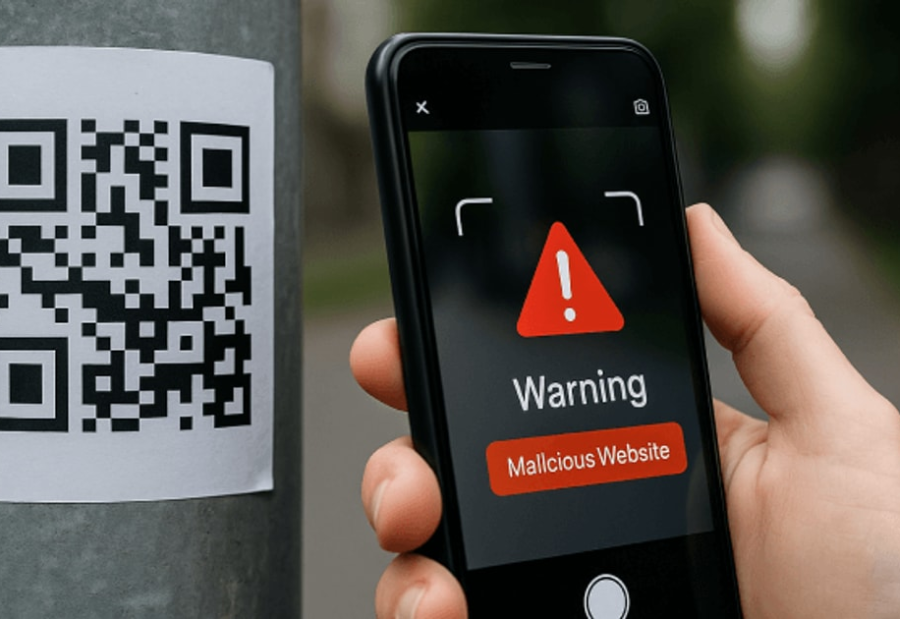
As QR codes become a regular part of daily transactions, experts are warning about their growing misuse by cybercriminals for fraud and data theft.
QR codes, or quick response codes, are square-shaped barcodes made of black and white patterns that store information. Developed in 1994 by the Japanese company Denso Wave, they are widely used today because they are easy to create and can be scanned instantly using a smartphone. They help users quickly open websites, make payments, or access services without typing. However, they do not show the final destination of a link before scanning, which increases the risk of misuse.
Cybercriminals are now using QR codes in phishing attacks, often called “quishing”. Instead of sending direct links, attackers share QR codes through emails or messages that lead users to fake login or payment pages. In public places, scammers may paste fake QR code stickers over genuine ones on parking meters, posters, or signboards. These codes can redirect users through multiple websites before reaching a fraudulent page, making them harder to detect.
Some QR codes may also trigger automatic downloads of harmful files or apps. This can give attackers access to a user’s device, personal data, or accounts. Since these actions happen quickly, users often do not get enough time to verify the source.
Experts advise users to treat QR codes like unknown links. It is important to check for signs of tampering, such as stickers placed over original codes, and review any web address preview before proceeding. Users should avoid scanning QR codes from unknown emails or messages, especially if they ask for login or payment details.
It is also safer to visit official websites directly instead of using QR links. Users should not enter personal or financial information immediately after scanning unless the source is verified. Keeping devices updated with the latest security patches can help reduce risks.
While QR codes are not harmful by themselves, their ability to hide links makes them a useful tool for cybercriminals. As their usage continues to grow, staying alert and cautious remains essential.
Also read: Viksit Workforce for a Viksit Bharat
Do Follow: The Mainstream LinkedIn | The Mainstream Facebook | The Mainstream Youtube | The Mainstream Twitter
About us:
The Mainstream is a premier platform delivering the latest updates and informed perspectives across the technology business and cyber landscape. Built on research-driven, thought leadership and original intellectual property, The Mainstream also curates summits & conferences that convene decision makers to explore how technology reshapes industries and leadership. With a growing presence in India and globally across the Middle East, Africa, ASEAN, the USA, the UK and Australia, The Mainstream carries a vision to bring the latest happenings and insights to 8.2 billion people and to place technology at the centre of conversation for leaders navigating the future.