


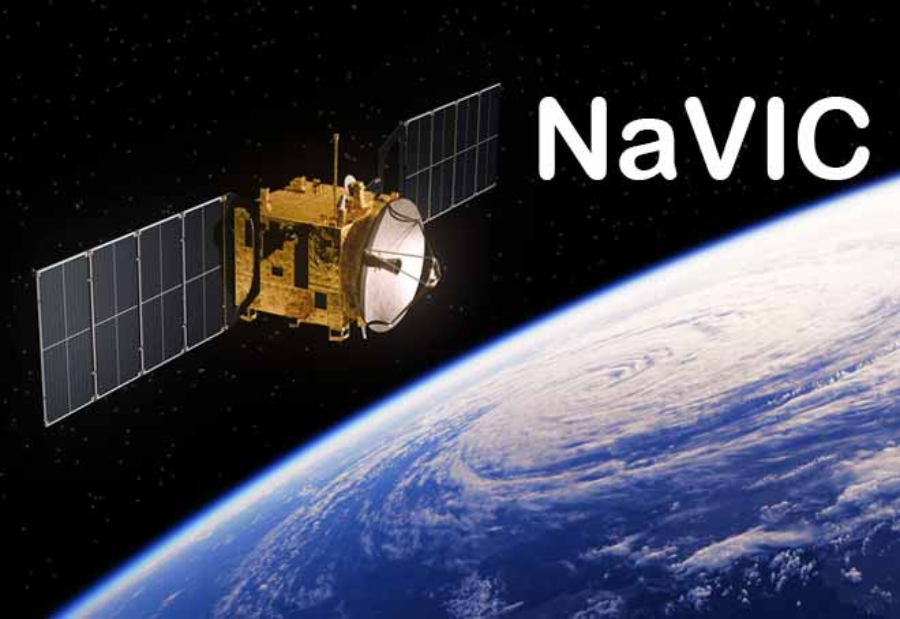
India’s indigenous navigation system, NavIC, is facing a major setback, with experts warning that its limited functionality could impact national security and strategic operations.
The issue follows the failure of the last atomic clock onboard IRNSS-1F on March 10. This leaves only 3 satellites in the constellation capable of providing position, navigation and timing services, while at least 4 operational satellites are required for full functionality.
Experts highlight that navigation systems like NavIC offer both civilian and restricted military signals, with the latter providing significantly higher accuracy. The reduced capability raises concerns about the system’s reliability for defence use, including logistics, mapping and operational planning.
Ananya Ray, former scientist at Indian Space Research Organisation, said, “Systems like NavIC have two signals — an open signal for common people and a restricted military signal that increases accuracy roughly tenfold.”
She added that dependence on foreign systems such as GPS during conflict situations could pose serious risks. “If you are in a war and using someone else’s system, they could add errors to the signals or spoof you, making you think you are in the wrong position. Depending on another country’s satellites is a dependency out of your control that can prove fatal during war.”
India began developing NavIC after the Kargil War, when access to GPS data was denied. The first-generation IRNSS satellites were launched between 2013 and 2018, but several have since faced repeated atomic clock failures.
E.A.S Sarma, former bureaucrat, said, “Usually, each of these satellites carries three or four atomic clocks for redundancies. So, if one goes bad, then one should be able to switch to the other one. In the case of IRNSS-1F, all of its atomic clocks have stopped working.”
Efforts to replace ageing satellites have also faced setbacks. The 2017 launch of IRNSS-1H failed, and while the second-generation NVS-01 satellite was successfully deployed in 2023, the 2025 launch of NVS-02 did not succeed. This has delayed upcoming missions including NVS-03, NVS-04 and NVS-05.
Currently, only IRNSS 1-B, IRNSS 1-L and NVS-01 remain operational, limiting NavIC’s effectiveness.
Sarma noted that focus on other missions such as Gaganyaan and Axiom Mission 4 may have diverted attention. “India cannot afford to rely on foreign navigation systems like GPS… Our priority must be strategic application, followed by other purposes, and lastly, political optics,” he said.
The situation underscores the importance of strengthening indigenous navigation capabilities to ensure long-term strategic independence.
Also read: Viksit Workforce for a Viksit Bharat
Do Follow: The Mainstream LinkedIn | The Mainstream Facebook | The Mainstream Youtube | The Mainstream Twitter
About us:
The Mainstream is a premier platform delivering the latest updates and informed perspectives across the technology business and cyber landscape. Built on research-driven, thought leadership and original intellectual property, The Mainstream also curates summits & conferences that convene decision makers to explore how technology reshapes industries and leadership. With a growing presence in India and globally across the Middle East, Africa, ASEAN, the USA, the UK and Australia, The Mainstream carries a vision to bring the latest happenings and insights to 8.2 billion people and to place technology at the centre of conversation for leaders navigating the future.