


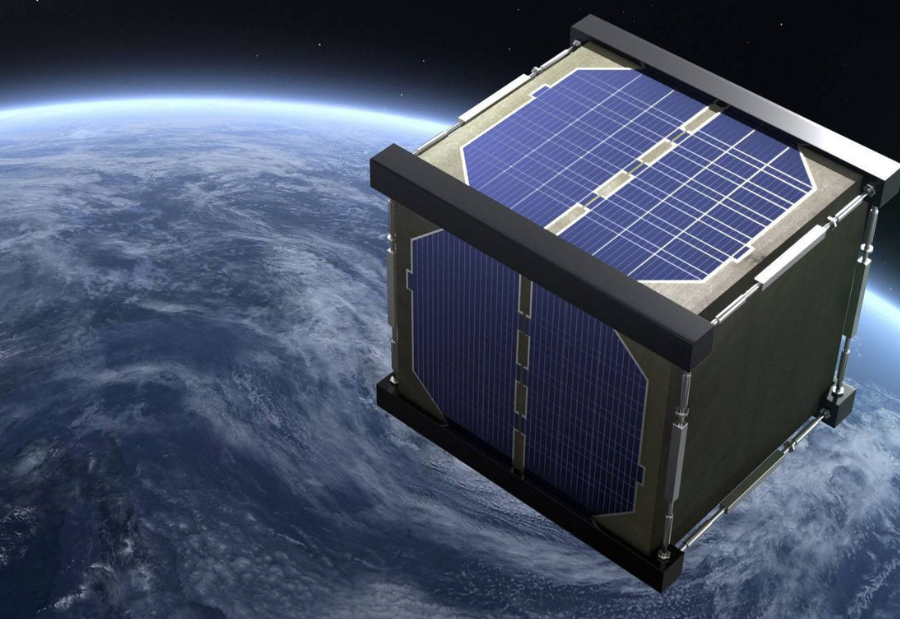
Japan has launched an unusual spacecraft into orbit — a small wooden satellite called LignoSat — as part of an experiment aimed at reducing space debris and atmospheric pollution from satellites.
The satellite, built using magnolia wood, was developed by researchers from Kyoto University and Sumitomo Forestry in collaboration with Japan’s space agency. The project is designed to test whether wood can be used as an alternative material in spacecraft structures while reducing the environmental impact of satellites when they burn up in Earth’s atmosphere.
Although the satellite resembles a small wooden cube, the mission is part of a serious scientific study focused on creating more sustainable spacecraft technology.
Addressing the growing space debris challenge
Earth’s orbit is becoming increasingly crowded with satellites, discarded rocket parts, and fragments from past collisions. Experts estimate that more than 1 million pieces of debris are currently orbiting the planet, raising the risk of collisions that could damage satellites used for navigation, weather monitoring, and communication.
Most satellites are eventually guided back into Earth’s atmosphere so they burn up rather than remain in orbit for decades. However, research presented in 2025 found that conventional aluminium satellites release aluminium oxide particles when they burn up. These particles can remain in the stratosphere for years and contribute significantly to metal dust in the atmosphere.
Wooden satellites like LignoSat are designed to burn up more cleanly, producing mainly water vapour and small amounts of carbon dioxide, instead of metallic particles.
Testing wood in extreme space conditions
Before sending the wooden satellite into orbit, researchers conducted long-term exposure tests on the International Space Station (ISS). Samples of 3 types of wood were mounted outside the Kibo laboratory module for about 10 months, where they were exposed to radiation, vacuum conditions, and extreme temperature changes.
After the materials were returned to Earth, scientists found no cracks, warping, or loss of mass. Among the tested materials, honoki magnolia wood proved to be the most stable.
As a result, LignoSat was designed as a 1-unit CubeSat measuring about 10 centimetres on each side, with outer panels made from magnolia wood. The panels are joined using traditional Japanese carpentry techniques, without screws or glue.
Inside the satellite, standard metal structures and electronics perform normal spacecraft functions, while the wooden shell is monitored through sensors that measure temperature, strain, and magnetic field conditions.
Why wood may work in space
At first glance, wood may seem unsuitable for space, where satellites face extreme temperature cycles. In low Earth orbit, spacecraft can experience temperatures of around 120°C in sunlight and below –120°C in shadow every 90 minutes.
Tests suggest magnolia wood remains dimensionally stable under these conditions and does not crack in the vacuum of space. Since there is no oxygen in orbit, the wood does not burn despite being flammable on Earth.
When the satellite eventually re-enters Earth’s atmosphere, the wooden components are expected to burn completely, producing far fewer harmful particles than conventional materials.
A step toward sustainable space exploration
LignoSat was deployed from the International Space Station in December 2024, allowing scientists to study how the wooden structure responds to radiation, temperature changes, and magnetic conditions in orbit.
Although the satellite is small and low-power, the data it collects could influence how future spacecraft are built.
Researchers are already considering follow-up projects such as LignoSat2 and exploring whether wooden components could be used in future lunar or Martian structures.
The experiment reflects a broader effort within the space industry to develop more sustainable technologies as the number of satellites in orbit continues to grow.
Also read: Viksit Workforce for a Viksit Bharat
Do Follow: The Mainstream LinkedIn | The Mainstream Facebook | The Mainstream Youtube | The Mainstream Twitter
About us:
The Mainstream is a premier platform delivering the latest updates and informed perspectives across the technology business and cyber landscape. Built on research-driven, thought leadership and original intellectual property, The Mainstream also curates summits & conferences that convene decision makers to explore how technology reshapes industries and leadership. With a growing presence in India and globally across the Middle East, Africa, ASEAN, the USA, the UK and Australia, The Mainstream carries a vision to bring the latest happenings and insights to 8.2 billion people and to place technology at the centre of conversation for leaders navigating the future.