


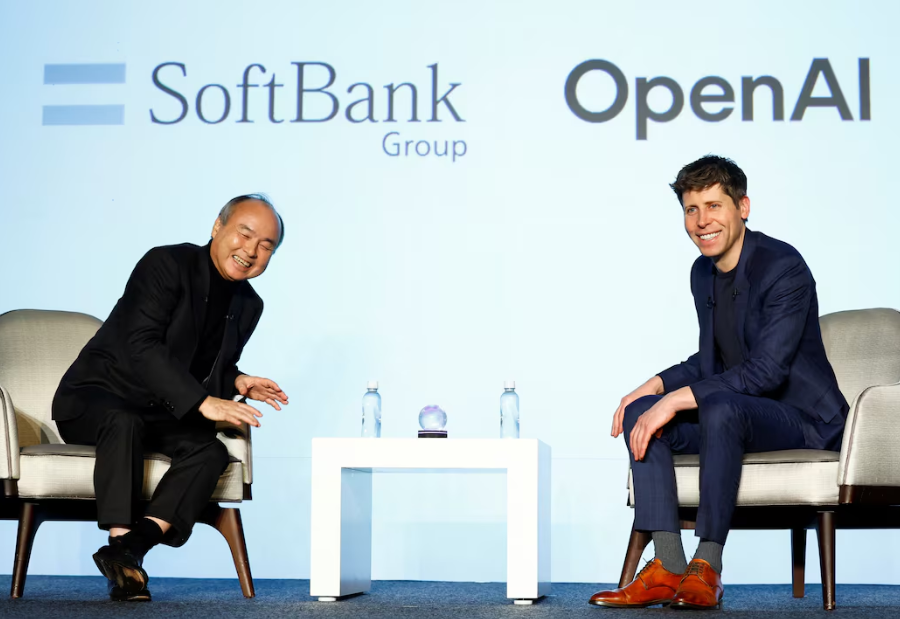
A bold investment strategy by Masayoshi Son to back artificial intelligence company OpenAI is now raising concerns among investors as the financial pressure on SoftBank Group continues to grow.
SoftBank reportedly rushed to secure a $22.5 billion funding commitment to OpenAI by the end of last year. The investment supports the AI company led by Sam Altman and reflects Son’s aggressive push into artificial intelligence technologies.
According to reports, SoftBank used multiple financing methods to raise the funds, including selling major assets and considering billions of dollars in margin loans. The large capital commitment was widely described as an “all in” move by the SoftBank chief.
To build the required capital, the company carried out several significant divestments. These included selling its entire $5.8 billion stake in Nvidia and reducing its holding in T-Mobile by $4.8 billion.
Following these moves, SoftBank held an estimated 11% stake in OpenAI by the end of the previous year.
However, recent developments suggest the aggressive investment may be weighing on the company. On Monday, March 9, SoftBank’s share price dropped as much as 12.5%, reaching its lowest level since August 2025 as markets assessed the impact of its growing AI commitments.
Investor concerns reportedly intensified after Oracle and OpenAI were said to have cancelled plans to expand a major artificial intelligence data centre project in Texas. The facility was expected to be part of the broader Stargate initiative.
At the same time, SoftBank Group’s credit default swaps (CDS) widened to an 11-month high and remain the widest among Japanese companies, indicating rising concerns over the group’s credit risk.
In recent months, the company’s share price has nearly halved as questions have emerged about the scale of its financial exposure to OpenAI.
Earlier in March, S&P Global Ratings revised SoftBank’s outlook to negative on March 3, citing the company’s additional investment in OpenAI. The agency also placed a negative outlook on SoftBank’s existing junk credit rating.
S&P further noted that OpenAI is among SoftBank’s investments with the weakest credit quality. It added that many AI-related investments face high innovation risk and intense competition, which could weaken the overall credit strength of the group’s investment portfolio.
Adding to the financial strain, SoftBank is reportedly seeking bridge loans to fund its OpenAI investment until it can generate funds through additional asset sales.
The company still holds substantial liquid assets, including about $80 billion worth of shares in Arm. It had earlier sold its stake in Nvidia to help finance a previous investment in OpenAI. Earlier this year, SoftBank also moved forward with a $1 billion listing in New York for PayPay.
SoftBank is not the only company facing market pressure linked to OpenAI-related investments. Both Oracle and CoreWeave have also experienced significant declines in market value, with their shares falling by more than two-fifths.
In September 2025, Oracle announced that its remaining performance obligations had surged to $455 billion, driven largely by cloud demand from OpenAI. The announcement pushed Oracle’s stock up more than 30% in a single day. However, those gains have since reversed as investors raised concerns about the cost of building large cloud data centres and the extent to which Oracle’s cloud backlog depends on OpenAI.
Also read: Viksit Workforce for a Viksit Bharat
Do Follow: The Mainstream LinkedIn | The Mainstream Facebook | The Mainstream Youtube | The Mainstream Twitter
About us:
The Mainstream is a premier platform delivering the latest updates and informed perspectives across the technology business and cyber landscape. Built on research-driven, thought leadership and original intellectual property, The Mainstream also curates summits & conferences that convene decision makers to explore how technology reshapes industries and leadership. With a growing presence in India and globally across the Middle East, Africa, ASEAN, the USA, the UK and Australia, The Mainstream carries a vision to bring the latest happenings and insights to 8.2 billion people and to place technology at the centre of conversation for leaders navigating the future.