


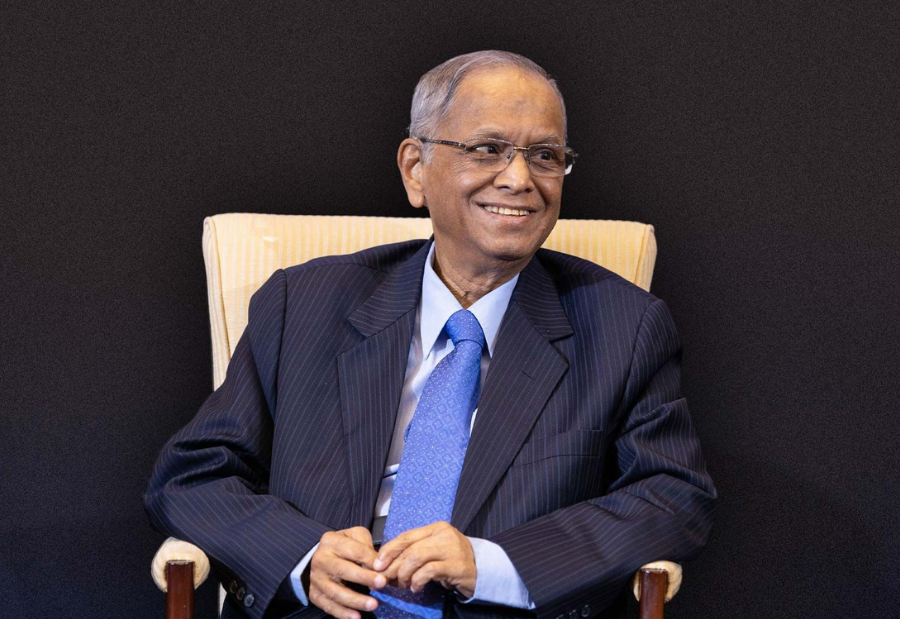
Amid rising concerns over artificial intelligence disrupting careers, Narayana Murthy has moved to reassure professionals that AI will expand employment opportunities rather than shrink them.
Speaking at an event at the International Institute of Information Technology Bangalore, the Infosys founder said technological change has historically increased jobs at the macro level. According to him, technology does not reduce employment overall. Instead, it changes the type of work and creates new roles that require new skills.
Lessons from earlier disruptions
Murthy referred to the introduction of core banking solutions (CBS), which had earlier triggered fears of large-scale job losses. However, he pointed out that the banking sector in the United Kingdom, and later in India, saw employment growth as technology improved efficiency and expanded services.
He said AI tools are expected to significantly boost productivity across industries. At the same time, legacy platforms and ongoing maintenance needs will continue to generate jobs in the technology services ecosystem.
Changing skill priorities
In software services, Murthy explained that the focus of professionals will gradually shift. As AI systems begin handling much of the coding work, more importance will be given to “defining requirements clearly” and “framing problems accurately”.
“That is where professionals will spend more time once AI starts coding,” he observed. He stressed that a change in mindset and continuous learning will be essential for professionals to stay relevant.
Mega trends for India
Murthy identified self-learning technologies, including the Internet of Things (IoT), technology-driven healthcare delivery, and productivity improvements in agriculture as key forces that will shape India over the next 10 years.
He said India has not yet fully utilised the potential of IoT and expects major opportunities in this segment. Currently, he noted, the country largely depends on structured, trainable algorithms based on regression models. Advanced self-learning systems such as deep learning and neural networks are not yet widely adopted.
Murthy’s remarks come at a time when global technology stocks are volatile, as investors assess the disruptive impact of large language model-based AI tools on traditional software services businesses.
Also read: Viksit Workforce for a Viksit Bharat
Do Follow: The Mainstream LinkedIn | The Mainstream Facebook | The Mainstream Youtube | The Mainstream Twitter
About us:
The Mainstream is a premier platform delivering the latest updates and informed perspectives across the technology business and cyber landscape. Built on research-driven, thought leadership and original intellectual property, The Mainstream also curates summits & conferences that convene decision makers to explore how technology reshapes industries and leadership. With a growing presence in India and globally across the Middle East, Africa, ASEAN, the USA, the UK and Australia, The Mainstream carries a vision to bring the latest happenings and insights to 8.2 billion people and to place technology at the centre of conversation for leaders navigating the future.