


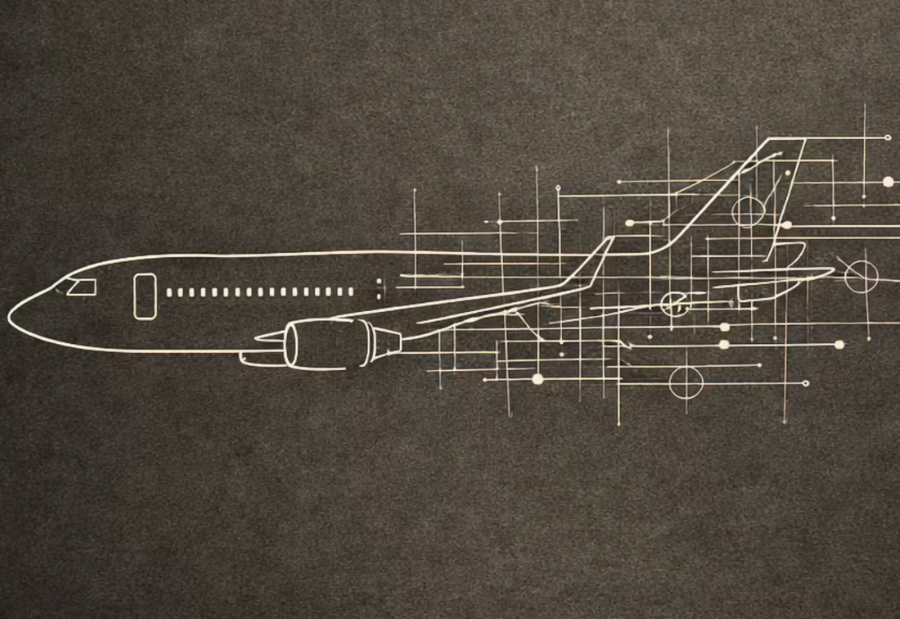
What began as a cost and scale play has now evolved into deep engineering ownership. Global aerospace and defence companies are shifting critical responsibilities to India, turning their centres into innovation hubs. Today, if you board an aircraft, there is a strong chance that part of its engineering was designed or validated in India. Companies such as Thales, Dassault Systèmes, Rolls-Royce Holdings plc and Pratt & Whitney are expanding high-value engineering mandates in the country.
According to EY India, aerospace and defence GCCs have crossed the “engineering support” stage over the past 5-6 years. “Over the past 5-6 years, India GBS/GCCs have crossed the ‘engineering support’ threshold and are now owning critical subsystems, digital platforms, and design authority for global programs,” said Arindam Sen. Teams now manage avionics, propulsion modules, digital twins and connectivity platforms. The sector is concentrated in Bengaluru, Delhi NCR and Hyderabad, which account for nearly 80% of A&D centres, as per NASSCOM. Bengaluru and Hyderabad alone house over 75% of the installed A&D talent base. Since 2021, firms including Starburst, AirAsia, Boeing and Bombardier have expanded or set up operations.
Thales Group, present in India since 1953, employs around 2,300 engineers in Bengaluru and Noida out of its global 35,000 engineering workforce. “India as a center is extremely important for us…it’s the fastest growing engineering center that we have in the Group today,” said Olivier Flous. The company plans to hire over 450 professionals by 2026. Its India centre is 1 of 3 global locations certified to develop DAL A software, alongside France and Canada. “We are moving up the value chain. The team now has the responsibility to say this system can fly,” Flous added. Meanwhile, BlackBerry QNX launched its Hyderabad centre in 2024, focusing on embedded systems and safety-critical software. “There were no discussions on cost. We were empowered and given autonomy from day one but we were also held accountable for outcomes,” said Rajkumar Jain. Rolls-Royce, operating in India for over 90 years, powers over 1,400 engines used by Indian forces and opened its largest capability hub in Bengaluru last September. Parent company RTX employs over 5,000 people in India.
AI is now reshaping aerospace engineering. As per the EY GCC Pulse Survey Report 2025, 65% of GCCs are building dedicated innovation teams. “Formal regulatory approvals remain within each OEM’s global processes.. India provides services across the safety-critical lifecycle,” Sen said. Dassault Systèmes uses its 3DEXPERIENCE platform to build virtual twins of aircraft and satellites. “Our vision around AI is that it is going to augment and support humans…it’s not going to purely replace them. That is why we call it a ‘virtual companion’,” said Manish Tambe. From predictive maintenance to digital twins, India is moving closer to the cockpit of global aerospace innovation.
Also read: Viksit Workforce for a Viksit Bharat
Do Follow: The Mainstream LinkedIn | The Mainstream Facebook | The Mainstream Youtube | The Mainstream Twitter
About us:
The Mainstream is a premier platform delivering the latest updates and informed perspectives across the technology business and cyber landscape. Built on research-driven, thought leadership and original intellectual property, The Mainstream also curates summits & conferences that convene decision makers to explore how technology reshapes industries and leadership. With a growing presence in India and globally across the Middle East, Africa, ASEAN, the USA, the UK and Australia, The Mainstream carries a vision to bring the latest happenings and insights to 8.2 billion people and to place technology at the centre of conversation for leaders navigating the future.