


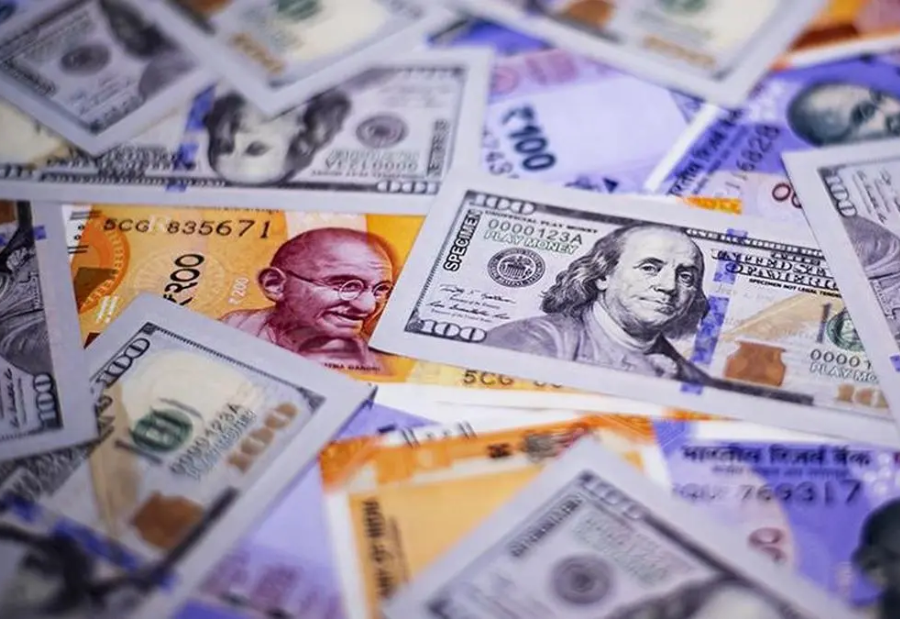
Even as digital payments continue to scale new highs, India is seeing a parallel rise in physical cash, driven by behavioural, regulatory, and economic factors across regions and households.
According to the economic research department of State Bank of India, currency in circulation (CiC) has increased sharply despite the surge in UPI transactions. The rise has been attributed to higher ATM withdrawals in states such as Karnataka following GST notices issued to small merchants, with ripple effects seen in West Bengal and Kerala. Other drivers include a growing preference to hold cash, especially in rural areas, and rising precious metal prices prompting households to recycle gold and silver.
SBI economists noted that CiC touched a record high of ₹40 lakh crore for the month ended January 2026, registering a year-on-year growth of 11.1 per cent, compared with 5.3 per cent last year. On a year-to-date basis, CiC increased by ₹2.76 lakh crore, up 3.11 times during the same period.
Currency with the public (CWP), which accounts for around 97.6 per cent of CiC, also hit an all-time high of ₹39 lakh crore in January 2026, with a growth of 11.5 per cent versus 5.4 per cent a year earlier. Based on current trends, SBI economists expect CWP to exceed the post-pandemic FY21 incremental growth of ₹4.6 lakh crore.
“Despite increase in CiC, cash as percentage of GDP is declining and ATM cash withdrawal as percentage of GDP is also declining. This clearly indicates that digital transactions continue to dominate our economy,” said Soumya Kanti Ghosh, Group Chief Economic Adviser, SBI.
For context, while CiC stands at ₹40 lakh crore, one month of UPI transactions is valued at ₹28.0 lakh crore, or nearly 70 per cent of the total currency in the economy. SBI Research also highlighted that the cash-to-GDP ratio has fallen to 11 per cent in FY26 from 14.4 per cent in FY21. “….the direction of change of currency and GDP may be same, but incremental GDP growth is now being less financed by cash and more through UPI,” the economists said.
SBI researchers pointed to the Karnataka Commercial Taxes Department issuing around 18,000 GST notices to small traders for UPI transactions exceeding the ₹40 lakh threshold between 2022 and 2025. They said this may have discouraged UPI usage and led to higher ATM withdrawals, with signalling effects extending to other states.
Cash holding has also increased, particularly in rural areas, amid low interest rates and consumption-led behaviour. Deposit growth remained subdued in FY26, rising 10.6 per cent as of end-January 2026. “In otherwords, with the rise in GDP, currency demand increases but not in same proportion with UPI and cash substitution,” SBI economists said, adding that lower interest rates may have boosted precautionary demand for money.
The study also linked higher CiC to recycling of gold and silver as households cashed in on rising precious metal prices. Cuts in GST and income tax further supported household consumption.
Following the withdrawal of the ₹2000 note announced on 19 May 2023, SBI noted a sharp rise in the share of ₹500 notes. By end-March 2025, the ₹500 note accounted for 86.0 per cent of value and 40.9 per cent of volume. The shares of ₹100 and ₹200 notes also rose marginally between 2023 and 2025.
To improve public access to smaller denominations, Reserve Bank of India directed banks on 28 April 2025 to ensure that 96 per cent of ATMs dispense ₹100 and ₹200 notes by end-March 2026. SBI’s currency chest data showed that while the value share of ₹500 notes rose by 4.4 per cent between April 2025 and January 2026, other large denominations declined.
Meanwhile, data from National Payments Corporation of India shows that transactions below ₹500 account for 86 per cent of total UPI volumes, suggesting that full substitution of low-denomination cash with UPI is unlikely.
Also read: Viksit Workforce for a Viksit Bharat
Do Follow: The Mainstream LinkedIn | The Mainstream Facebook | The Mainstream Youtube | The Mainstream Twitter
About us:
The Mainstream is a premier platform delivering the latest updates and informed perspectives across the technology business and cyber landscape. Built on research-driven, thought leadership and original intellectual property, The Mainstream also curates summits & conferences that convene decision makers to explore how technology reshapes industries and leadership. With a growing presence in India and globally across the Middle East, Africa, ASEAN, the USA, the UK and Australia, The Mainstream carries a vision to bring the latest happenings and insights to 8.2 billion people and to place technology at the centre of conversation for leaders navigating the future.