


A quiet breakthrough has emerged from space science as Artificial Intelligence reshapes how astronomers explore the universe.
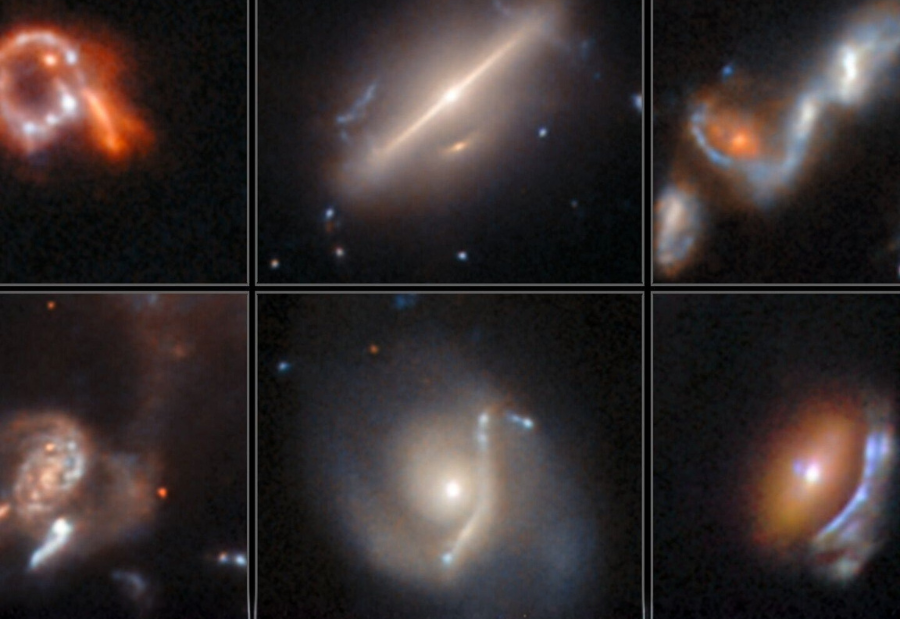
Scientists at European Space Agency used an AI system called AnomalyMatch to scan the vast image archive of the Hubble Space Telescope. The system reviewed nearly 100 million image cutouts in about 2.5 days. This effort revealed more than 1,300 unusual cosmic objects, including around 800 that had never been recorded before.
The discoveries include colliding galaxies, rare gravitational lenses, and so-called jellyfish galaxies with long gas tails. The work shows how AI can rapidly detect patterns that human researchers may miss when working with extremely large Hubble datasets.
According to NASA, the Hubble data archive is too large for astronomers to search manually. To solve this, ESA scientists David O’Ryan and Pablo Gómez built a neural network named AnomalyMatch. It was trained to flag unusual visual patterns in space images.
In just 2 to 3 days, the model scanned about 100 million image cutouts from the Hubble Legacy Archive. Doing the same work by hand would have taken astronomers many years. This marked the first full-scale and systematic search of the entire Hubble archive for anomalies. After AI shortlisted potential findings, scientists confirmed nearly 1,300 of them as true anomalies.
Researchers described the range of objects uncovered by the system:
“For example, a lot of the oddities we saw were galaxies merging or interacting with each other. Some were strange gravitational lenses, where one galaxy’s gravity bends the light from another behind it. Then there were galaxies with massive areas where stars are forming or those with ‘jellyfish’ gas tails. Some of the edge-on disks that are forming planets even resembled hamburgers. What’s pretty incredible is that several dozen anomalies just don’t seem to fit into any known category.”
The results underline how AI can accelerate discovery by finding rare and unexplored objects in long-standing space archives, opening new paths for future astronomical research.
Also read: Viksit Workforce for a Viksit Bharat
Do Follow: The Mainstream formerly known as CIO News LinkedIn Account | The Mainstream formerly known as CIO News Facebook | The Mainstream formerly known as CIO News Youtube | The Mainstream formerly known as CIO News Twitter
About us:
The Mainstream is a premier platform delivering the latest updates and informed perspectives across the technology business and cyber landscape. Built on research-driven, thought leadership and original intellectual property, The Mainstream also curates summits & conferences that convene decision makers to explore how technology reshapes industries and leadership. With a growing presence in India and globally across the Middle East, Africa, ASEAN, the USA, the UK and Australia, The Mainstream carries a vision to bring the latest happenings and insights to 8.2 billion people and to place technology at the centre of conversation for leaders navigating the future.