


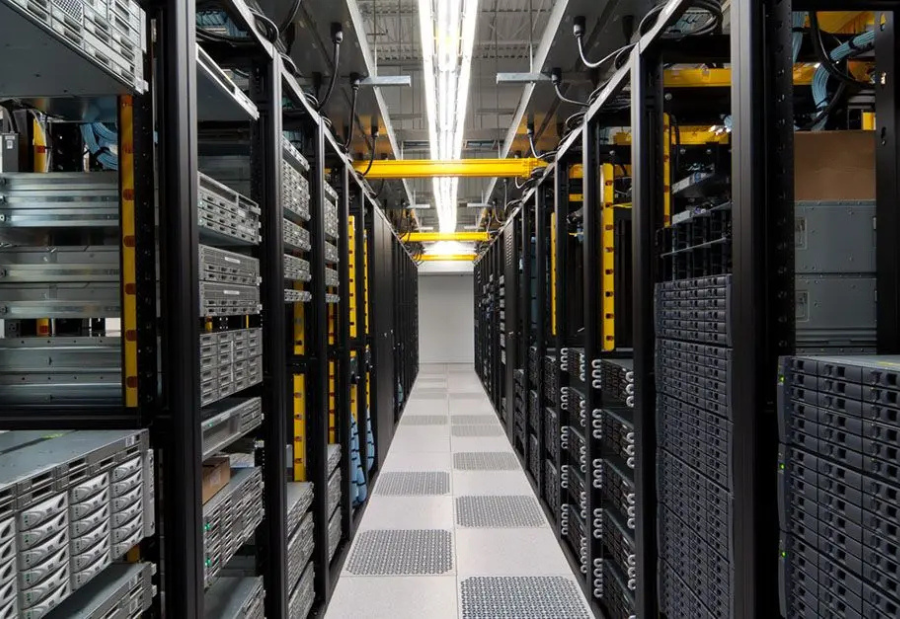
Data centres on the outskirts of Dublin are delivering an unexpected benefit, providing clean heat to a university campus through excess energy generated by artificial intelligence workloads. Students at a technology university are now seeing their campus heated using waste heat from a nearby cloud facility, showing how AI driven infrastructure can support sustainability goals. Since 2023, the Tallaght campus of Technological University of Dublin has relied on excess heat from an Amazon Web Services data centre, placing it among a growing number of buildings connected to district heating networks.
Data centres have always produced excess heat, but using it has been difficult because temperatures were too low to warm buildings. That is changing as AI drives the use of advanced chips that require up to 3 times more computing power. According to Adam Fabricius of Sav Systems and EnergiRaven, AI is the “twist” that makes reuse attractive. “The exciting thing is that AI can give you higher temperatures, and the water cooling makes it a lot easier. You need a lot less hardware to connect these systems,” he told a news network. The International Energy Agency said data centre heat could supply up to 300 TWh of space heating by 2030 and warm 10% of European homes.
Ireland offers a strong test case. Data centres consumed 22% of the country’s electricity in 2024, prompting a temporary ban on new facilities that was eased last year. In 2020, local authorities created Heat Works, Ireland’s first not for profit energy utility. Waste heat from the AWS facility now supplies 100% of the Tallaght heating network. The campus cut 704 metric tons of carbon dioxide in 2024 and now meets 92% of its heating needs. AWS provides the heat free of charge, initially covering 55,000 square meters of buildings and 133 apartments. “It’s a win win when we can identify a special project that uses our infrastructure to support the climate goals of the community,” said AWS country lead Niamh Gallagher.
Across Europe, similar projects are expanding. Data centres already heat 1,000 homes in Paris, support networks in Denmark, and power heat recovery in Finland. Studies show waste heat could warm at least 3.5 million UK homes by 2035, or 6.3 million in a best case. New cooling technologies now deliver heat at 55 to 60 degrees Celsius instead of 30 to 35. “We see data centres as energy borrowers, and actually as energy generating,” said Nexalus CEO Kenneth O’Mahony. While high costs and long planning cycles remain challenges, experts agree reusing heat can cut gas use, lower emissions, and reshape how cities power homes.
Also read: Viksit Workforce for a Viksit Bharat
Do Follow: The Mainstream formerly known as CIO News LinkedIn Account | The Mainstream formerly known as CIO News Facebook | The Mainstream formerly known as CIO News Youtube | The Mainstream formerly known as CIO News Twitter
About us:
The Mainstream is a premier platform delivering the latest updates and informed perspectives across the technology business and cyber landscape. Built on research-driven, thought leadership and original intellectual property, The Mainstream also curates summits & conferences that convene decision makers to explore how technology reshapes industries and leadership. With a growing presence in India and globally across the Middle East, Africa, ASEAN, the USA, the UK and Australia, The Mainstream carries a vision to bring the latest happenings and insights to 8.2 billion people and to place technology at the centre of conversation for leaders navigating the future.