


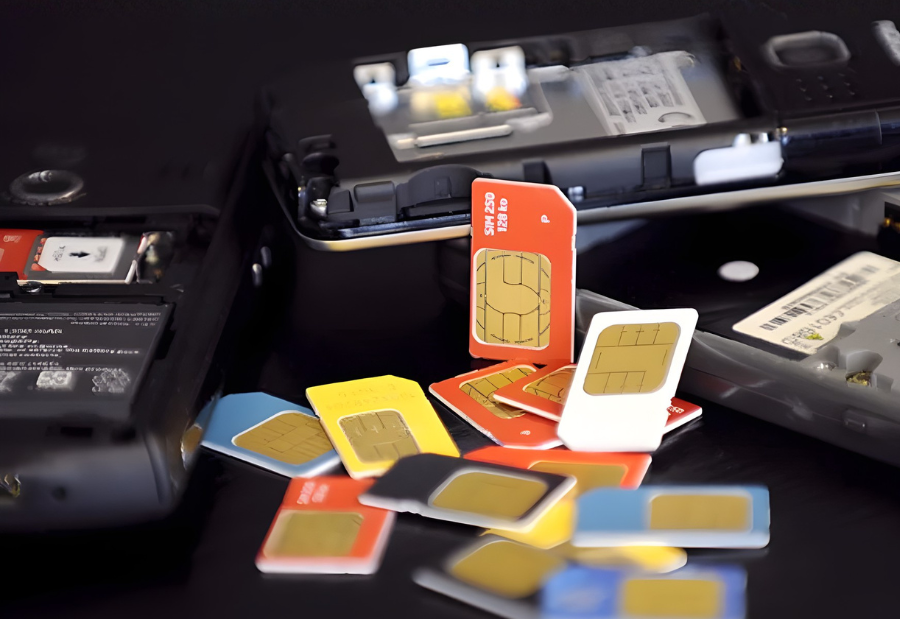
Early investigation findings suggest that while fraudsters used Indian mobile numbers to reach victims, the calls and messages were actually routed from foreign locations, mainly Cambodia. Technical analysis showed that the syndicate was operating out of cybercrime hubs in Southeast Asia, using illegally activated Indian SIM cards to avoid detection.
With support from the Indian Cyber Crime Coordination Centre, investigators traced a large pool of Indian SIM cards roaming abroad under suspicious conditions. Officials said tens of thousands of Indian SIM cards were found active in Cambodia alone, with many directly linked to fraudulent activities.
The probe found that SIM card manipulation was central to the operation. Investigators uncovered a structured system to procure SIM cards by exploiting loopholes at point-of-sale outlets. Customers were allegedly misled during verification, with excuses such as biometric or photo mismatches used to activate multiple SIM cards under a single identity.
In several cases, customers received only one SIM card for legitimate use, while additional activated cards were kept by intermediaries. These extra SIM cards were then sold illegally at inflated prices, transported out of India through international routes, and used to run cyber fraud campaigns targeting Indian users.
Authorities said the money trail from the fraud amounted to ₹1,100 crore and was spread across multiple states, highlighting the nationwide reach of the racket. Maharashtra recorded the highest losses, followed by Tamil Nadu, Delhi, Telangana, Karnataka, and Rajasthan. Investigators are now tracking bank accounts, digital wallets, and layered transactions to identify final beneficiaries and recover diverted funds.
Officials noted that the syndicate relied on fast movement of funds across multiple accounts to make tracing difficult. However, coordinated analysis of telecom records, banking data, and digital footprints has helped agencies rebuild the transaction trail.
So far, 5 key operatives linked to SIM distribution and activation networks have been arrested. Police said these arrests are only the first step. A Special Investigation Team has been formed at the commissionerate level to examine deeper domestic and international links.
Authorities have also begun blocking thousands of suspicious SIM cards and related messaging accounts operating from overseas. Requests for international cooperation have been sent to track individuals involved in moving and using SIM cards outside India.
Experts say the case underlines the growing complexity of cybercrime, where telecom misuse, social engineering, and cross-border systems are combined at scale. Police have advised citizens to stay alert against unsolicited investment offers and warned that genuine opportunities do not promise unusually high returns in short periods.
The investigation remains ongoing, with officials indicating more arrests and seizures ahead.
Also read: Viksit Workforce for a Viksit Bharat
Do Follow: The Mainstream formerly known as CIO News LinkedIn Account | The Mainstream formerly known as CIO News Facebook | The Mainstream formerly known as CIO News Youtube | The Mainstream formerly known as CIO News Twitter
About us:
The Mainstream is a premier platform delivering the latest updates and informed perspectives across the technology business and cyber landscape. Built on research-driven, thought leadership and original intellectual property, The Mainstream also curates summits & conferences that convene decision makers to explore how technology reshapes industries and leadership. With a growing presence in India and globally across the Middle East, Africa, ASEAN, the USA, the UK and Australia, The Mainstream carries a vision to bring the latest happenings and insights to 8.2 billion people and to place technology at the centre of conversation for leaders navigating the future.