


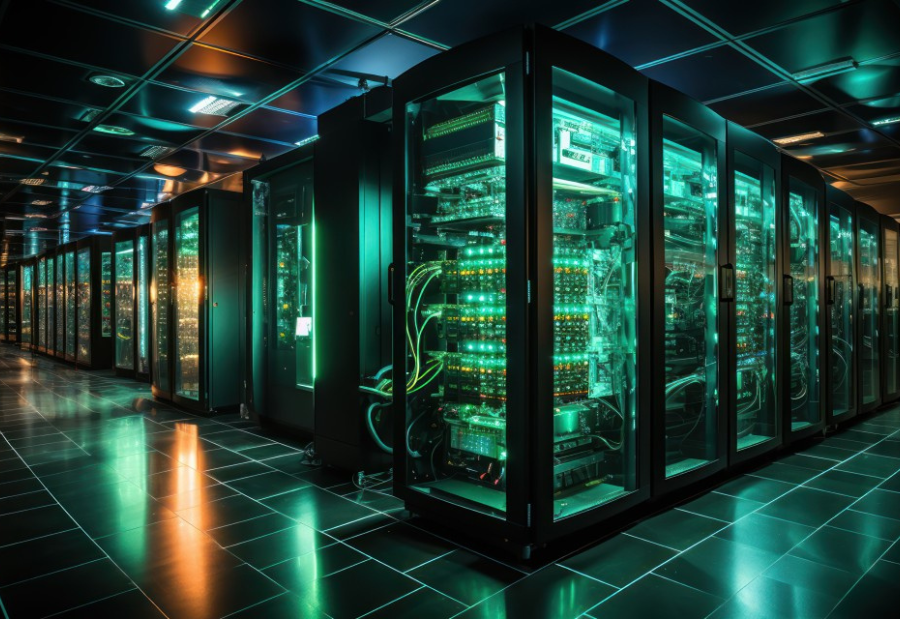
Data centers, long associated with sprawling warehouse-scale facilities, are facing a rethink. While global demand for computing power continues to rise, experts suggest that bigger is not always better. The next generation of data centers could be smaller, localized, and more integrated into everyday spaces.
Companies and innovators are exploring micro and edge data centers. In Devon, England, a firm called Deep Green has powered a public swimming pool using heat from a data center no larger than a washing machine. Its founder, Mark Bjornsgaard, said, “Small is definitely the new big.” He envisions public buildings hosting miniature data centers, forming a distributed network that shares workloads and reuses heat.
Compact data centers are even moving into homes. In 2025, a British couple heated their home using a garden shed server, while a university professor used an AI GPU under his desk as an office heater. Such examples show how computing infrastructure is becoming both smaller and multifunctional.
Analysts also see benefits in placing small edge data centers near large populations. Proximity reduces latency and improves responsiveness for compute-heavy applications. Amanda Brock of a UK tech advocacy group noted that disused urban spaces could be repurposed into small, connected data hubs. She added that much of the processing currently done in large data centers could eventually move to devices like routers, set-top boxes, or handhelds.
The shift is also affecting AI. Dr. Sasha Luccioni from a leading AI firm observes that locally trained, task-specific models “tend to perform more accurately, and can require less computing,” making smaller, targeted systems preferable to massive general-purpose models. This trend aligns with environmental concerns, as large data centers consume vast resources.
Security experts point out another advantage of smaller facilities. Alan Woodward, a cybersecurity professor, said, “Small targets have less impact if they are penetrated,” while larger centers remain critical points of failure.
Some innovators are thinking even further ahead. Avi Shabtai, CEO of a space technology company, suggests orbiting micro data centers could provide efficient, flexible, and scalable solutions beyond Earth.
Smaller, distributed data centers may represent the future of computing, offering environmental, security, and operational benefits while reshaping how society interacts with digital infrastructure.
Also read: Viksit Workforce for a Viksit Bharat
Do Follow: The Mainstream formerly known as CIO News LinkedIn Account | The Mainstream formerly known as CIO News Facebook | The Mainstream formerly known as CIO News Youtube | The Mainstream formerly known as CIO News Twitter
About us:
The Mainstream is a premier platform delivering the latest updates and informed perspectives across the technology business and cyber landscape. Built on research-driven, thought leadership and original intellectual property, The Mainstream also curates summits & conferences that convene decision makers to explore how technology reshapes industries and leadership. With a growing presence in India and globally across the Middle East, Africa, ASEAN, the USA, the UK and Australia, The Mainstream carries a vision to bring the latest happenings and insights to 8.2 billion people and to place technology at the centre of conversation for leaders navigating the future.