


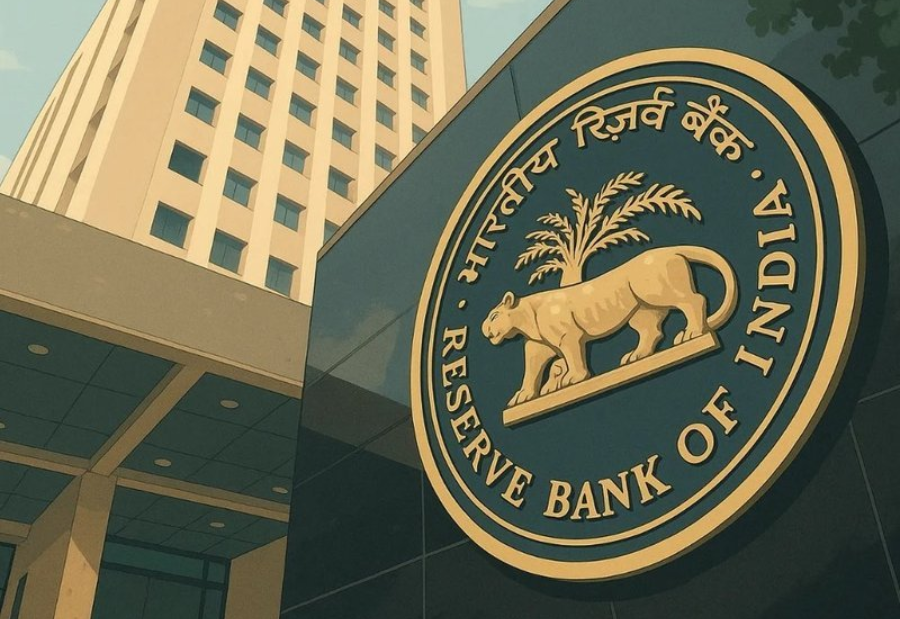
In a step aimed at strengthening capital discipline in the banking system, the central bank has proposed tighter rules on how much profit lenders can distribute to shareholders. The new approach seeks to balance shareholder returns with long-term financial stability.
The Reserve Bank of India (RBI) on Tuesday released a draft framework proposing to cap banks’ dividend payouts at 75% of net profit, also known as profit after tax. The proposal applies to both Indian banks and foreign banks operating in branch mode in India.
Under the draft norms, banks will be allowed to declare dividends only if they meet all applicable regulatory capital requirements at the end of the previous financial year and continue to remain above prescribed thresholds even after the payout. Capital adequacy must stay within regulatory limits during the year in which dividends are paid.
Indian banks will need to report a positive adjusted profit after tax for the relevant period. Foreign banks operating through branches must also post a positive profit after tax in order to remit profits to their head offices. In addition, banks must not be under any explicit restrictions imposed by the RBI or any other regulatory authority.
RBI said it carried out a detailed review of existing prudential norms governing dividend declarations and profit remittances, including those applicable to foreign banks. As part of this process, a draft of the revised framework was released for public comments on January 2, 2024. After receiving stakeholder feedback and holding consultations, the RBI has now proposed a revised method to calculate the maximum eligible dividend payout.
The draft directions clarify that any excess remittance by foreign banks must be promptly returned by the head office. For calculating profit after tax, banks will be required to exclude exceptional or extraordinary income, as well as any overstated profits flagged by statutory auditors.
The framework also bars banks from using unrealised gains from the fair valuation of Level 3 financial instruments, certain provision reversals, or unrealised gains linked to loan transfers to fund dividends or profit remittances. These restrictions align with existing RBI guidelines.
The RBI has retained full authority to restrict dividend distribution or profit remittance in cases of non-compliance. It also made clear that no special relaxation will be granted if eligibility conditions are not met. Any breach of the proposed directions could invite supervisory or enforcement action.
Also read: Viksit Workforce for a Viksit Bharat
Do Follow: The Mainstream formerly known as CIO News LinkedIn Account | The Mainstream formerly known as CIO News Facebook | The Mainstream formerly known as CIO News Youtube | The Mainstream formerly known as CIO News Twitter
About us:
The Mainstream is a premier platform delivering the latest updates and informed perspectives across the technology business and cyber landscape. Built on research-driven, thought leadership and original intellectual property, The Mainstream also curates summits & conferences that convene decision makers to explore how technology reshapes industries and leadership. With a growing presence in India and globally across the Middle East, Africa, ASEAN, the USA, the UK and Australia, The Mainstream carries a vision to bring the latest happenings and insights to 8.2 billion people and to place technology at the centre of conversation for leaders navigating the future.